Meet Matt Martensen | Founder, User Cooperative


We had the good fortune of connecting with Matt Martensen and we’ve shared our conversation below.
Hi Matt, can you walk us through the thought-process of starting your business?
I never set out to start a business—much less a cooperative. I was just trying to find a job, not build a company. But one stubborn idea—giving users a real ownership stake in the tech they use—pulled me in and wouldn’t let go. After traveling the world, job-hunting in Brexit-era London, and getting rejected more times than I can count, I dove into research. I discovered a latent global demand for user-owned tech, uncovered an overlooked cooperative model, and realized a web browser could be the perfect launchpad. What started as a maybe morphed into a mission. That’s how User Cooperative was born.
************
In 2018 I’d landed in London after a solo backpacking trip around the world. By the time I arrived, I was on financial fumes, and I needed a job STAT. But it was peak-Brexit and I had no work permit. Sponsorship would take months. Despite solid corporate-finance experience, it was tough to beat a local candidate who could start immediately.
Before London, I’d been a budget manager at an ad-supported shopping app company that gave cash rewards to users for walking into stores or scanning barcodes. When ad revenue dipped, cash got tight. My coworker Adam (our general counsel at the time and now a User Co-op advisor) and I brainstormed: what if we issued company shares (non-cash, but very rewarding) to users for their activity instead of cash rewards? The idea was rejected, but it stuck with me.
The London job hunt dragged on. I interviewed at tech firms and banks; the feedback was consistent: “We like you, but we’re not going to sponsor you.”
One interview, though, changed everything—a CEO role at an Oxford-affiliated startup. I’d never pictured myself as a CEO, but I prepped, stepped up, and imagined being in the seat. Drawing on years of advising execs, being a senior finance manager, and my MBA, I thought that maybe I could actually run a company. I didn’t land the job, but the mindset stayed.
After that, between interviews I kept circling back to that idea of giving users ownership for their tech activity. Nothing like that existed. I researched user-ownership, consumer sentiment, market size, product options—anything to see if the idea would scale and if people would care.
The deeper I looked, the more signs of a latent global demand for user-ownership appeared. Studies across demographics showed:
• Tech companies felt too powerful
• People thought their data was exploited
•. They wanted more control, transparency, and equity
•. They didn’t feel they benefited from the wealth their data created
As for the market potential for user-ownership? Everyone knows the tech industry is huge, but what really struck me after doing more research is that it’s huge because of us. Trillions in value are generated because billions of us click, search, watch, and scroll every day. All that value comes from us. Maybe it could belong to us too.
Three big boxes checked: belief I could run a company, apparent latent global demand for user-ownership, and a big market potential for it. Now, it was time to figure out what product to build to usher in user-ownership.
(By the way, I assumed that I’d simply modify a traditional C-corp later on to grant user-ownership, so I focused on the product.)
I explored countless ideas, including a gamified photo-tagging app that I was so excited about, I mocked up in Figma down to the pixel. But I scrapped it—too complex, too much friction for users. The concepts could be ad-supported, sure, but they still weren’t simple enough.
By the end of 2019, I was out of money and had to move back home to Boerne, Texas. A few months later COVID hit and the world shut down. After 15 years away, I was back home with my parents—for the duration, it turned out.
It was a blessing. My family was incredibly supportive—emotionally, intellectually, even financially. With COVID stimulus checks and time, I kept working.
I read voraciously—psychology, management, history, value investing, growth hacking, movement building—anything to arrive at that eureka moment for the right product to lead with.
One lesson kept resurfacing: habits are hard to break. So, I ruled out building a brand-new product. Instead, I shifted to the idea of incorporating user-ownership into the tech people are already using.
What do people use every day that’s ripe for change? Browsers.
They’re well understood, widely used, have open-source code, and can generate billions. A browser could transport value quickly, monetize meaningfully, and offer a crystal-clear choice: use this browser and earn ownership—or don’t. A simple fork in the road. That felt scalable, so I went with it.
Now, it was time to figure out how the heck were we going to distribute ownership to users for their tech activity.
The breakthrough came during a chat with my mom. I was venting about legal structures when she mentioned an email from REI about their co-op model. She asked whether I looked into it. I hadn’t. I knew almost nothing about co-ops. I dug in: REI wasn’t just an outdoors brand—it was basically a user-owned company.
I dove deep into cooperatives—governance, profit sharing, legal frameworks—and I decided that was the best possible legal platform to give users ownership for their tech use.
User Cooperative was born shortly thereafter. The name was obvious; the logo, what I’m loosely calling the “atcha” sign, is a playful spin on the @, a symbol of being online. Just felt right.
That was 2021. A lot has happened since, but that’s the winding, research-heavy, belief-testing path that led to square one—and to building a company where the people who create the value finally share in it.

What should our readers know about your business?
Oh, I suppose some summary stuff about who User Co-op is, what we do, how we do it, and a gentle call to action to join us should be good.
************
User Co-op Overview
User Cooperative is a user-owned web browser startup that’s uniquely structured as a consumer cooperative—a member-owned and -governed company.
Our goal is to put all meaningful tech power and profits into the people’s hands through free and open membership and our everyday business activities.
Here’s how we do that:
1. We build our membership and raise voluntary contributions from our members to cover our startup costs.
2. We develop, release, and profit from our web browser. It’ll be free to use, members-only, and available on all major platforms.
3. We use our profits to launch other tech services—like a search engine—and pay dividends to our members in proportion to their activity, or “clicks,” on our services.
Here’s where we’re at:
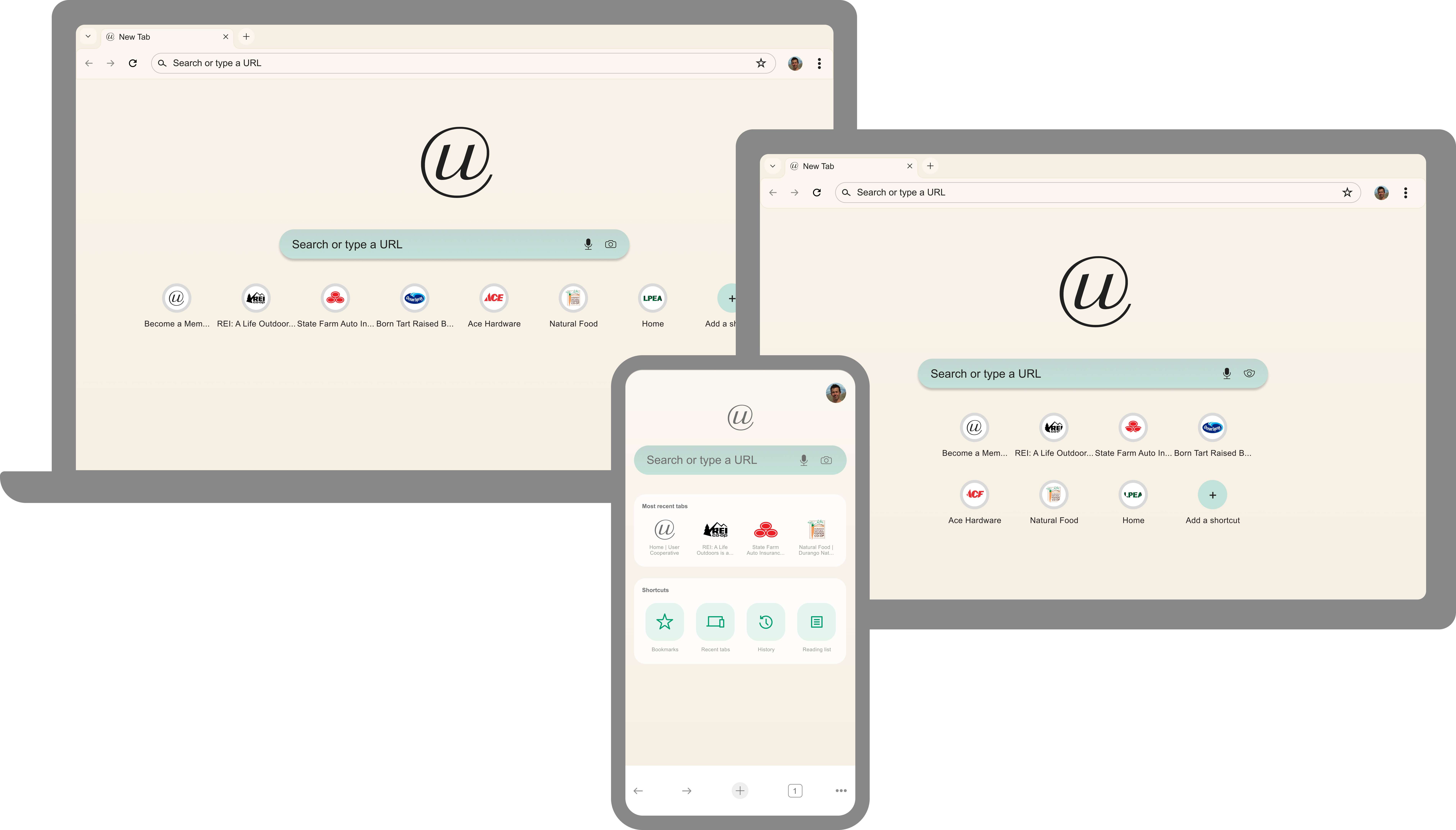
We soft-launched in 2025 and we’re currently focused on growing our membership, raising voluntary contributions, and building the first version of our Chromium-based web browser, “Surge Browser.” A macOS desktop release is coming this Fall.
Why We’re a Consumer Co-op
Tech businesses, like Big Tech, run on the data in people’s clicks. Every time we search, scroll, click, or watch, we’re feeding a machine that turns our activity into money. That data carries risk, and in most industries, when you take on risk to provide capital, you earn ownership. We think that same logic should apply here.
So, we’re doing something new: building a modern internet tech company that gives ownership and control back to the people who power it. And we’re doing it through a consumer co-op structure—like REI’s—which puts all profits and corporate control into its members’ hands on the basis of their patronage.
How We Share Profits
As a co-op, we share all our profits with our members through patronage dividends. These can be paid in cash, perks, or both—based on how much a member interacts with our services.
Here’s the basic formula:
Member dividend = annual profit x (member’s annual clicks ÷ all members’ annual clicks)
Clicks include virtually any action you take (like opening a tab or typing a search) and automatic background activity that sends data to us so that we can make our services work and improve them.
We collect and use member data in accordance with our members’ individual privacy settings and our privacy policy, which our members control.
If we ever sell the company, any proceeds will be shared among members based on their cumulative clicks.
How We’re Governed
We follow a “one member, one vote” model, and all governance happens electronically.
Members vote for board seats and on major business decisions—things like acquisitions, leadership changes, algorithms, product features, privacy policies, terms and conditions, or a potential sale. Day-to-day operations are run by our team, but members set the direction.
To keep things stable while we’re still small, voting won’t start until we reach 1.5 million members and $15 million in revenue.
Why We’re Starting With a Browser
We picked a web browser as our first product for a few reasons:
• Everyone uses one
• It’s easy to switch
• It’s relatively affordable to build
• It generates valuable data
• And it can be very profitable
There are two main ways browsers make money:
1. Search engine royalties – Search engines like Google pay us a cut of the ad revenue from searches done through our browser. For context: Google reportedly pays Apple about $20B/year for Safari (16% market share), and Mozilla about $500M/year for Firefox (2% market share).
2. Targeted ads – Advertisers pay us when members see or click on ads we serve through new tabs, notifications, and other placements.
We believe those revenues alone can fund member dividends and help us build more tech services so that we can put more tech power and profits into the people’s hands.
The Surge Browser
Surge Browser will be free to use, members-only, and available on all major platforms. It’ll look and feel a lot like Chrome—on purpose.
We don’t want to reinvent the browser. We want something familiar, so members can earn dividends from their clicks without changing how they browse.
Almost every click on Surge Browser will count toward your dividend. That includes things like:
• Opening a tab
• Entering a search
• Clicking a link
• Reloading a page
• Adjusting settings
• Viewing an ad
To get credit for your clicks, you’ll just need to be signed in to Surge Browser.
When it’s time to distribute dividends, we’ll pay members electronically.
And switching to Surge Browser will be easy—during setup, you’ll be able to import your bookmarks, passwords, cookies, and more in just a few clicks.
Where We Are Now
Like most cooperatives, we’re starting with a community of people who believe in the mission and are chipping in to help fund the early stages.
We soft-launched in 2025 and are currently growing our membership, raising contributions, and building Surge Browser. The first desktop version (for macOS) is on track for release this Fall.
If you believe tech profits and power should belong to the people who create them, we’d love to have you as a member. Learn more—or become a member—at usercooperative.com

Any places to eat or things to do that you can share with our readers? If they have a friend visiting town, what are some spots they could take them to?
My best friends tend to be frugal and fairly adventurous like me, so I’d plan their visit around epic scenery, cold rivers, and cheap (but awesome) food. So, I present you with Durango, Colorado on a Dime for a Week:
************
Day 1: Settle in + Walk the River Trail
We’d start with something easy: a stroll or bike ride on the Animas River Trail, a beautiful path that runs through town right on the water. It’s a great way to get the lay of the land. We’d grab burritos or tacos from Zia Taqueria, then wolf them down by river and catch up.
Day 2: Hike + Hot Springs
Morning hike up Castle Rock—a pretty strenuous trail with the best view of Animas Valley, my favorite valley on Earth. We’d eat something simple after—maybe a Road Runner pizza from HomeSlice or snacks back at the house. Then, we’d soak at Trimble Hot Springs and drink Ska Mexican Loggers (aka “Mexies”) until the sun goes down.
Day 3: High Country Adventure
We’d head north on the Million Dollar Highway and hike a proper alpine trail near Silverton—like Ice Lake Basin, if the snow’s melted. These kinds of hikes are absolutely unreal. After that, we’d stop at The Nugget for some sliders, truffle fries, and a beer before heading back to Durango.
Day 4: Chill Day in Town
Breakfast burritos or scrambles from Rupert’s, then we’d hang out downtown: cruise Main Ave., grab some coffee at Durango Coffee Company, check out some cool gear at Gardenschwartz, maybe rent paddleboards and float the lazy stretch of the Animas. Dinner would be at Cuckoos—best chicken wings on Earth. Then, of course, we’d have to swing by The Bookcase and Barber for a “haircut” before calling it a night 😉
Day 5: Mesa Verde Day Trip
We’d drive out to Mesa Verde National Park and spend the day exploring the cliff dwellings and viewpoints. It’s a stunning look back in time. On the way there and back, we’d stop at Moondog Cafe and Bakery in Mancos for some coffee and epic pastries and eats.
Day 6: River Time + Live Music
Sleep in, grab coffee at Durango Joes, and spend the afternoon tubing, swimming, or just hanging out by the river near Oxbow Park. In the evening, we’d catch some live music—maybe at The Balcony, The Animas City Theatre, or a free Bluegrass show if we’re lucky. We’d grab some Serious Texas BBQ and bring it with us.
Day 7: Sunrise + Sendoff
On the last morning, we’d wake up early and catch the sunrise from Smelter Mountain—a short, steep hike and worth it. Then, one last coffee at Durango Coffee Company, maybe some breakfast pastries from Toast, and send them off.

Who else deserves some credit and recognition?
My family for their love, feedback, and support; my girlfriend, Haley, for loving and supporting me and tolerating me with grace during my ups and downs; Vanessa McCrann, for believing in User Co-op before we had the basic grammar to express our ideas and for connecting User Co-op to the Startup Colorado community, where we incubated and accelerated our progress; our members, especially the ones who’ve parted with their hard-earned money to help us pay for our startup costs: without you, we’re nothing; our advisors, mentors, and those who’ve given us feedback along the way; and, lastly, a special shout-out to Walter Blunt of Thinking Out Loud, who recommended that Shoutout Colorado consider me for this cool publication.
Also, thanks in advance to all those who’ll join, contribute to, and/or support our effort. We need you!
Website: https://www.usercooperative.com/
Linkedin: https://www.linkedin.com/company/usercooperative/
Other: https://www.usercooperative.com/news-and-content