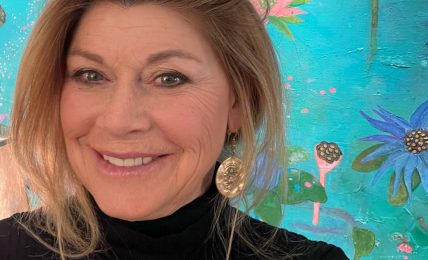
Meet Caleb Gruber | Ecoscape Designer, Business Owner


We had the good fortune of connecting with Caleb Gruber and we’ve shared our conversation below.
Hi Caleb, maybe we can start at the very start – the idea – how did you come up with the idea for your business?
The idea for my business, All Beings Ecoscapes, evolved out of my love of gardening, permaculture, and a holistic approach to urban land stewardship. I first realized that there was a way to make my dream a reality while taking a permaculture design course in Australia in 2015. When I returned to Colorado and over the next four years, I spent a great deal of time making small permaculture designs and also began learning about Rocky Mountain region native plants. I continued to deepen my love of working with the soil, caring for plants, and observing the diversity of wildlife that visited my garden.
My background as a permaculture designer, a native plant master, and an environmental engineer, provided the foundation for me to be able to finally launch my design business in 2019, using my skills and knowledge to create thriving landscapes that support pollinators, insects, birds, and also humans.
In the permaculture space, I saw the majority of people prioritizing mostly food for human consumption. So part of the idea of my business was to use permaculture concepts to create landscapes that also provide food and shelter for other beings in our ecosystem, hence the name of my business All Beings Ecoscapes (which was inspired by a Buddhist verse in Pali, which translates to “may all beings be happy and free from suffering”).
I believe it is our ethical and moral responsibility to repopulate our urban ecology using native plants that co-evolved with the indigenous fauna of our eco-region, while also making more efficient use of natural resources that exist within our landscapes.


Can you give our readers an introduction to your business? Maybe you can share a bit about what you do and what sets you apart from others?
In 2019, I began designing and installing small ecological gardens as part of the Audubon Rockies Habitat Hero Program. This program awards certifications to gardens that use native plants to create food and shelter for birds and other forms of wildlife. This was a perfect way to get my business started because Audubon’s mission is in alignment with mine, and they were able to provide me with clients who were excited about revitalizing their yard. I documented my designs, started building my website, and assembling my portfolio.
What sets me apart from a typical landscape designer is my focus on moving beyond ornamental landscapes, and toward establishing functioning ecosystems using a wide diversity and density of native plant species.
I discovered that many people share this value and there is actually an entire cultural shift happening, moving us away from water-consuming lawns, ecologically dead landscapes, and alien plant species, and towards a more sustainable urban ecology. Some of these people have become my clients, and they are excited to hire me to begin transforming their landscape. I currently have a waitlist of clients to work with in the future, which is not something I was expecting to happen, but am deeply grateful for the abundance and the passion of others.
My success has stemmed from my ability to collaborate with my clients and listen to their desires and needs, and come up with a plan to restore their land to ecological balance, minimize water use, and create an aesthetic that they will enjoy.
Diversity is key to a thriving and resilient ecosystem that is capable of providing habitat for pollinators, birds and other wildlife. This is why I always strive to include as much diversity as possible in my designs, which is appealing to my clients, and also to people walking by my ecoscape creations, who are often curious about the plants I am using and if they can work with me to create something similar at their property.
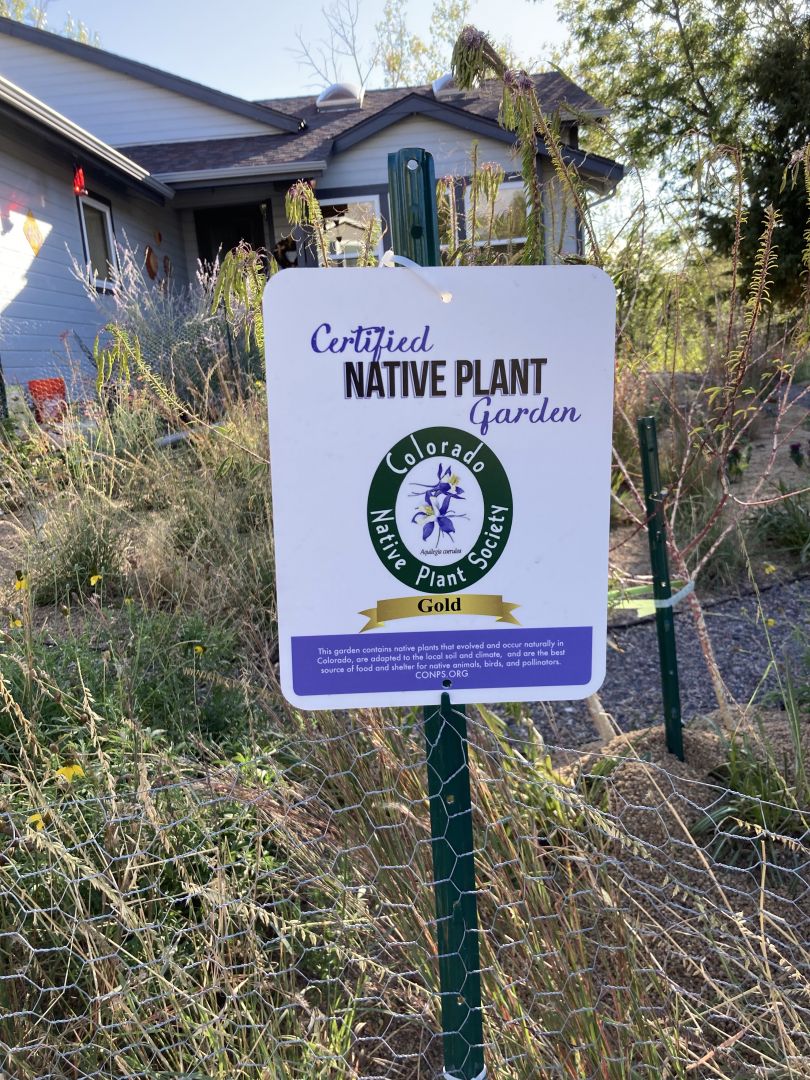
I am proud of how far my business has come, that my clients are satisfied, and also that some of my gardens have received awards from the Audubon Rockies and the Colorado Native Plant Society. In one of my recent installations, we planted 64 different species of forbs, grasses, groundcovers, sub-shrubs and shrubs, with a total of 320 individual plants in a 1,500 square foot front yard. 51 of those species are native to the Colorado eco-region, 10 are native plant cultivars, 3 are low water use exotics. All of these plants, once established, are capable of surviving with little to no irrigation.
One of the biggest lessons I have learned, which is also an approach that I created, is called the three P’s – practice, perseverance, and patience. The practice is that in every new project and new client, my skill set develops further based on new scenarios, and I refine my craft by learning how to better understand my clients’ desires, which also improves the efficiency of bringing my designs to life.
The perseverance is in spending time and energy to ensure that my designs are meeting the desires of my clients, even if that involves changing or redoing past work, and paying attention to every last detail.
Success is a continual process of evolution, and requires a great deal of patience. Day by day, month by month, year by year (hence the term succession), the garden begins to flourish and so too does a business. Plants and creative ideas thrive best in soil that is well nourished and cared for over time, and growth unfolds at the pace at which Mother nature intended, which may not always be the pace we desire. We must learn the skill of patience to manifest true abundance, to attract all the birds and pollinators to our garden, and to see our ideas take root and spread throughout the world. Even some of my friends in Europe have said they are patiently waiting for the day I can come help create a garden for them! I too am patiently waiting.
Bhavatu sabba mangalam.
May all beings be happy and free from suffering.


Let’s say your best friend was visiting the area and you wanted to show them the best time ever. Where would you take them? Give us a little itinerary – say it was a week long trip, where would you eat, drink, visit, hang out, etc.
Love these questions! Well we would have to hit all my favorite concert spots…Red Rocks, Levitt Pavilion, Cervantes.
Restaurants I would love to show them would be City O’ City, Avanti, and Uchi.
Being a nature lover and a climber, of course we couldn’t just stay in the city for an entire week. I would take them to hike a 14er and to do some cragging (climbing) in Eldorado Canyon or Shelf Road.
Some other fun activities I would love to show them would be Meow Wolf, the Santa Fe Art Walk, The Denver Botanic Gardens, and ecstatic dance at Rhythm Sanctuary.


The Shoutout series is all about recognizing that our success and where we are in life is at least somewhat thanks to the efforts, support, mentorship, love and encouragement of others. So is there someone that you want to dedicate your shoutout to?
I want to dedicate my shoutout to the many people who inspired me during my time living abroad and to the friends and family who have believed in me over the past few years. Like a puzzle, the entire picture of my life would not be complete if any of these people were missing. Kai, my permaculture mentor; Dani Wolf-Chambers and Jesse Robertson, for hosting me for 6 months at Agari Farm in Australia; Dan Palmer of Very Edible Gardens, Australia; my friend Carmen Pîrlogea in the Netherlands; Aaron Michael of Earth Love Gardens; Jax McCray and Lindsey Snow of Remedy Permaculture Design; Niko Kirby of Grow Digital Design; the community of The GrowHaus of Denver; the community of Montessori School of Denver; my CSU Extension Native Plant Master instructors; my parents Terry & Jackie; and to a long list of special friends.


Website: https://allbeingsecoscapes.com/
Instagram: https://www.instagram.com/allbeings.ecoscapes/
Linkedin: https://www.linkedin.com/in/caleb-a-gruber-86641029/
Facebook: https://www.facebook.com/allbeingsecoscapes/