Meet Gwen Bonilla | Storyteller and Therapist


We had the good fortune of connecting with Gwen Bonilla and we’ve shared our conversation below.
Hi Gwen, what are you inspired by?
I am inspired by opportunities to connect. Whether it’s in my practice as a therapist, in my role as a clinic director, or as a storyteller, I am inspired, energized, and enlightened by moments of authentic connection with others.
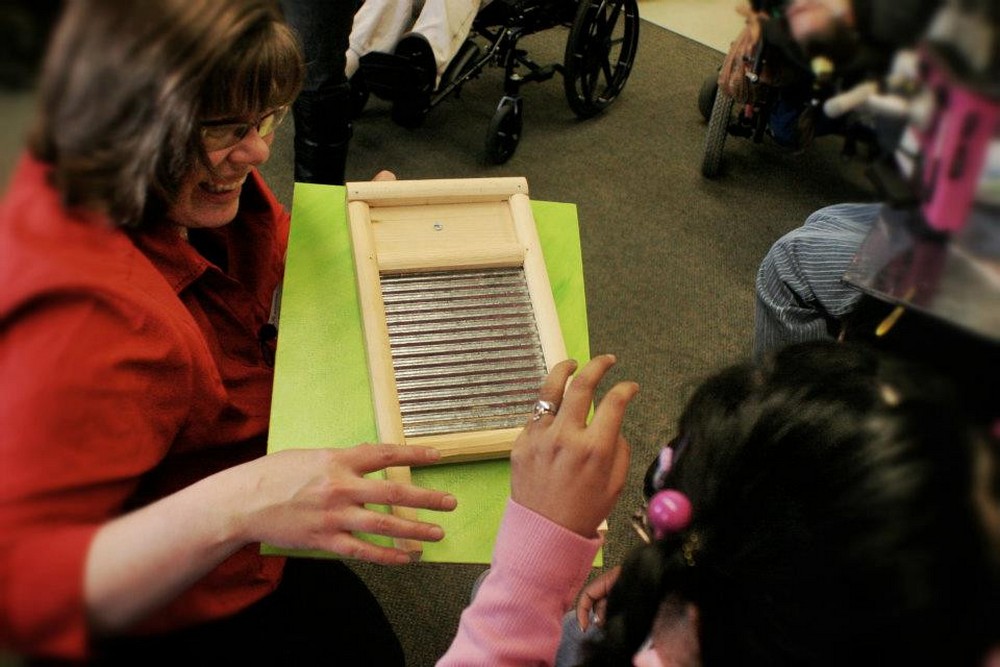
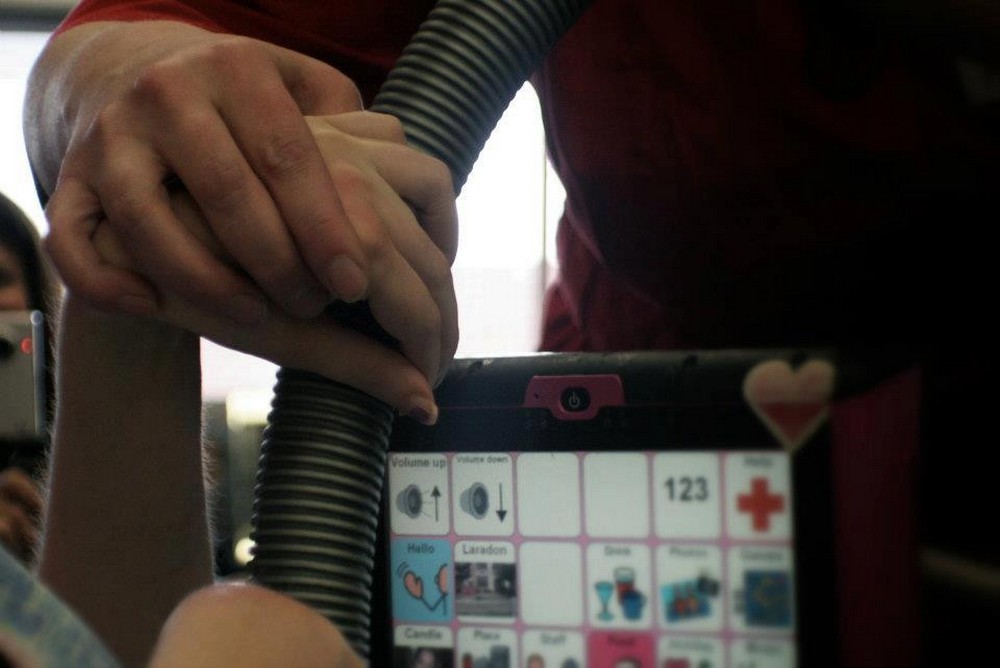
I developed Touching Stories, a multi-sensory storytelling program out of a desire to connect individually and authentically with people for whom intentional and playful connection is rare — people with moderate to severe intellectual and developmental disabilities. In Touching Stories, hand-over-hand sensory experiencing is paired with storytelling to help people engage in the play and the communal joy of stories.
 Alright, so for those in our community who might not be familiar with your business, can you tell us more?
One of the most wonderful things about being a storyteller is the shared connection between the audience and the teller. There is something truly magical about the giving and receiving of a story that allows everyone — those hearing the story and the person telling it — to grow and be enriched by the experience.
I began as a storyteller in schools, telling to elementary children — mostly as a volunteer, but occasionally would luck into a paid gig. I dreamed of one day making my living doing this thing I loved, creating worlds of words. In my studies as a clinical social worker, however, I began to see opportunities for something else entirely. I started to think of storytelling as a profound therapy opportunity.
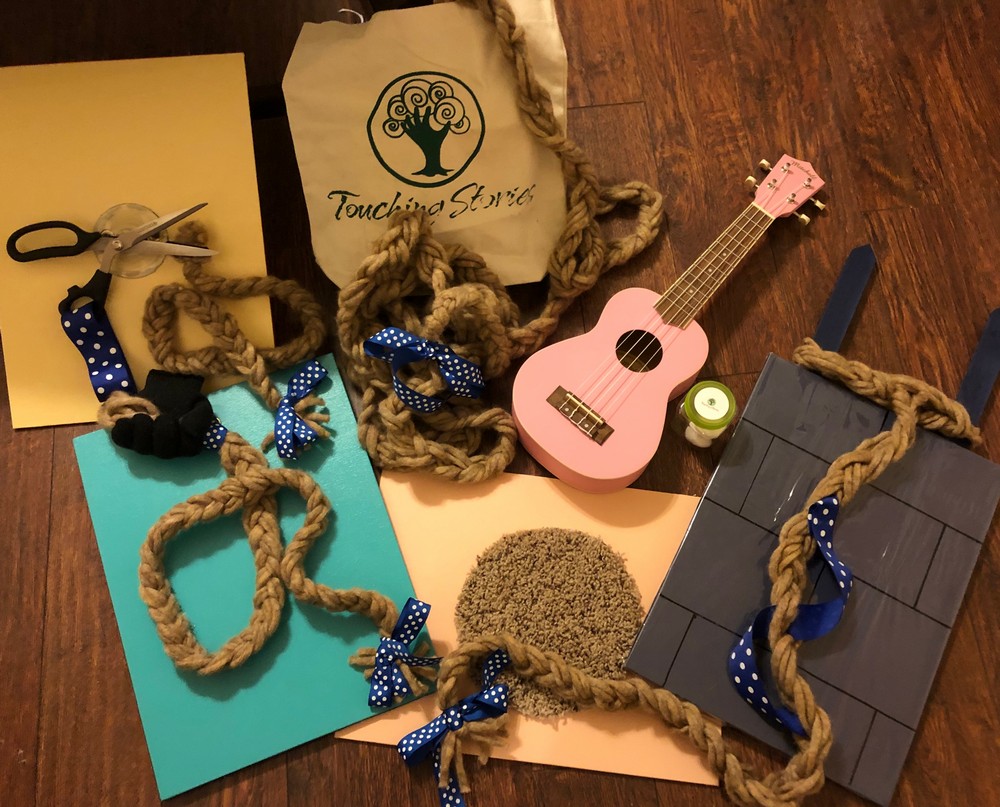
About twelve years ago, I developed a multi-sensory storytelling program called Touching Stories. Multi-sensory storytelling is the use of sensory elements — sound, smell, touch — to enhance the story experience. I was drawn to multi-sensory storytelling as a means to share stories with people with developmental disabilities such as Autism or Down’s Syndrome.
For people with developmental disabilities, isolation and a sense of separateness are too often a fact of life. Without language to receive, or to share conversation and communication, they are often left out of their communities. Stories have always been a tool to connect people with their communities. I wanted to bring specialized stories to these special audiences. I wanted to help them be a part of the story.
In multi-sensory storytelling, the stories are simple — short on plot and character and long on sensory experience. They are told as the teller guides the audience, one-by-one, to explore items to touch, to manipulate, or to smell. These stories are more snapshot than portrait.
And yet… that special connection still occurs.
One day, a few years ago, I was telling stories at a day program for adults with developmental disabilities. My audience on this day was a combination of non-verbal individuals, who required a great deal of hand-over-hand assistance to explore the sensory elements of the story, and others who were much more able to communicate verbally and to explore the sensory elements in their own way.
I was telling the story of The Monster on Grandma’s Bed. In that story, young Sarah, at Grandma’s house for a sleepover, is awakened by a terrifying sound in the middle of the night. When she reaches out in the dark to see what’s there, she encounters something furry. The sensory item for this part of the story is a canvas board covered in short, thick faux fur.
As always, I asked the participants what they thought it was. Usually, the responses I get are “a wolf,” “a bear,” or “a monster.” But on this day, all the participants were in agreement: the board felt like “Jake’s head.”
“Jake” was one of the audience members that day. A young man in his early twenties, Jake was engaged and enthusiastic. He had a bright smile and a lot to say. As the board was passed from audience member to audience member, each said that they thought that the thing that Sarah was feeling in that dark room was Jake’s head. Even the non-verbal participants, when asked, would point to Jake. Each time, Jake’s smile grew wider.
The audience laughed on cue when the story went on to reveal that the furry thing was Grandma’s fuzzy bathrobe and the terrible sound was Grandma’s loud snores, but at this telling — different from any other time I’ve told it –that punchline was not the best part of the story. The sparkle had happened when they had made the decision to make that furry thing Jake’s head. I had a lot of fun with it, but didn’t really understand.
After the story was over, and I was packing up, Jake came to talk to me.
He told me that he is a cancer survivor, and had only in the last few months finished his course of chemotherapy. His hair had just come back.
And in that telling, in that delightful, spontaneous improvisation, the whole room had celebrated the return of Jake’s hair.
It just goes to show, no matter how simple, there’s a whole lot of connecting that happens when a story is told.
If you had a friend visiting you, what are some of the local spots you’d want to take them around to?
For a little quieter adventure, head to BookBar in The Highlands neighborhood in North Denver. You can get a glass of wine and sit in the lounge or on the patio with a great book. BookBar is committed to creating a space for new authors and for elevating the voices of authors of color.
Stop by Guided by Humanity in Englewood for a Yoga Class that is designed to be accessible to ALL bodies. Finally, while you are in Englewood, be sure to stop by Brewabilty Lab for a beer and grab a meal at Cafe 180 — a “pay what you can” restaurant featuring nutritious and delicious food and a great community for all.
Shoutout is all about shouting out others who you feel deserve additional recognition and exposure. Who would you like to shoutout?
I am grateful to the work of Bag Books, a non-profit organization in London, UK, whose work initially inspired my journey and profoundly impacted the early development of Touching Stories.
I am further indebted to Denver Family Institute. DFI is a post-graduate training program for Marriage and Family Therapy. I currently serve at the Clinic Director there. As a student at DFI, I developed so much of what has become essential to my thinking about therapy and about how to help people achieve the growth they desire It was at DFI, and in my training there in play and experiential therapy that Touching Stories evolved from a storytelling program to a therapy model. Really important to me is that DFI provides our training program and therapy services through a lens of Diversity, Equity and Inclusivity, which is really at the foundation of our understanding of how to provide meaningful, life-changing experiences and healing for all.
Instagram: touchingstoriescolorado
Youtube: https://www.youtube.com/channel/UCT51c4hsrpyxDYbYXBwHgwg
Image Credits
Amberly Kroha Erin Phipps Marcos Perez