Meet Matt Loughlin | Letter-cutter & Memorial Artist

We had the good fortune of connecting with Matt Loughlin and we’ve shared our conversation below.
Let’s talk shop? Tell us more about your career, what can you share with our community?
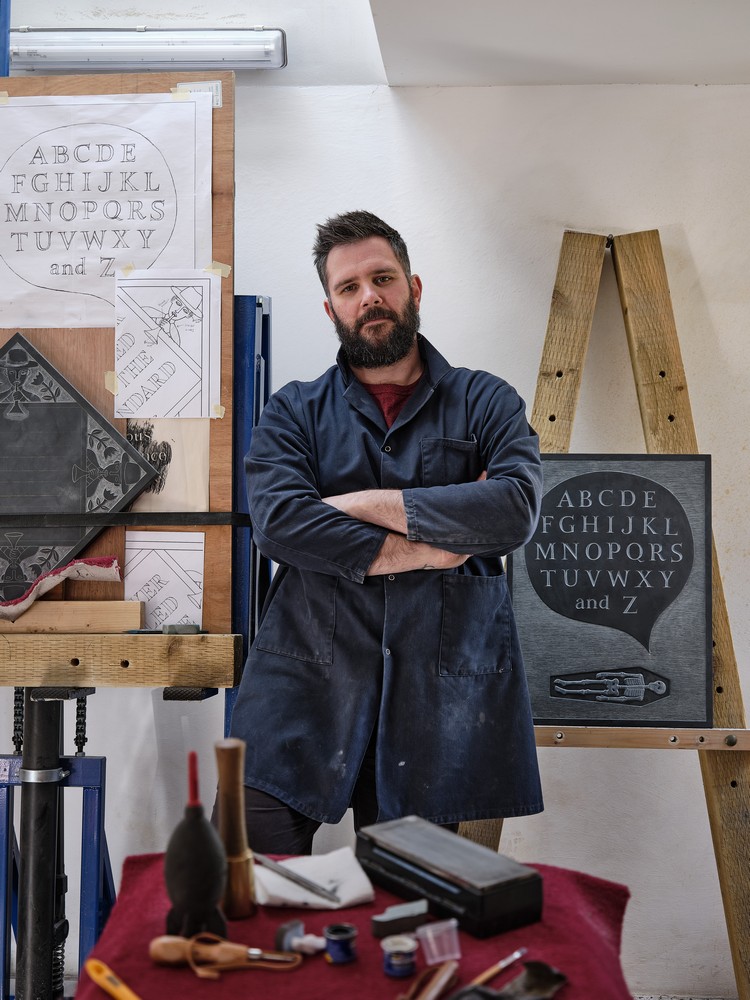
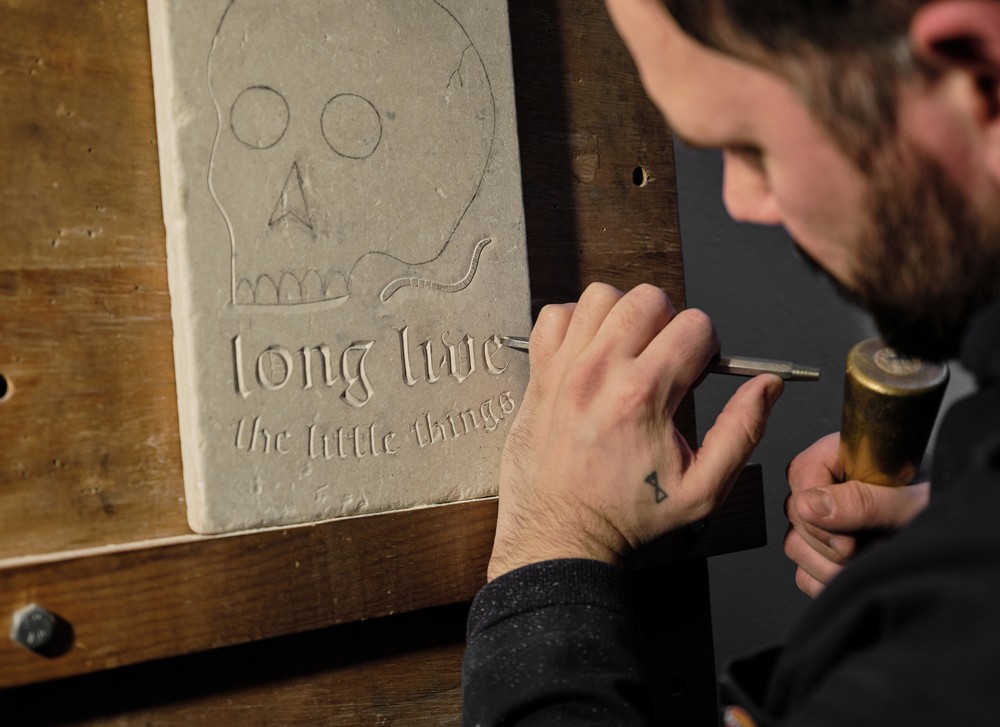
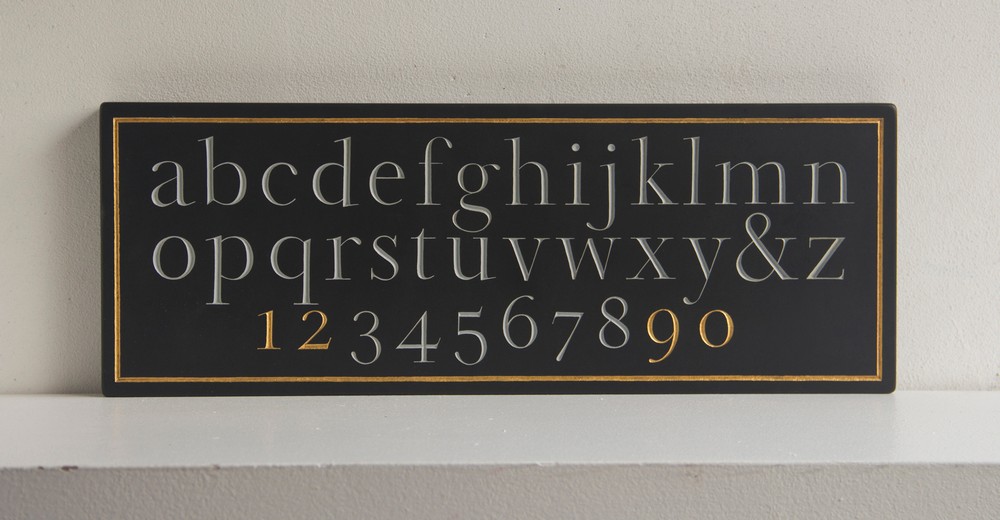
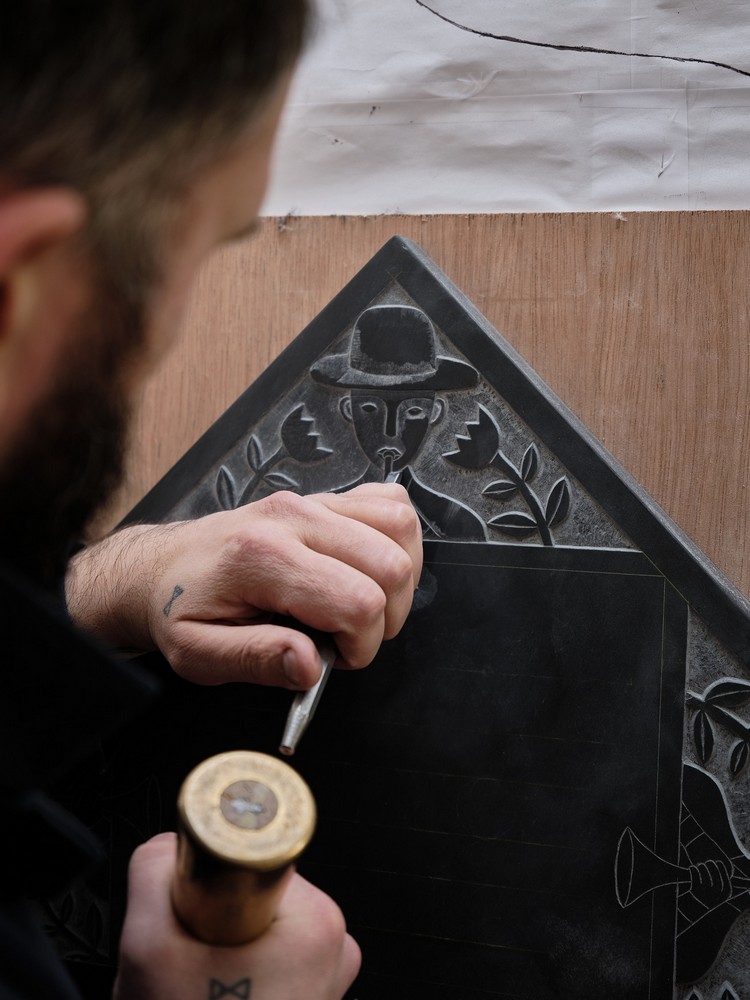
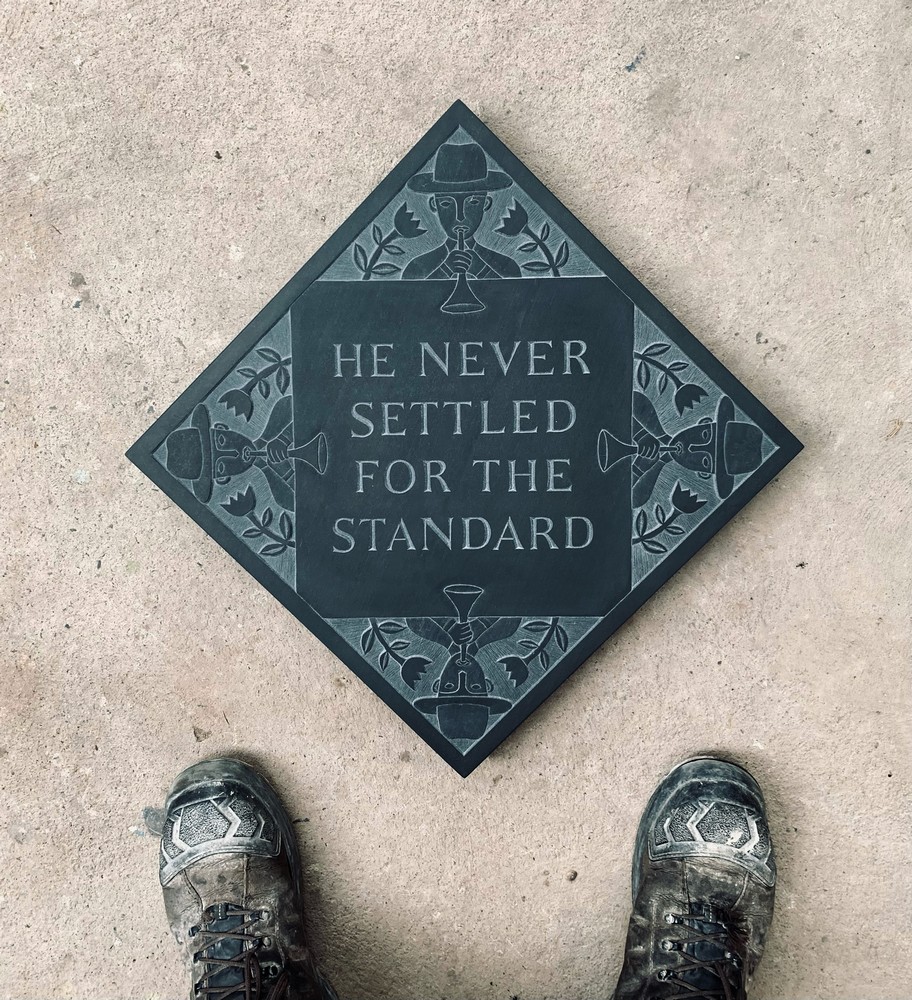
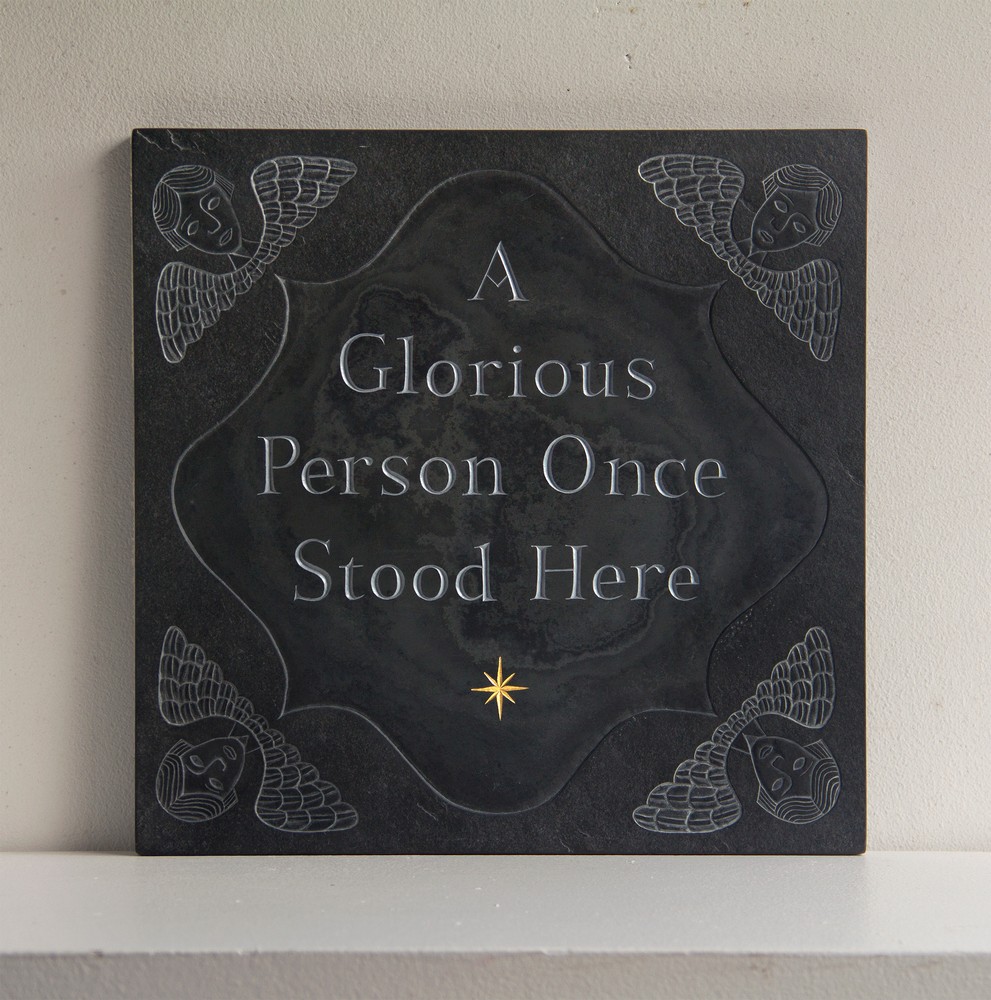
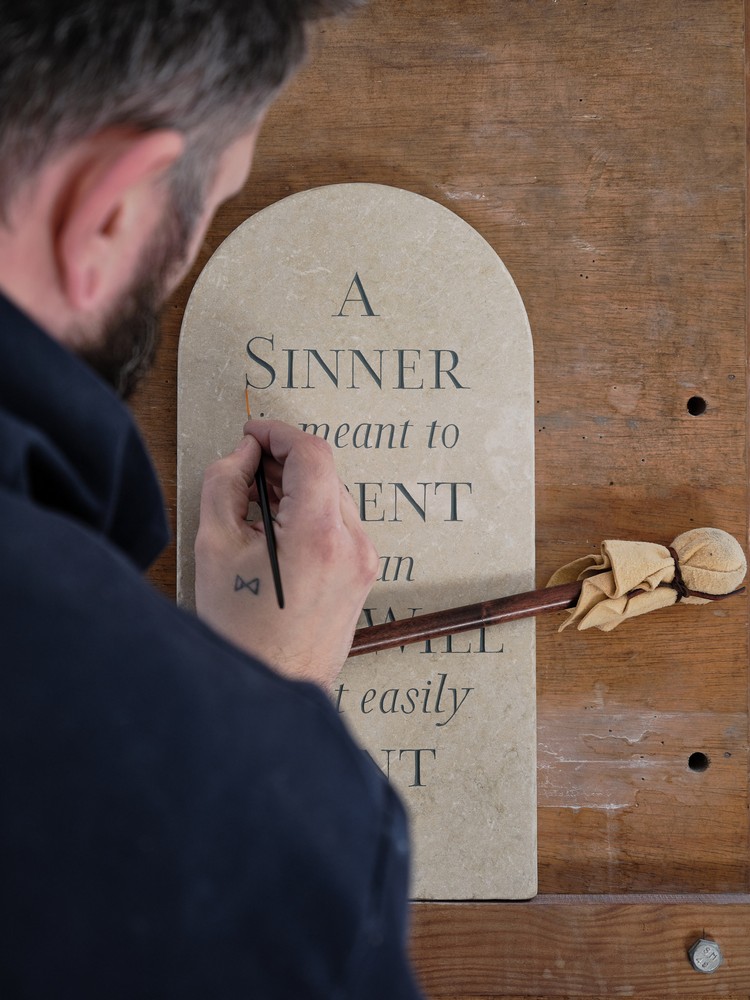
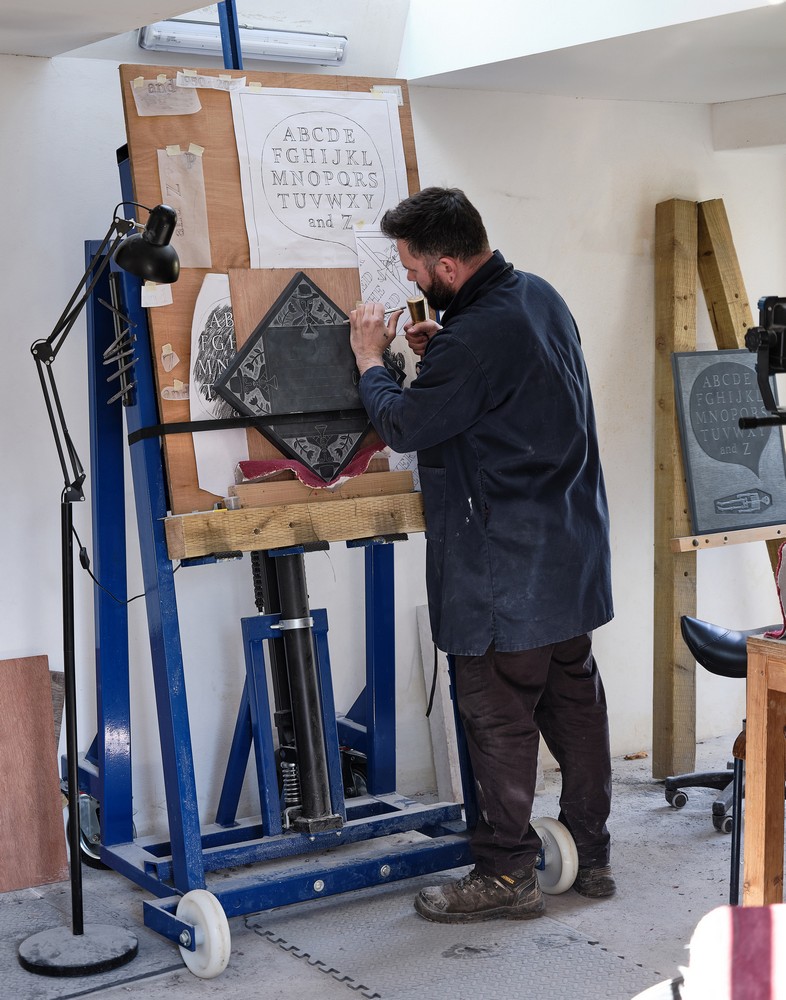
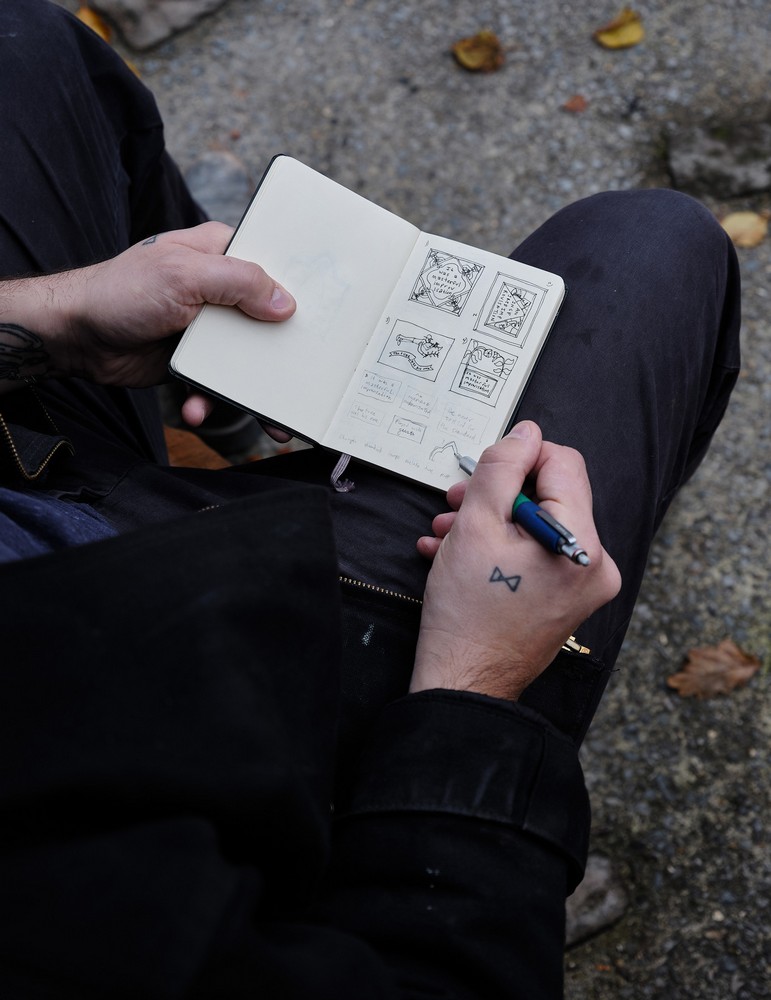
I spend my days drawing and carving bespoke gravestones, cremation plaques, and fine art by hand. I use a traditional hammer and chisel to make my memorial art, working in a long tradition of artist/craftmen, which is fairly rare these days. I would like to think that what makes my work unique is the style and sensibility I bring to it, the time and care that I put into crafting it, and the sincerity with which I make it.
I think a lot of people, especially younger folks, are rediscovering traditional arts and crafts because there is so much depth and history there; but there’s also a lot of opportunity to innovate and move things forward. When I discovered the craft of letter-cutting, one of the most exciting prospects for me was the possibility of doing a contemporary take on a traditional craft: I felt that with my background in graphic design, I could hopefully contribute something unique to a long chorus of creative voices. I hope I can do that.
What drives my work, and helps sustain me through this formative stage in my career, is my mission to bring the concepts of death and remembrance and appreciation of life out into the fore, but to do it with style, sincerity, and a bit of humor.
Everything I make is a memento mori, in some way, and the message is: life is fleeting and precious, so don’t waste it or forget to celebrate it.
What was your thought process behind starting your own business?
The thought of running my own business used to scare the hell out of me, if I’m being honest. I was firmly in the 9-5 world, and it never entered my mind to go out on my own.
But about four years ago, I discovered the craft of letter-cutting and decided I wanted to change my career. I had spent over a decade in corporate design making things I didn’t like, for people I never met. If I was going to disrupt my life to change my career, it had to be worth it: which meant making gravestones and memorial art by hand, with a hammer and chisel, in my own unique style. So working for myself and having my own workshop was really the only way forward.
What’s one thing about your industry that outsiders are probably unaware of?
I think most people simply aren’t aware that commissioning a handmade memorial is an option in this day and age. If I had a nickel for everytime someone told me “I didn’t know people still did that”, I could retire for a week.
I think it’s also important to point out to people that not only can they still get a handmade memorial, but they can commission truly unique pieces of memorial art.
Risk taking: how do you think about risk, what role has taking risks played in your life/career?
I think risk is an essential ingredient for a fulfilling life and career. Taking risks means setting yourself up to fail, putting your goals just beyond your reach – but that’s how you grow. Each time you stretch for success you become a little stronger, a little more capable. If I hadn’t taken risks like moving abroad, changing my career, or starting my own business, I honestly don’t think I would wake up everyday happy to go to work.
I also would not be able to do this without the support and encouragement of my wife Stephanie. Not only has she stoked my confidence and enthusiasm when I’ve hit my low points, but she’s also patiently picked up the slack while I’ve changed careers. Having a wonderful partner like her really helps.
I think the next mountain to climb, especially as someone who is not far from their 40s, is to keep taking risks and keep changing and developing as a person. I don’t want all of my good stories to take place in my 20s.
Other than deciding to work for yourself, what was the single most important decision you made that contributed to your success?
From the very beginning, I decided I wanted to jump head-first into being a letter-cutter and memorial artist, which meant finding a proper full-time apprenticeship. I could have taken it up as a side-hustle first, but I knew if I did that I would never follow through. It would just become another half-developed hobby relegated to the weekends. So I went out searching, and I was lucky enough to be awarded a full-time apprenticeship by the Lettering Arts Trust, which placed me with a master letter-cutter here in the UK..
Within a few months of applying for the apprenticeship, my wife and I had packed up and moved to the other side of England, and I was working and learning memorial making full-time. Being decisive and not overthinking this monumental change was one of the best decisions I ever made. I did all the research, I knew in my gut that it was the right thing to do, so I pulled the trigger.
What is the most important factor behind your success / the success of your brand?
My brand is really an amalgam of all the things I love: colonial gravestones, mediaeval tombs, early printing and type design, printmaking, traditional calligraphy and letter-cutting, modernist painting and sculpture. All of these things, and many more, inspire and excite me, and inform all of the things I make.
It was only after I decided to go with my gut and make things I personally liked and was excited by, as opposed to working in a more commercial or established style, that I started to gain some traction and build interest in my work.
What’s the most difficult decision you’ve ever had to make?
Probably when my wife and I decided to move from Oslo, where we had full-time jobs, to the UK, where we had very few prospects.
It was a tough time, filled with a lot of uncertainty, but it allowed us to essentially start with a blank slate and better realign our lives with the things we really wanted. Out of it, I was able to change my career and work towards a happier lifestyle. So, in hindsight, it was a very tough decision but absolutely the right one to make.
Work life balance: how has your balance changed over time? How do you think about the balance?
I work way more than I ever did as a 9-5 graphic designer – that’s just the nature of being a self-employed artist. But I am much more engaged and invested in the work I do, and much more fulfilled by it, even with the stress and uncertainty that comes with it.
I’m still trying to build a work/life schedule that works for me, but I’m getting there. When you want to work all the time, things like stress management, exercise, and time for socializing can get pushed to the bottom of the priority list, so I’m still working to get the balance right.
Do you have a favorite quote or affirmation? What does it mean to you / what do you like about it?
Don’t look for happiness, look for purpose.
For me, my purpose is my work, which allows me to express myself and be creative, but also connect with other people by helping them celebrate life, with all of its ups and downs. I think happiness can grow organically from feeling engaged and useful; from having a good reason to get out of bed everything morning
Why did you pursue an artistic or creative career?
It never occurred to me to do anything else. I’ve been creative and making art my whole life, it’s just a part of my personality and the way I think.
The creative lens through which I’ve focused my creativity, in terms of careers, has shifted a few times, but over the last few years, I’ve really tried to whittle away all my extraneous interests to find the core things I’m interested in. The distillation of that process is my career as a letter-cutter and memorial artist.
What do you want your legacy to be? What do you want people to remember about you?
Very simply: my work is my legacy. I think that’s ultimately why all art gets made.
What’s amazing for me is that my work is also someone else’s legacy. For some people, a gravestone or a memorial is the only legacy they will leave on this earth. So the work I do is really a shared legacy: My work acting as a vessel for the memory and celebration of a life. I find that incredibly unique and fulfilling.
Any places to eat or things to do that you can share with our readers? If they have a friend visiting town, what are some spots they could take them to?
Well, I don’t live in a city. I live in the English countryside, so friends who come to visit are in for a more rustic and rural experience! Outside of work days, I’m not a big fan of itineraries: they make me feel like a tourist in my own life.
But some essential activities for a visitor would be country walks, flea markets, studio visits to artist and craft friends, wild swimming (though I’d probably be on shore reading a book), ditto for the beach, meals at both centuries-old pubs and hipster eateries, and, of course, trips to the many ancient churches, castles, and country houses that dot the landscape here. Coming from the US, I’m still in awe of how much history surrounds you here in the UK. It’s inspiring and humbling at the same time.
I have to say though, a country walk with a bit of gravestone spotting in an old churchyard followed by a trip to the pub is about as perfect a day as I could ask for!
Shoutout is all about shouting out others who you feel deserve additional recognition and exposure. Who would you like to shoutout?
I would like to dedicate this to my wife, Stephanie Le Cocq, who is incredibly patient and supportive of me in everything I do, but especially so by hanging in there with me while I changed my career, retrained, and started a new business. She’s a saint and I don’t deserve her.
Website: www.MemorialWorkshop.com
Instagram: @TheMemorialWorkshop
Twitter: @TheMemorialWorkshop
Facebook: Facebook.com/TheMemorialWorkshop
Youtube: The Memorial Workshop
Other: Visit my website to sign up for my newsletter, where I share exclusive photos and videos of the process, news on new projects and shows, and early preview of work for sale on my website.
Image Credits
Please credit Max Bainbridge for all photos, except for the photo “Matt_Loughlin_Memorial1”.