Meet Ronald Isaacson | Catalyst-Consultant-EcoSculptor-Musician-Wordsmith
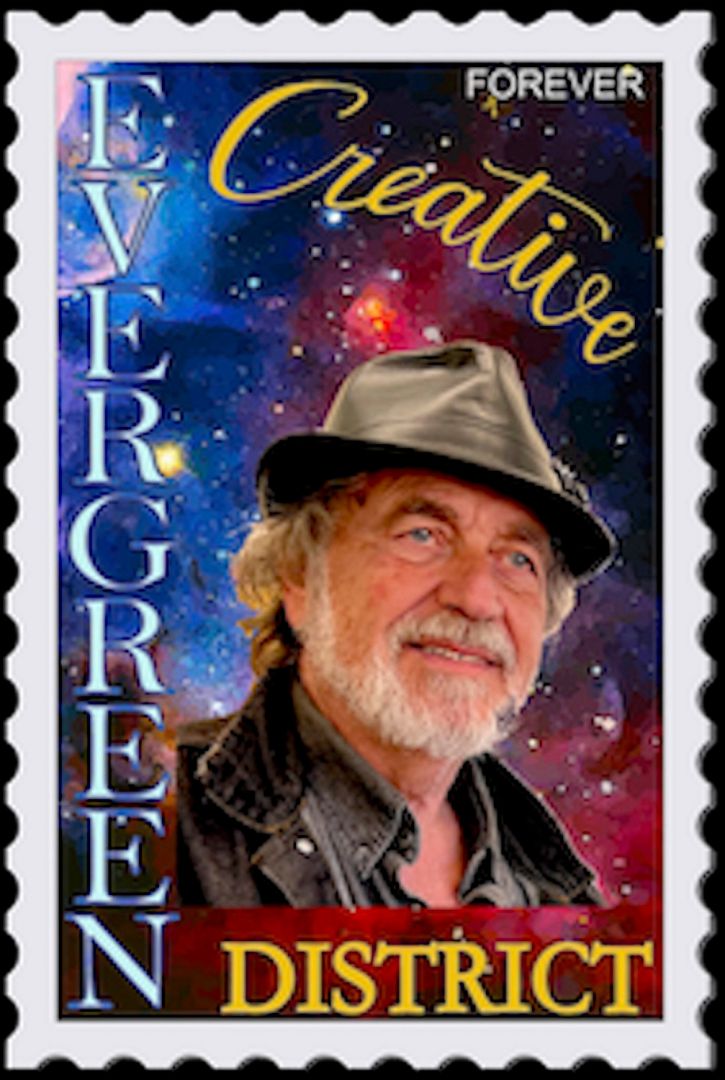

We had the good fortune of connecting with Ronald Isaacson and we’ve shared our conversation below.
Hi Ronald, what was your thought process behind starting your own business?
I am a serial Entrepreneur. I descend from generations of entrepreneurs. My parents, grandparents and relatives followed their passions, starting, owning, and operating their own business. Growing up I was surrounded by people like that; people whose close friends and acquaintances were also entrepreneurs. Hence my thought process, the decision to discover and follow my own path was a normal and logical evolution.
I am an Artreprenure.
Can you open up a bit about your work and career? We’re big fans and we’d love for our community to learn more about your work.
Risk taking…The journey I’ve taken throughout life has challenged me to look at options and alternatives. There have always been and will forever be risks to putting forth ideas that have never be tried because of lack of precedent, because something had never been done before.
Facing risk is not about fighting lost causes. I’m not a hero, I don’t deal in life and death issues. I don’t face that type of risk. As a creative spirit pursuing a vision, I’m willing risk my time and energies in the hope of bringing something to life that will effect positive change. Why? It’s who I am.
Here’s an adage that has guided my actions, allowed perspective of past events, offered hope to efforts in progress, and possibilities for better tomorrows.
“You can always meet your revised expectations.”
The decision to trust my instincts, find and surround myself with people who share common goals, informed co-contributors who will share in decision making, who speak honestly and have the skills to follow through on agreed upon tasks.
Associating myself with others has led me on an incredible journey to formulate a unique gallery concept, an inventory control system that became the industry standard, an arts marketing philosophy that brought me invitations to sit on a multitude of local and national boards and committees and offered me leadership roles where, as a catalyst, I could have an impact on helping individuals, organizations, and communities better themselves.
The mid 90’s was a tumultuous economic time for businesses. In 1995 the economy grew at a weak 0.9 percent. CPI inflation, sluggish personal income growth and a housing market collapse had taken its toll on sales at my main gallery. The 10,00O sq.ft. exhibition/sales space, which just years earlier boasted over a million dollars in sales, employed a peak staff of 20+ and helped support the studios of hundreds of artists facing an uncertain future. Flat corporate profits had already played havoc with my gallery’s once thriving Corporate Art Sales division. Corporations could no longer justify spending thousands on major sculptures or wall pieces to adorn their lobbies and walls while they were laying off employees.
As things continued to decline in subsequent years, tough decisions had to be made. I stopped drawing a paycheck, scaled back on staff and faced a host of undeniable new realities. My creation, Mindscape Gallery, which over the course of 28 years, had grown into an entity that was recognized as one of the top 10 Contemporary American Fine Craft Galleries in the United States, a business that so many depended upon, was in decline. There were sleepless nights, days filled with angst and an unwillingness to bring things to an end in default or debt to those who trusted me. Ultimately, I downsized, parceled off pieces of the gallery to key employees, sold my building, and with great sadness, ended my career as a gallery owner.
People outside the arts industry are generally unaware of the factors that contribute to changes and challenges of the marketplace.
As a student of art history, significant art movements, trends, shifts and changes in styles and direction typically occur over a period of 25 years, during which, artists agents sought to identify and promote the new. Museums and curators would take notice, patrons would sponsor and support newly discovered artists, and public acceptance of the artform would follow.
Slowly those artforms would become commonplace, copied and even mass produced. Inevitably a new style or artform would be discovered, identified and the cycle would begin anew. This has been born out time after time. Most recently when one looks at the evolution of the Contemporary American Fine Craft Movement, where once unique ceramic, glass, wearable arts, and unique works created by artists have been copied and now appear as low priced, mass-produced decorative objects online and in retail settings.
Over the past decades, other economic trends that impact the arts community stand out to those of us who study such things. In cities across America, deteriorating infrastructure in blighted or underserved communities created groups of properties, even entire neighborhoods that were undesirable, crime ridden or otherwise unstable. Plummeting rents in these areas made them very appealing to artists, and creative entrepreneurs who were then welcomed to help stabilize and redevelop those areas. Typically, over a 25-year period, galleries, specialty restaurants and boutiques would take root, eventually attracting more upscale tenants and customers. Those areas then catch the eye of developers or the attention of city officials looking for opportunities to boost tax revenues. Slowly rising rents drive out artists, arts related and other creative business.
Unfortunately, that cycle threatens efforts to build and stabilize creative communities. And the side effect is a marginalized, underserved, at risk community of innovative, creative entrepreneurs increasingly reliant on grants and donations. They are all too often unappreciated for their contributions to a community’s economic development and the quality of life they bring to its citizens.
Arts economic impact studies, developed over the past 50 years are finally quantifying the importance of the arts in cities large and small. Studies in Colorado show that the benefit of funding arts related events, business and entities far exceeds the benefits of funding sports related activities, which while drawing large crowds, have minimal impact on community development.
At different points over my life during these past 75 years, I’ve been an illustrator, a potter, a poet, a wordsmith, a sculptor who has carved apples, rendered images in wood, stone, and marble. I’ve worked as a metalsmith who has welded, forged, and fabricated a multitude of materials to create three D images large and small. I’ve taken and taught classes to children, adults and studied the histories of art and artists. I’m schooled in the design, development, and construction of edifices, dwellings, and monuments. I’ve performed in various productions, played music in bands, improvised, and jammed with friends, and journeyed on pathways to turn daydreams into realities.
I’m blessed/cursed as someone both right and left brain oriented. As a sculptor who creates works from found objects, I see the world as a composite of rare elements. I see things left undone, jigsaw puzzle pieces, building blocks and components that can be brought together in the exploration of potentials, portals to places, spaces, and times that can better serve communities and enhance the quality of life.
As my talents and skills evolved, so has my ability to help identify and bring together seemingly unrelated elements associated with Arts & Economic Development issues, and I’ve cultivated expertise and respect as a consultant and catalyst.
Now as The Executive Director of the Evergreen Creative District, when not playing music or creating EcoSculptures, I contribute time and energies to helping preserve, protect, and promote arts and cultural entities in my adopted home of Evergreen Colorado.
Living this life as a creative spirit is not a choice, it’s what I am, who I am.
There was a time when my life’s work defined my life. 24/7. My wife worked with me at the gallery as did other family members. I employed friends and family in need of jobs. Gallery staff helped raise my daughter. The Gallery even had a special kid’s room at that welcomed families of customers and visitors. Work and life were intricately intwined.
After the gallery closed and my daughter went off to college, my next career move also demanded being available any day at any time. Financial need demanded that. Then life changed. A divorce prompted me to leave Chicago. As a wordsmith I chose to chronicle the journey as my “Grand Adventure” and began a search deep within for what brought me joy, who I was and how I wished to live the rest of my days. My heart ached as my soul search for answers. I acquired a vintage Airstream Motorcoach, a motorcycle, and a trailer to hold my possessions, spending the better part of a year on the road exploring myself and the eastern United States.
I was an Artist, a Musician, a Wordsmith, and I turned West to find a place where I could live in harmony with nature and a community that would allow me to be those things. Then I made what I thought would be a brief stop in Evergreen, Colorado. I played a few tunes with some local musicians and sold a few of my creations. I rode the hills and valleys, and I pondered my existence.
It was late summer as I sat on the rocky mountainside above Evergreen Lake, playing my harmonicas. Monsoon rains gathered around me, and I played on. The skies began to clear, and the sun caressed the rippling water below. A singular though ran through me, I could be on the road for another year searching to build a life in a place like this.
And so, I stayed.
As an Artreprenure/Wordsmith I understand that developing a brand Identity is a key factor to the development and success of any business.
And as the Executive Director of the newly formed Evergreen Creative District, at this point in our development, we are focusing on branding Evergreen, Colorado, a small unincorporated community in the foothills above Denver, as a “Haven For Creatives “. Our brand tag line is, “Creativity Lives Here”.
We are working closely with Colorado Creative Industries, the Colorado Department of Economic Development, the Colorado Department of Tourism, County, State, and regional entities to recognize and help promote that brand identity. Over the past 18-months, a process that included reviewing a 150-year history of how the arts have shaped our community (now published in the Jefferson County Historical Journal), we concluded that our largest industry, is our Creative Industry. And we have come together to celebrate, the creative spirit that dwells in our mountain community. There’s something unique and special here that enlivens and inspires people involved in the Performing Arts, Visual Arts, Culinary Arts, Healing Arts, Industrial Arts, and who are Artreprenures. The people who dwell in this mountain community thrive on the creative energy that weaves through our events, arts, and cultural programs.
The success of this branding campaign will help protect and preserve what we have for future generations to enjoy and participate in.
My role as a catalyst and arts activist, in bringing attention to the works of hundreds of contemporary artists and craftspeople via the 25+ year history of Mindscape Gallery will be forever documented on artists resumes, in exhibition catalogues and referenced in the history of the Contemporary American Craft Movement.
My role as a participant, chairperson, and consultant on numerous local and national arts related boards and commissions is imbedded in the archives of board minutes, strategic plans, and project development records. I can only hope that any insights and efforts or contributions attributed to me are viewed in retrospect as worthy, and beneficial.
As “Harper” a harmonica player sharing stage with a multitude of talented performers, my harmonies have caused heads to bob, feet to tap, smiles and tears to form on the faces of those who chose to listen. Perhaps those experiences shall remain in stories shared with others. I have been told my music lingers in the memories of fans, and that touches me deeply.
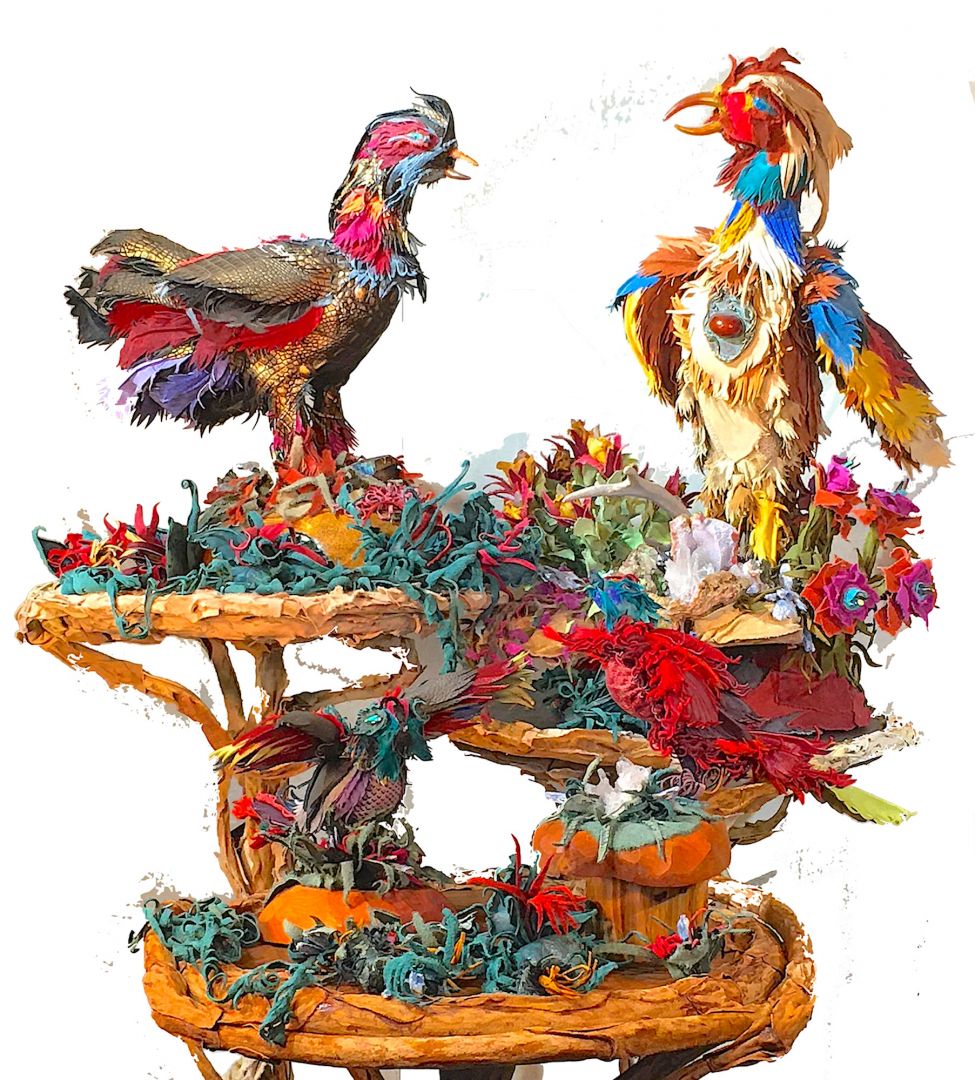
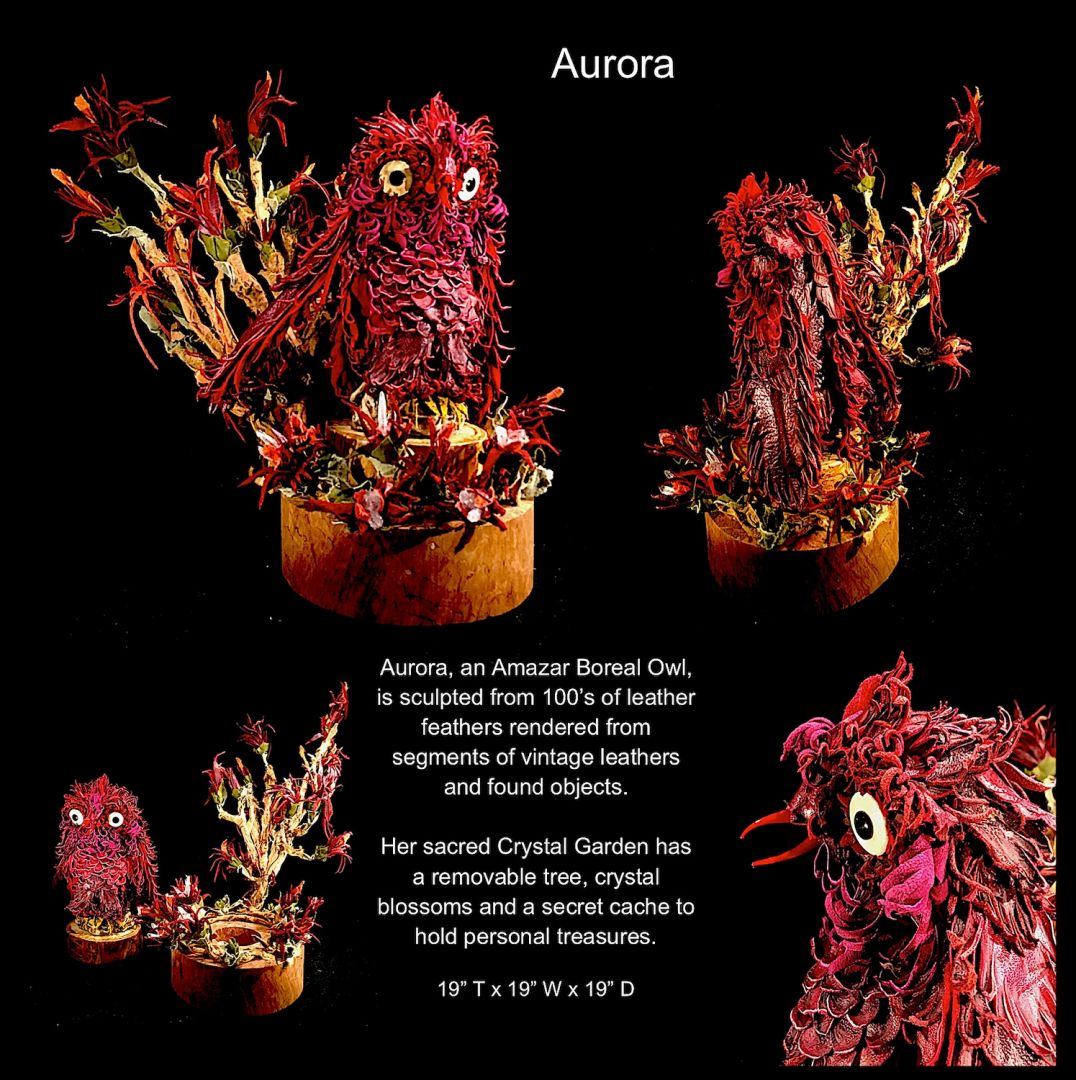
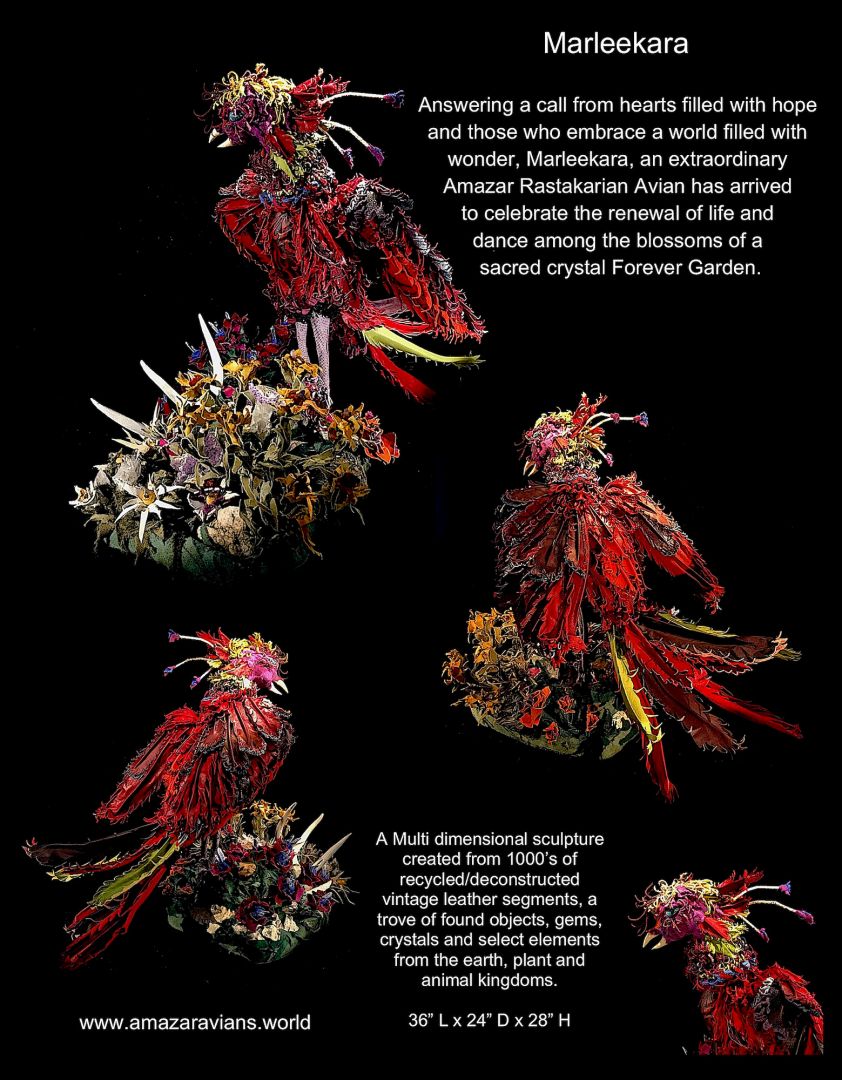
As an EcoSculptor, I’ve brought to life a series of Amazar Avians to call attention to the plight of our planet. My creations speak to the importance of recycling and creative reuse of materials that would otherwise end up in landfills. They call attention to issues of importance, how society deals with the byproducts of a consumer driven society, the need for harmony between all living things that dwell on our planet and finding better ways of living. Perhaps, a hundred years from now, one of my Amazar Avian sculptures will be plucked from a pile of trash and cause people to ponder the story of its creation.
Through all I’ve done along my journey through life, I’m compelled not by the need for a personal legacy, but to honor those moments in time, those places I’ve left behind, those serendipitous encounters that await on the road ahead, by leaving in my wake something meaningful and good.
In the Greater Denver Area, people can experience flocks of my Amazar Avians at: Birdsong Gallery in Arvada, Colorado and at the Lakewood Arts Gallery in the 40 West Arts Hub and by visiting www.amazaravians.world.
Let’s say your best friend was visiting the area and you wanted to show them the best time ever. Where would you take them? Give us a little itinerary – say it was a week long trip, where would you eat, drink, visit, hang out, etc.
There isn’t a week that goes by in Evergreen, Colorado that doesn’t involve the creative community and I invite folks to come and visit here. Evergreen hosts a wonderful community of people activity involved with the performing arts, music, visual arts, culinary arts, and business that include the healing arts, industrial arts and artreprenures.
You’ll discover numerous fairs, festivals, a rodeo parade, holiday walks, a Chili Fest, Summerfest, Fine Arts Fest, dozens of venues offering live music, sculpture walks, murals and amazing landscapes filled with elk & deer and an amazing lake that boarders a historic downtown.
Creativity Lives Here!
Shoutout is all about shouting out others who you feel deserve additional recognition and exposure. Who would you like to shoutout?
Shoutout to the board/members of the Evergreen Creative District and all those who have joined me along my journey.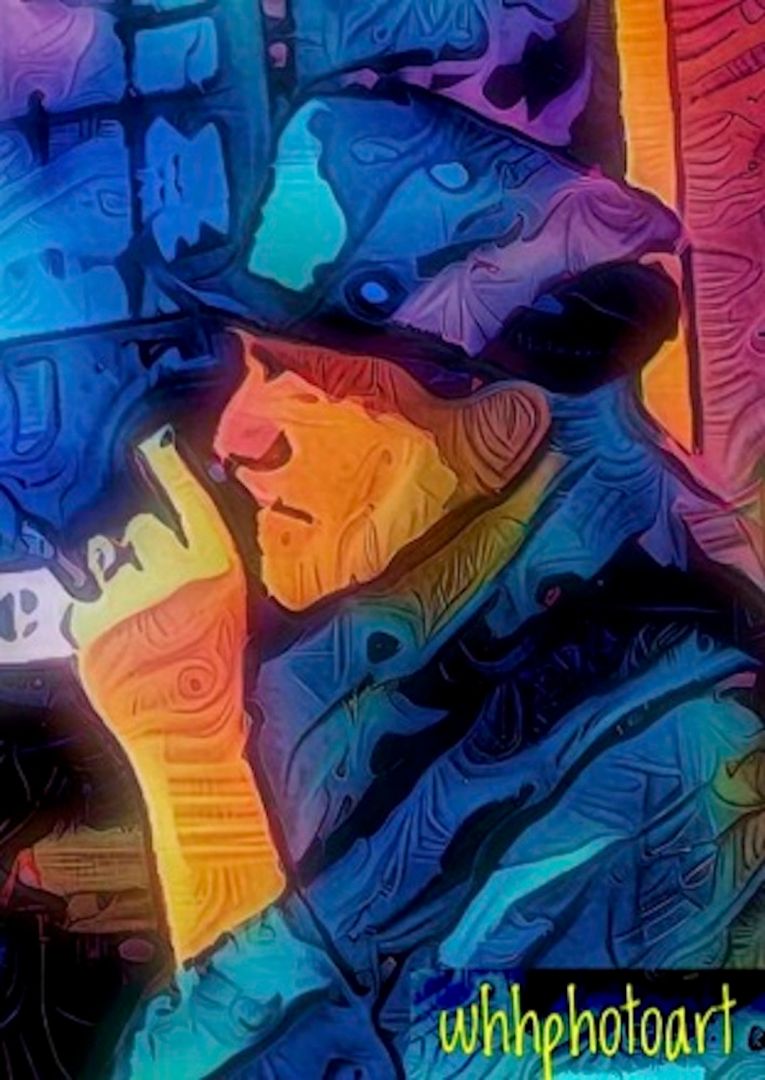
Website: www.amazaravians.world
Other: www.evergreencreativedistrict.org
Image Credits
Ron Isaacson Billy Hinch


