Meet George Bates | Artist
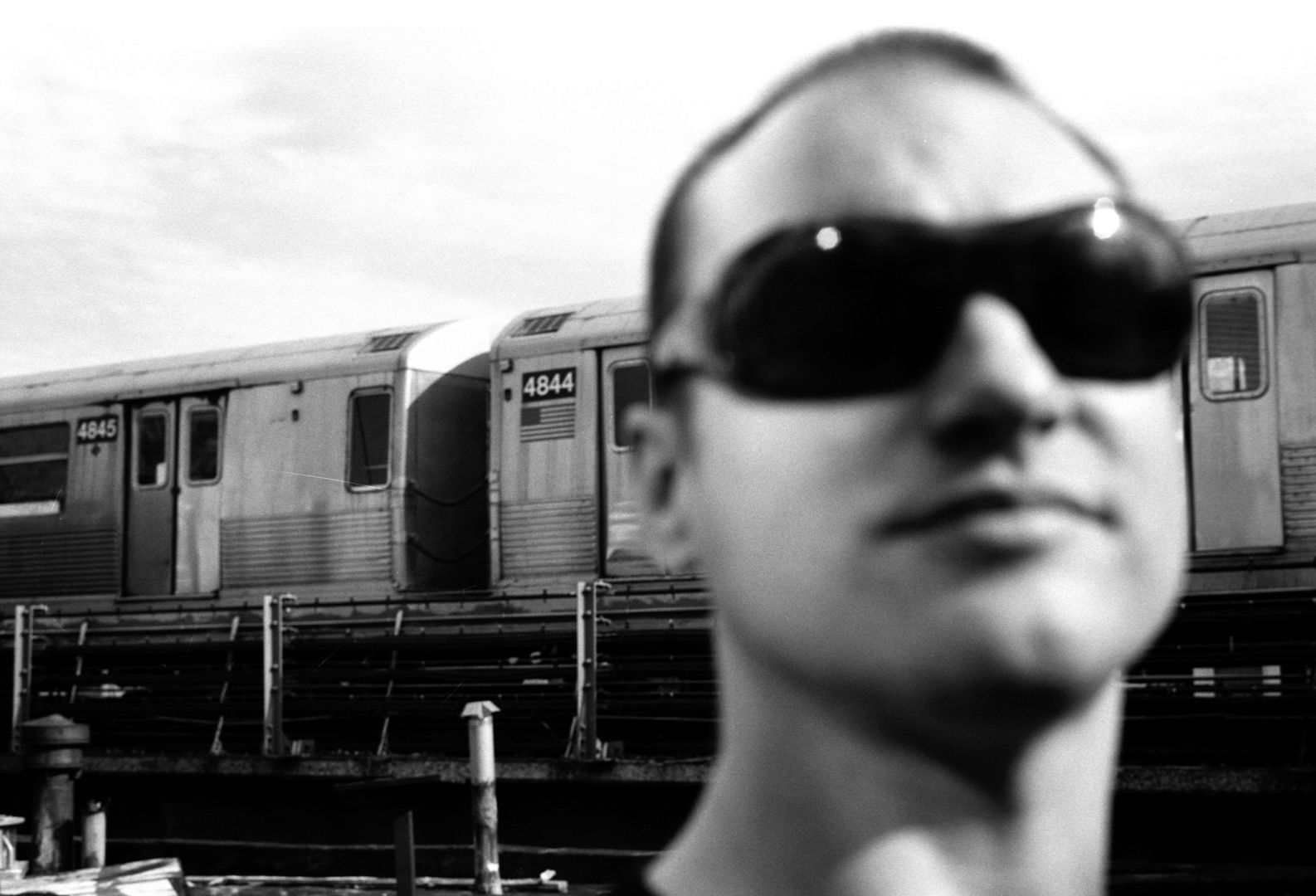

We had the good fortune of connecting with George Bates and we’ve shared our conversation below.
Hi George, how do you think about risk?
Risk taking is essential. It either open doors, or leads to deeper learning.
I’ve never had a job. I’ve always been some sort of freelance creative resulting in an entirely unanticipated career path. It began in formally in freelance Illustration in 1990 with my first officially published work in the New York Times Book Review (Art Director-Steve Heller) and branched out from there. The path has been indebted to and the progeny of the risk taking explored within my Sketchbook & Studio Practice that eventually opened doors to Public Art & Fine Art.
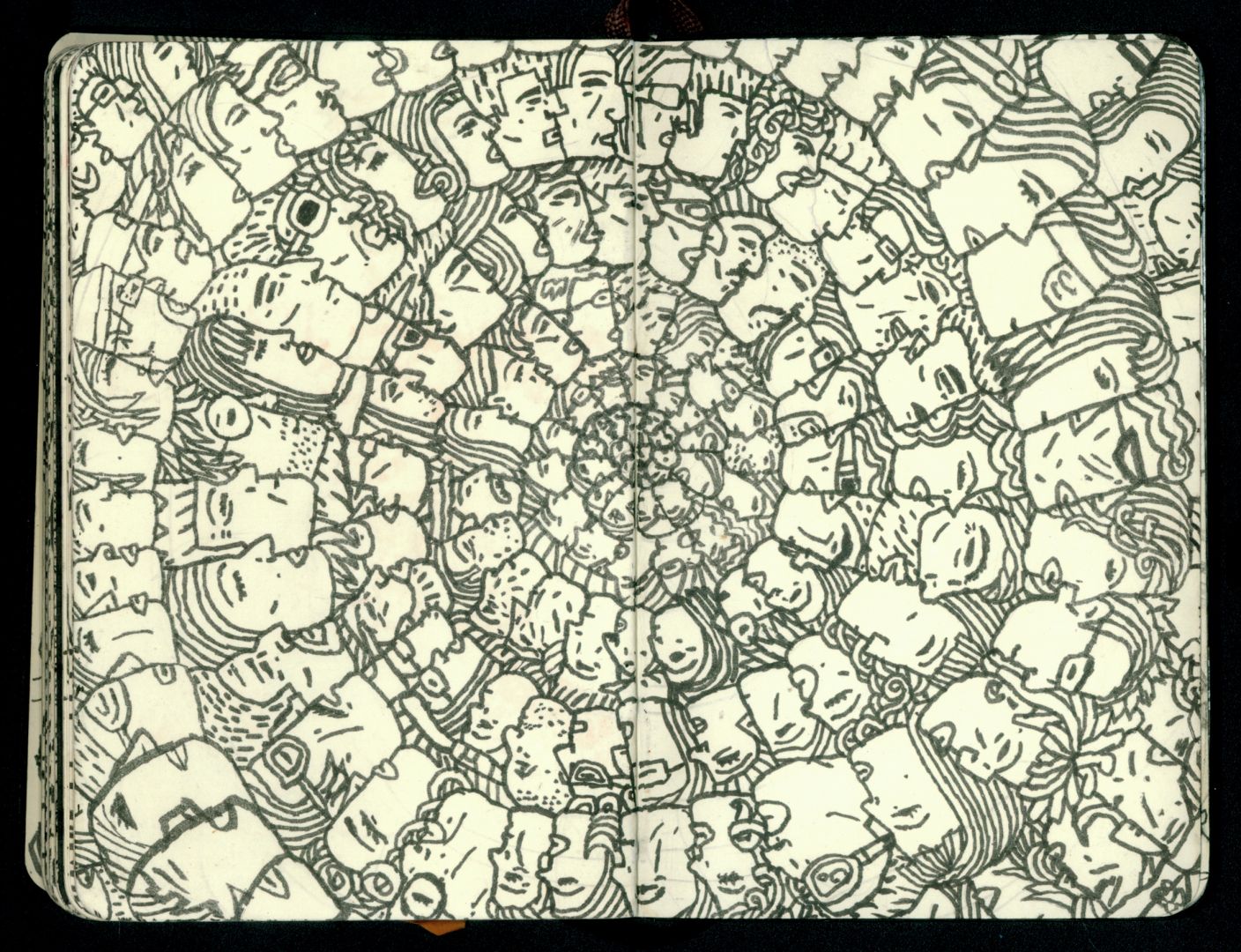
The Sketchbook & Studio Practice are entirely about posing and answering questions about creativity and aesthetics, and reevaluating those questions and outcomes. Making a point to actively try to fail, try to do something that’s wrong, or bad on purpose, and see where this leads has been a big part of it also. Often my students look at me sideways when I suggest this but I lead them through a series of steps and challenges that bring them around to its value as a part of one’s practice.
I can’t tell you how many times a drawing or work that I’m unsure of or don’t think is very “good” has become something that solves a problem for someone and becomes a work that is celebrated as having and revealing a pertinent meaning or experience.
The first time I sold a large work of art to collectors I was in the gallery when they made the decision to own it. It was the one piece I was entirely unsure of out of the series shown, but lead to the impetus for a new series, and I asked the couple to explain why they chose this piece. Their answers were fascinating as within their explanations and without any backstory they each hit on aspects of some of the rules and risk taking decisions that was the impetus for the work (Titled: System Between). Yet each of their answers were entirely unique to their experience of the piece where they in turn took a sort of ownership of it and was unique to each of them.
I teach a class entirely about risk taking, it’s reward, and developing and deepening intent in light of an infinite array of plastic options and choices. It has become rote that many Seniors in a creativity program will see a blank page, canvas, or wall and freeze up with anxiety, unable to make even a first mark or choice on moving forward. The wilderness of the blank page as absolute freedom too often reduces students to a state of idealogical and aesthetic paralysis. Especially for those who have never considered it necessary to define their intent or be open to trust in letting their intent evolve. As we’ve all been educated in a good/bad valuation system. This is a severe and silly deterrent when engaged in teaching or learning what creativity truly is as true creativity is so much messier than any good/bad valuation. Through a guided series of exercises, lectures, one-on-one conversations, and prompts, by the end of the course students say that now when they see a blank page, blank canvas, or wall, that they can’t wait to make that first mark, dive in headfirst, and explore where it all goes.
Interestingly all fabricators I work with and talk to say the only limits these days in translating ideas into an array of materials are time and budget. It has almost become limitless in therms of how reality has become as plastic as an artists blank canvas, infinite possibilities. But for so many it’s a risk to admit what you don’t know and collaborate with those who can help you realize your intent in unexpected ways.
In the end you are only an absolute authority on your own intent & knowledge and taking the risk to admit what you don’t know and seek out collaborators with their own expertise, intent, and knowledge who can become a part of this greater dialogue is what it’s all about.
Can you open up a bit about your work and career? We’re big fans and we’d love for our community to learn more about your work.
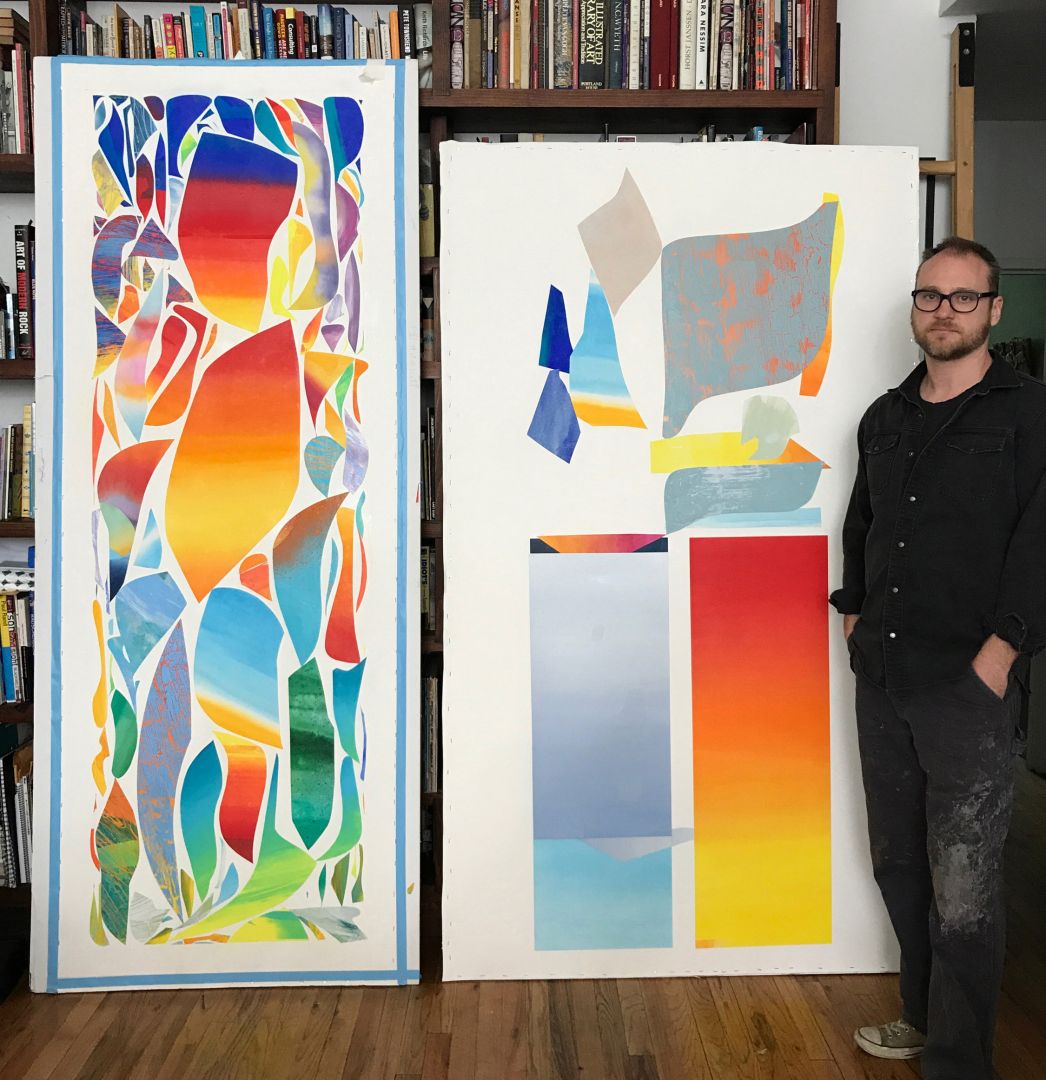
I have a lifelong, evolving, Sketchbook & Studio Practice that informs and relates to my Public Art, Fine Art, and Illustration work. The latter are initially outside of these original concerns and explorations but inevitably the dialogue that occurs between is always folding back upon each other forging new paths and opening doors along the way, yet sometimes completely diverging. The practice looks to be revealing moments, hopefully enduring, of aesthetic experience and meaning all along the way.
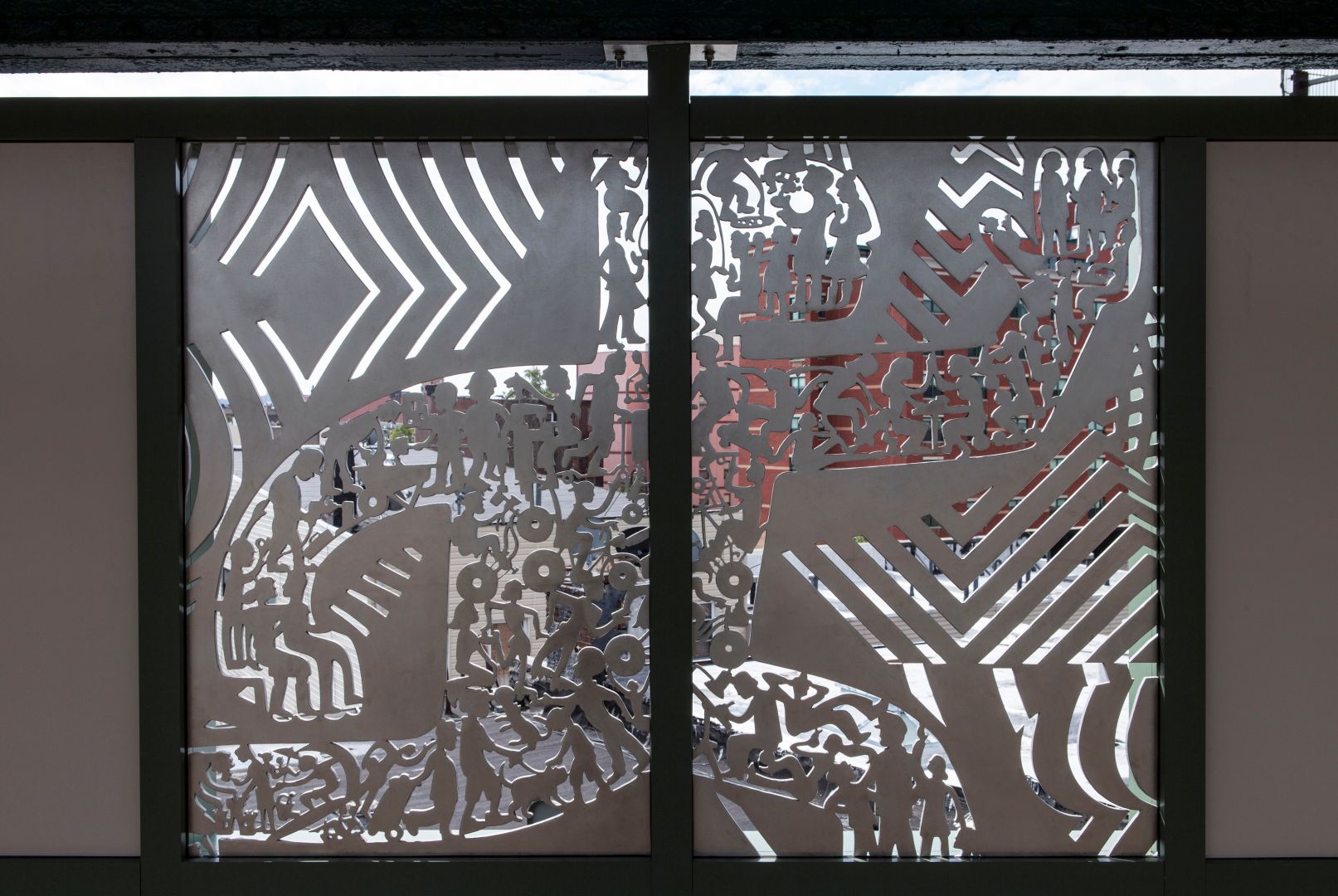
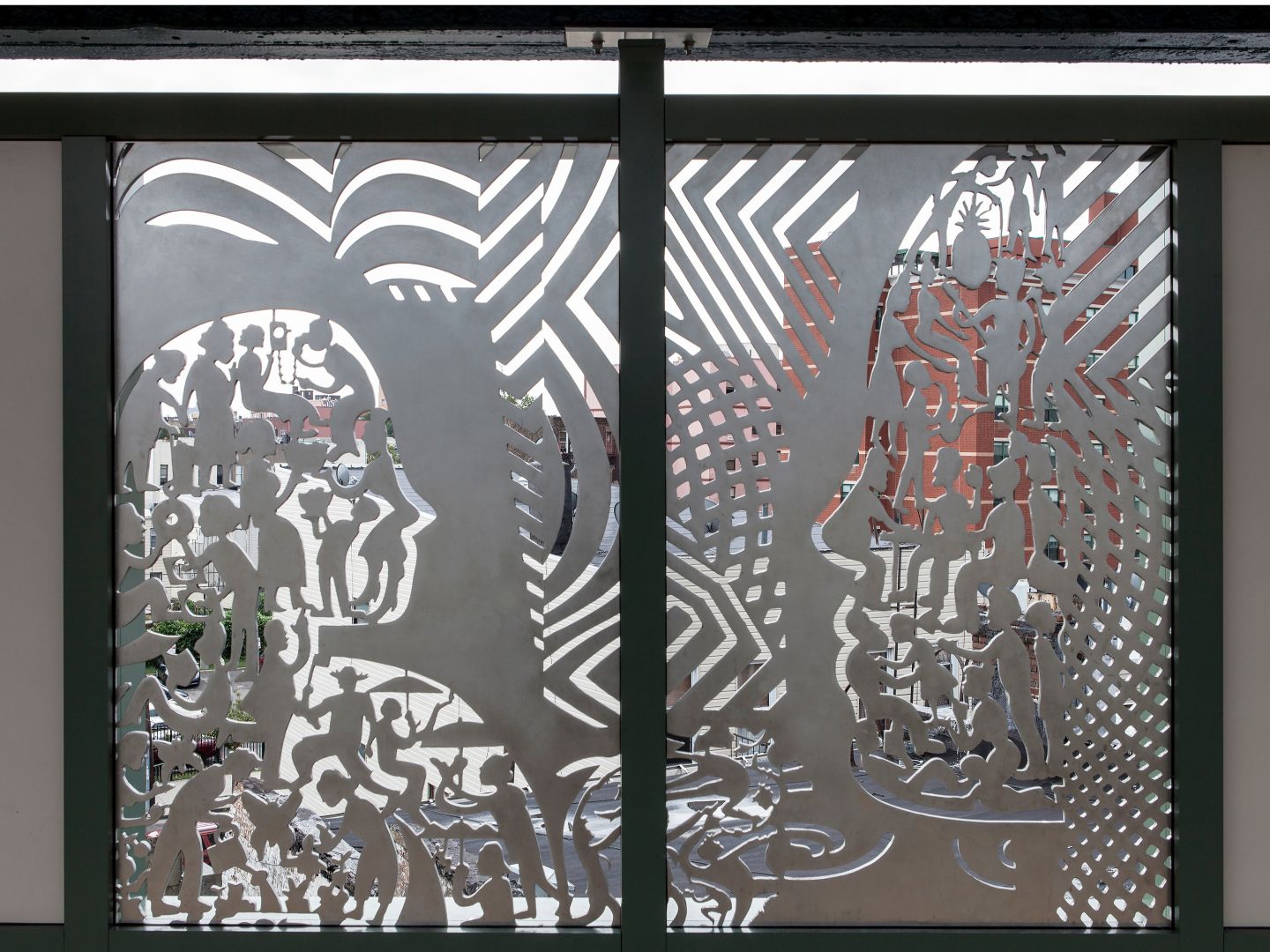
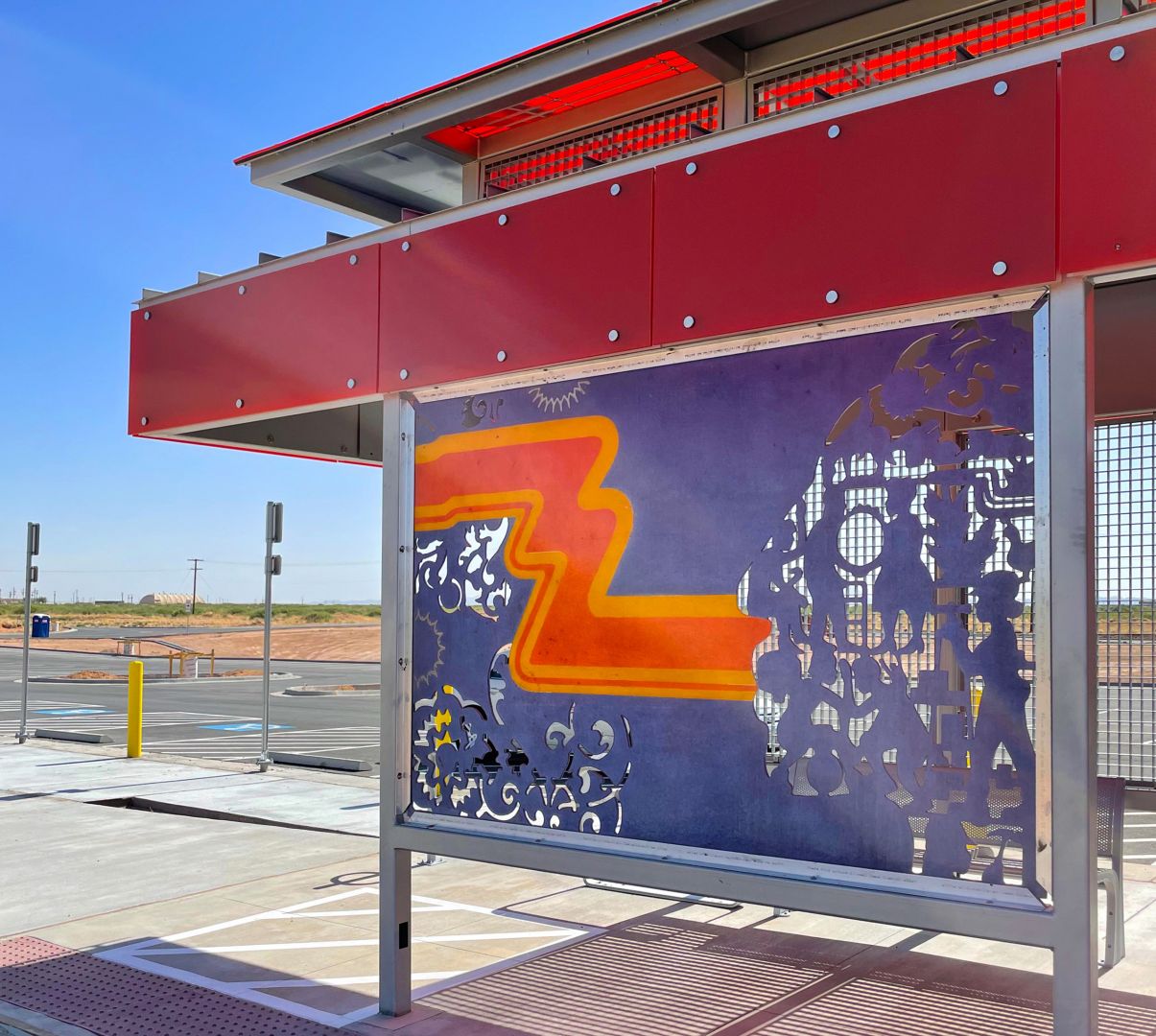
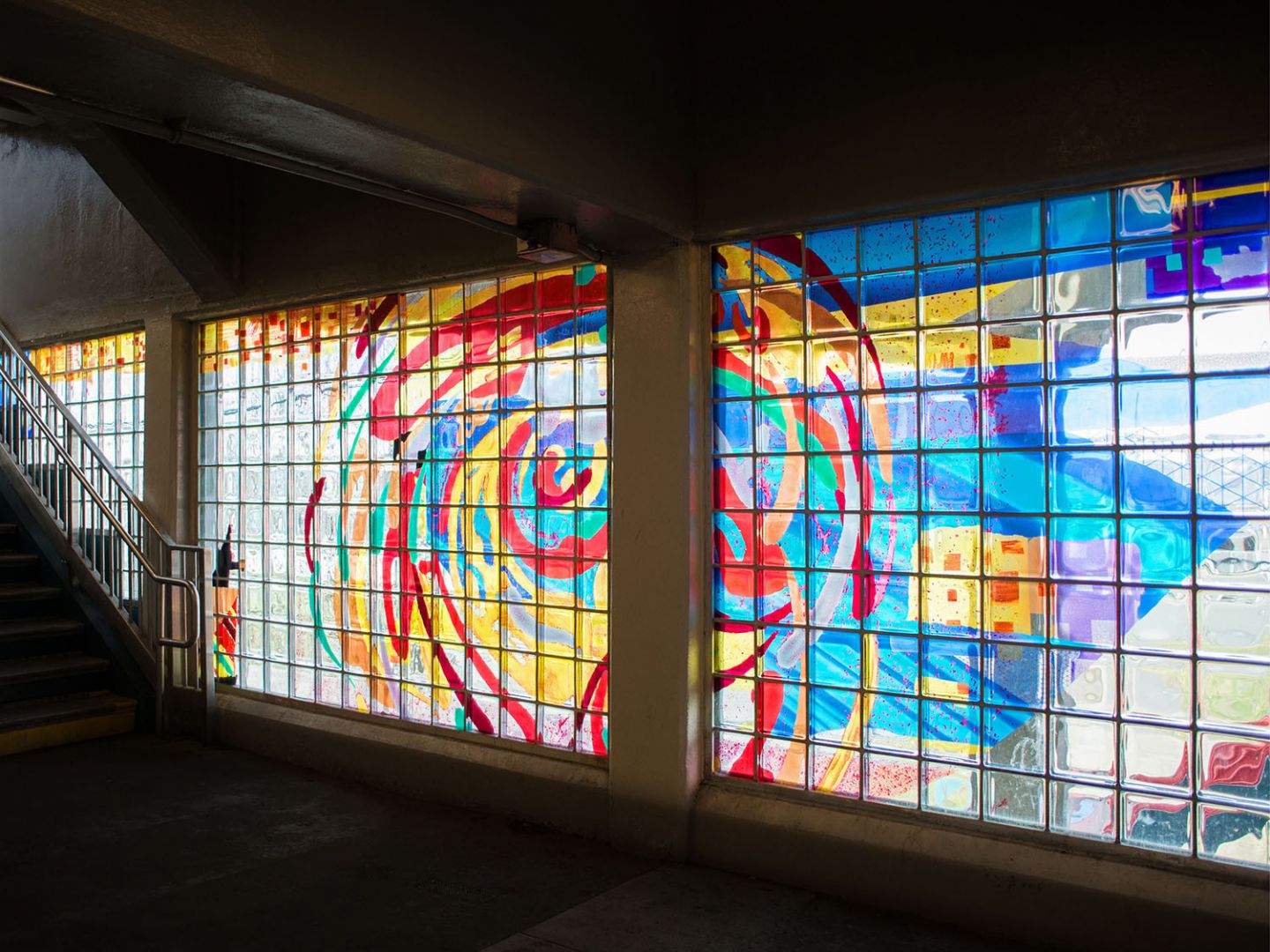
Currently I have ten permanently and temporarily installed Public Art works through the USA with 2 of those in the final phase of permanent installation in 2023.
It’s tough to nail down one moment of significance as the path has been so varied and naturally occurring out of the intent of the guiding stars that form the foundation of the practice.
Id’ say that I’d be proud of how the thread that guides the intent is revealed in the experience the viewer has who either appreciates or cherishes the final experience, takes ownership of it, and makes it their own. When one has a positive aesthetic experience with the work there’s a sort of ownership that takes place. There are almost too many stories to tell in this regard.
”Art is a thoughtful reflection, and a thoughtful reflection is an act of kindness. The world can use more acts of kindness”. I mention this guiding principle in all of my proposals and is a constant driving the intent no matter if it’s commercial, editorial, public art, or fine art. I doesn’t matter what the space, size, or scale is, the intent and drive was to always own the page, own the space, own the wall as another guiding star is a distillation of Susan Sontag’s/On Style—“ It’s more than a statement, it is an experience”. What that experience is, if you nail it, has a value way beyond commerce, but of course it is connected to a commerce valuation (by someone) eventually. Ultimately the only real value of Art is what it brings one to think or feel. Art is using reality avoidance to say something about the very nature of reality.
There are definitely satisfactions to the work, and its best to find ways to do it in a satisfying manner (this can be challenging), but everything from the studio explorations to the managing of projects, is work, and all work is solving problems. Play is the artificial exercise of strength so there is a playfulness to it also, there has to be, but this is secondary to running an active studio practice really. I do tell everyone interested in a similar path that—”You have to be comfortable being uncomfortable (within limits, of course)”. There’s little to no stability and this trajectory is not for everyone. To do this sort of thing requires you to evaluate and re-evaluate your intent, what your valuation system is, how you manage it, and clearly define what you are willing to sacrifice for this intent. So much of it is not what you think it is (unless you are an working artist/creative, then you know exactly what it is), especially with the Public Art projects as most of the large-scale, permanently installed projects, require a great degree of management and sensitivity to an array of issues working with city, state, federal employees, architects, engineers, committees, communities, fabricators, and installers all within designated timelines, budgets, safety, and engineering guidelines and limits.
Often before giving a presentation I can sense a (perfectly understandable) hostility in a room to an artist who is not from the community coming in from the outside or a hostility toward Public Art in general (the “Fix the potholes vs. Art” conundrum) with the fear of something the community doesn’t want being foisted upon them. I always lead a presentation with— “ I don’t make anything , my goal is to reveal something, and what that reveal is relates entirely to the site-specific nature of the project”. And I’m very serious about this. This can take folks off the back foot and ease initial tensions. The interesting thing though is that for Public Art to work you don’t have to like it, but it’s always better when you do. I’ve had all manner of folks approach me after these presentations to say— “ We didn’t know you and we didn’t like you. We didn’t care what you presented, we wanted to reject it because we didn’t like the idea of an artists not from around here coming in to make us live with something we didn’t want. But after seeing your presentation we understand and appreciate that you’ve really listened and we now see the value of the project and support it”.
Art is a dialogue and genuine dialogue makes the projects stronger. This is very different from my Studio Practice which is an individual dialogue guided by a very different set of questions and rubric happening alone over a long period of time with no particular goal.
I warn artists that the management, public speaking and engagement takes a skill and diplomacy that is simply not natural to folks who’s preference is to spend hours upon hours alone in the studio with the work. This had to be learned, I’m not a natural. But I have a history of taking risks in this regard that stems from many years of being in bands, taking the stage, and what that means in terms of responsibility to an audience. I did made a decision early on in this regard though that—“The work has to be that damn good” as this would ensure that I didn’t have to explain, publicly speak on, or work socially to actively sell anything, as the work did that on its own. Take care of the work, and the work will take care of you ethos. It’s funny now though that mostly what I do for these projects is exactly that, explain the work and give public presentations on the intent.
I speak to artists all the time who say they’d like to work on these types of large-scale projects but when I discuss the reality of what it’s like to apply for and manage all aspects of a project some say they’d never want this sort of responsibility and burden (perfectly valid and understandable). This ability to manage a projects, individuals, and committees also comes out of the early years as an Illustrator where every project is a collaborative dialogue going deep into the minutia of details, often with editors and folks who have almost no visual savvy and are quite literally word people.
One of the things that I do like about working on the large-scale public art projects is that whatever I give to a fabricator as my art & design plans, they in turn, through their transformative magic of expertise, translating the art into their respective materials, wind up make the final form of the work better than I ever could have imagined and I get to have an experience of aesthetics akin to as if I’m viewing someone else’s work new and fresh. This has been wholly unexpected and satisfying as it negates the inevitable critique that happens when the maker has been too close to the work for so long. Suddenly it’s fresh and new.
“We build for 200 years”. I was told this by the Manager of the MTA Arts & Design for the first large-scale permanently installed Public Art project I ever worked on. Years later I was giving a lecture on Public Art with the Director of the MTA Arts & Design program and they told me the that the Manager at the time was just messing with me, as they build for 100 years… This didn’t really change the thinking at all, its a long time. Really, is there much difference? The nature of Illustration work is that it’s generally here and gone (but I do think the Prince Paul Psychoanalysis: What Is it?! album art created with Designer Michelle Willems will endure for a lifetime tho, that album is a Prince Paul masterwork…), and with work owned by private collectors anything can happen, but with the public works the longevity of the work within the experience of the public realm is humbling and levels up the degree of responsibility and seriousness of the interactions and intent.
Let’s say your best friend was visiting the area and you wanted to show them the best time ever. Where would you take them? Give us a little itinerary – say it was a week long trip, where would you eat, drink, visit, hang out, etc.
While I was installing the project in Aurora, Colorado the install crew I was working with took me to the Buckhorn Exchange and that’s quite an exotic experience and exceptionally delicious. We also went to the Coors Brewery which was excellent & fun. Highly recommend both.
The Clyfford Still Museum is one of my all time most favorite museums ever! It really drives the point home about what a studio practice really is. I recommend this small museum, first and foremost, to everyone visiting.
I had very limited time while installing the project but I made some time to get up in the mountains for some hiking, and also visiting the Denver Art Museum, and the Museum of Contemporary Art Denver. Definitely get to all of this if you can.
Shoutout is all about shouting out others who you feel deserve additional recognition and exposure. Who would you like to shoutout?
My earliest and most enduring legacy inspiring my path was my Father. He was an Illustrator in the 60’s who became a High School Art Teacher and his ability to concretely explain steps & approaches to creativity, aesthetics, skills, craft, and especially concepts of plasticity, stemmed from the rigorous skill set type of education that was commonplace in Artshools and Illustration training in the 1950’s. This was something I naturally took to early on and mined him for information, of which I utilize in my teaching practice today. He clearly had a tangible depth of knowledge and an ability to communicate what this knowledge is. He also has a learning disability that limits his ability to read anything. This he mostly kept hidden initially yet his intuitive workarounds for the problem had deepened his ability to clearly and effectively teach skills & concepts to a myriad of non-traditional & traditional learners. His teaching was very spatially oriented with clear steps and process driven, but always emphasizing the importance of accidents and intuition to reveal unexpected results and meaning.
In the summers of the early 1970’s he taught Art classes in a Newark NJ youth program that I and my siblings would also attend . We’d take classes for the day with a variety of other teachers while spending the day with other students in to what at the time would have been refereed to as the now retired, un-PC, term commonly used at the time—“Inner City” ( it’s a testament to the dialogue that’s occurred in contemporary culture that the coded language of the past is being acknowledged, no longer used openly, and we are moving forward with every generation taking greater steps towards a more open dialogue and equity on these issues, we’ve come a long way thankfully, long way to go…). Then retuning to our exclusively white/working class enclave after the sessions was profound, complex, and eye opening as a youth. Often I’ve reflected upon this experience as it was the first clear experience of seeing & experiencing aesthetics as social value and how many of the thoughts surrounding preconceptions and conditions of cities are false. It gave me a clear experience of the point of aesthetics functioning and interacting on an individual and community level. But also revealed an entirely different perspective on economics, politics, and race, and fostered a determination to eventually living in a city someday full of dynamic energies, ideas, personalities, and culture foreign to my limited experience.
As someone who had this clear advantage of having a highly skilled Illustrator/Artist/Art Teacher in my home to inform my practice I’ve made a point to bring this learning & knowledge to every educational experience I’m a part of and also adhering to the Sister Corita Kent—Rule #3 GENERAL DUTIES OF A TEACHER: PULL EVERYTHING OUT OF YOUR STUDENTS. I add—Leave nothing unsaid, teach them EVERYTHING you think they need to know to navigate a creative path based on your own real world experience.
My Philosophy of Aesthetics professors were invaluable also as they verbalized that which was always non-verbal and intuitive for me and helped put to words aspects of my studio practice ethos/manifesto. As someone who is mostly visual, words are not my most comfortable realm. I do miss the messiness and looseness of language of the phone era I grew up in, so much more forgiving.
The program I attended at Parsons-The New School in NYC in the 1980’s was (and still is) very progressive in promoting attitudes of dissolving boundaries wherever they existed. I had incredible instructors in this regard including: Stephanie Rose, Warren Linn, Frank Olinsky, Dave Passalacqua.
The biggest shout-out though I’d say goes simply to NYC in the 1986-mid 2000’s as the formative years simply living there within a truly open Wild-West of creativity, music, art, ideas, and aesthetics. The DIY subcultures I ran with engaged in, and thrived on, a creativity on the fringes of society that I have not seen surpassed in sheer inventiveness and profound experience in terms of creativity, diversity, experimentalism, self actualized individuals, and community. Of course I firmly believe that this creative spirit is ALWAYS happening somewhere, on the fringes. The question is always —Are you tapped into it? When you are young, this is the time to really indulge and investigate this, as I tell my students that School isn’t necessarily learning. The dialogue and acceptance that was happening at that particular time within the circles I traveled in has become a part of the conversations at the center of culture now and many of those fringe ideas, attitudes, art, and music are considered normal or even passé now. It’s been refreshing to see how much of this dialogue, diversity, and acceptance has become a part of mainstream culture.
x 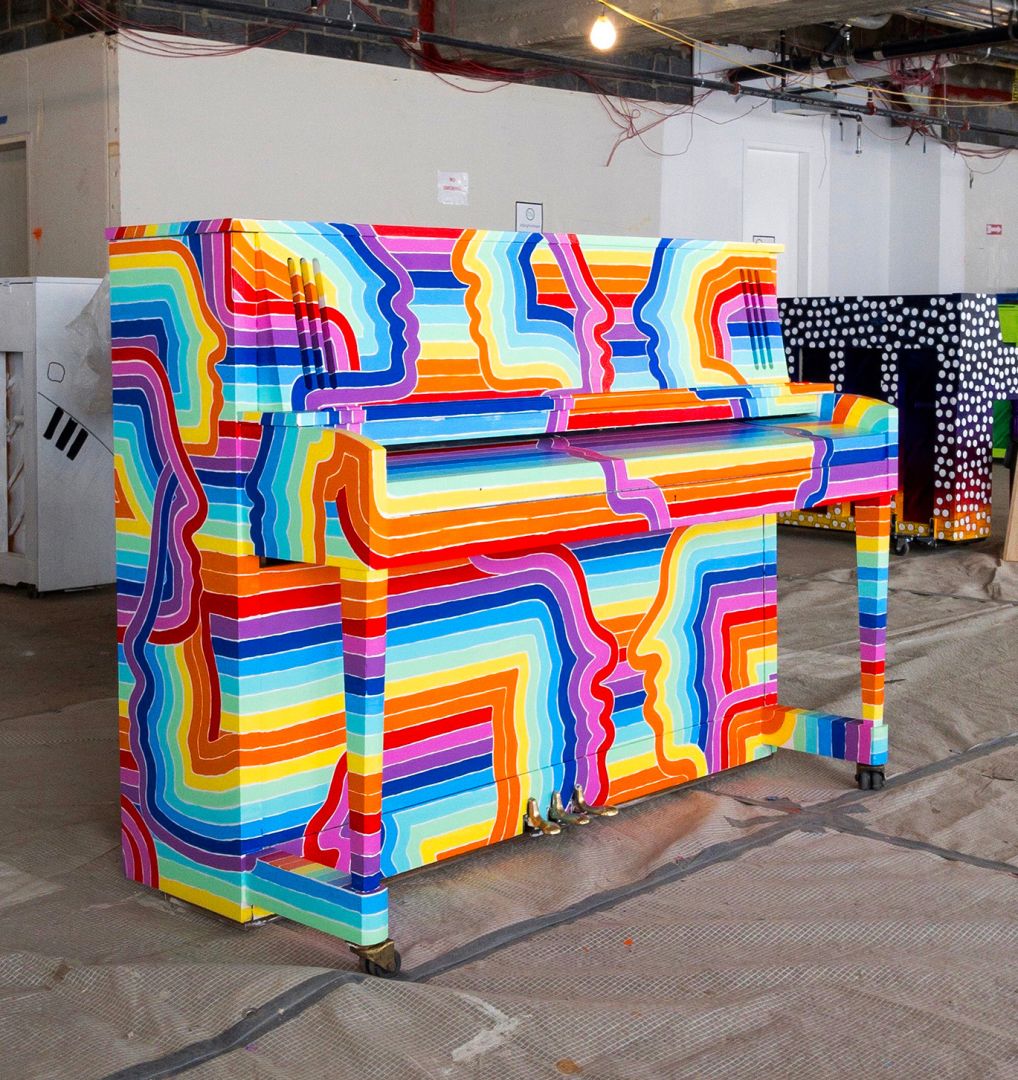
Website: www.georgebates.work
Instagram: @bates_george
Linkedin: https://www.linkedin.com/in/georgebatesstudio/
Other: www.bates_george.tumblr
Image Credits
Personal/Subway photo: Sven Hoffmann (Bushwick NYC, Year: 2000) All other photos: George Bates Studio and Andreea Waters