Meet Amanda Weaver | Sustainable Urban Farmer


We had the good fortune of connecting with Amanda Weaver and we’ve shared our conversation below.
Hi Amanda, is there something you can share with us that those outside of the industry might not be aware of?
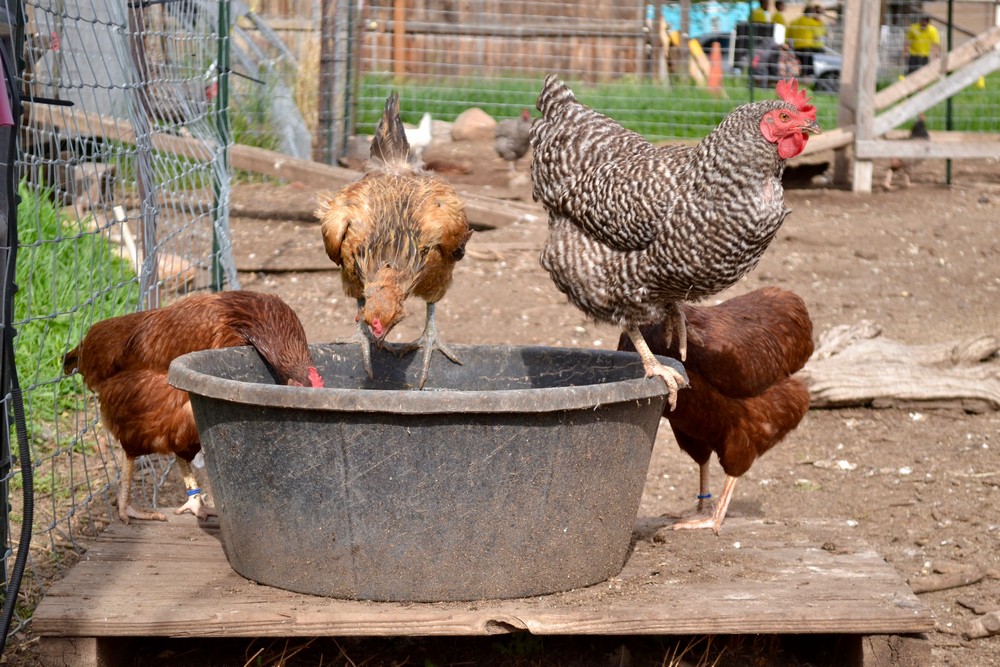
Most consumers look at small farms as one of two things 1) a place where they can pet animals or 2) or a place where food comes from. The difficulty is that farms work on their own system of seasonality and annual rhythm. For example people are always surprised (and disappointed) to learn that chickens do not lay a consistent amount of eggs all year. They also do not connect that if I take an animal out of production due to a health issue, that will mean less of that product (in my case, yogurt, cheese, or eggs) is available from the farm.
At the same time, they see the animals, connect with the place called a “farm,” and want the animals to be treated humanely, etc However, they still demand food products on their schedule ( which comes from food being sourced from large industrial farms around the globe.) That perpetual availability (lack of seasonality)in the grocery trade is called the Permanent Global Summertime. In the US we teach that demand from a very young age— start with the recipe, rather than learn what is local, seasonal, and available.
 Can you open up a bit about your work and career? We’re big fans and we’d love for our community to learn more about your work.
THE SHORT VERSION
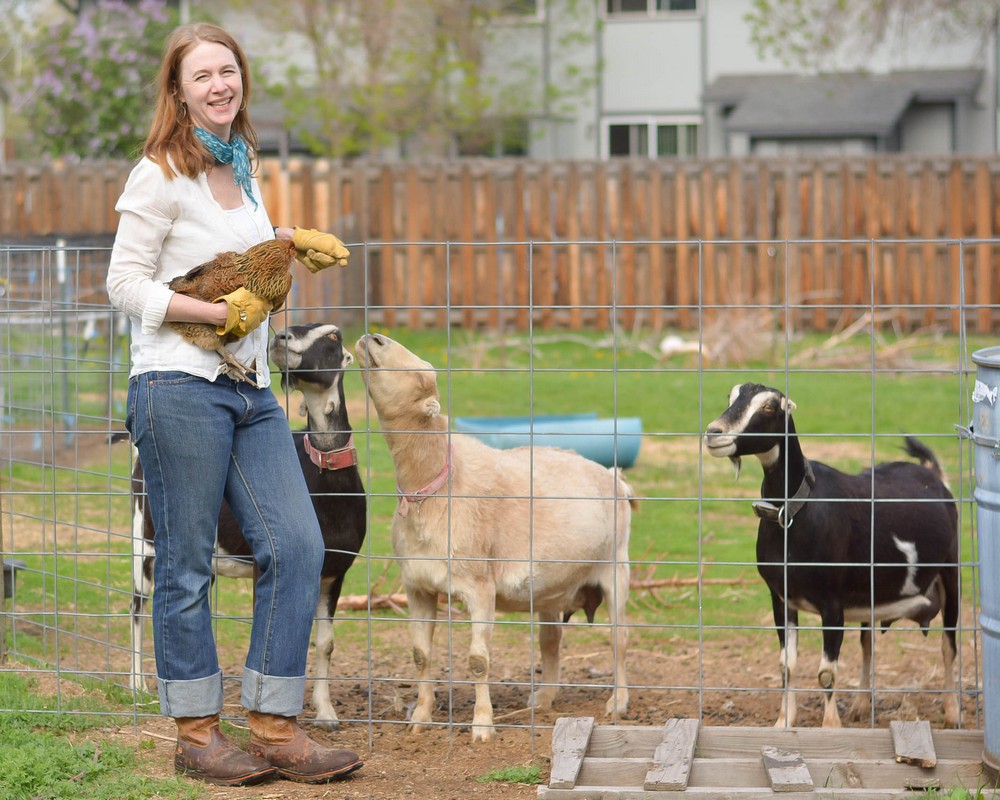
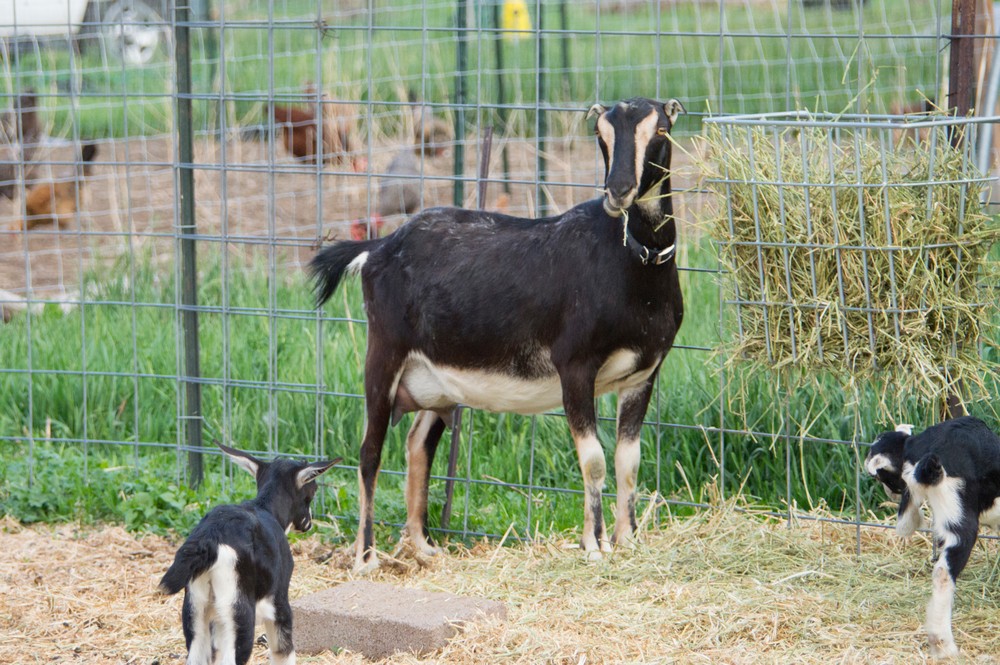
I am a local Wheat Ridge, Colorado resident and owner of the 13-acre sustainable urban farm, 5 Fridges Farm. While finishing a dissertation on the viability of local food production in Colorado, I apprenticed with long-time Wheat Ridge resident and city founder, Louis Turner, with dairy goats in the urban environment. Later I bought the neighboring historic farm from her and started my own herd of dairy goats. While teaching at CU Denver, I now maintain dairy and weed grazing herds, flocks of chickens and turkeys, hives of bees, as well as growing a variety of vegetables for local restaurant sales. I use my farm as her research lab and classroom, teaching urban agriculture, sustainability, and environmental science.
THE LONG VERSION
As a granddaughter, world traveler and geographer, I have had a lifetime fascination with people’s connection to food and land. During my dissertation research on Colorado food production and distribution, I observed that the increase in popularity of “local” food by urban populations parallels the exponential loss of local food production land due to development and water use. It seemed ironic that the same urban populations buying “local”and “organic” were also those buying homes on newly developed former farmland acreage. It also seemed as if no one had any idea that farmland, good prime agricultural land with water, is a finite resource.
So I went about trying to understand ways that prime farmland/ranchland could be saved when faced with an encroaching urban land use value system- “highest and best use.” About that time, I started apprenticing with Louise Turner and bought the farm with its conservation easement already in place. At the time, however, that only meant to me that I could afford 13 acres of farmland in the middle of the city to have the farm of my dreams. I would realize later that this is one of the best ways, when faced with higher land values around urban areas, that farmland can stay in farm use and how younger un-landed farmers can access (via buying or leasing) land for production close to urban centers.
Since buying the farm and soon after finishing the dissertation, my work changed to that of farming. But, unconnected, finite, conserved urban farmland requires a different philosophy than conventional rural farming. First, there was the disconnectedness. In an urban area there are no other farmers to connect to for labor, machinery, or knowledge. All input and outputs had to be rethought due to the implements and resources available. Next, the farm boundary, while large by urban standards, is finite. At the farm, there is no “over there”, away from everything. Everything at the farm comes in and goes out on a truck, or it stays somewhere at the farm. Every growing area, wildlife habitat, grazing area, or human space affects each other. I quickly realized that the legal conservation tool of an easement was just the beginning of sustainably managing one space sharing agricultural, wildlife, and human habitats.
Due to these requirements, all projects at the farm are evaluated for their full “life-cycle” attributes. What do they bring? What do they leave? Do they help or hurt current systems? From animal carrying capacity to soil redevelopment to water use– “sustainable urban farming” is not just one solution, but many functioning side-by-side and changing all the time.
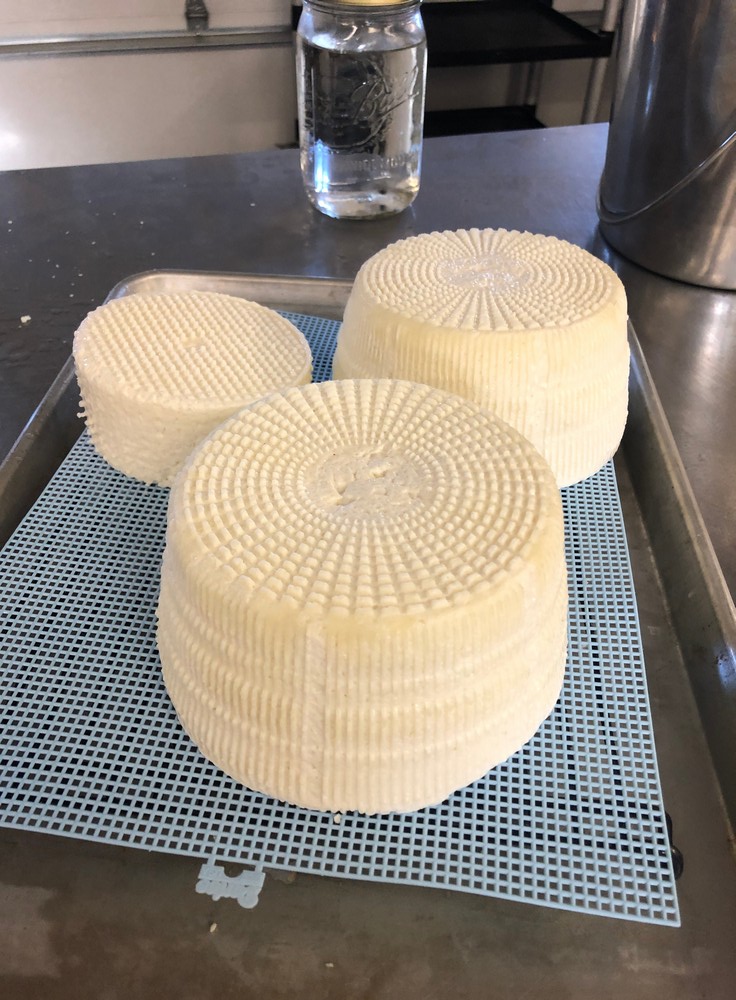
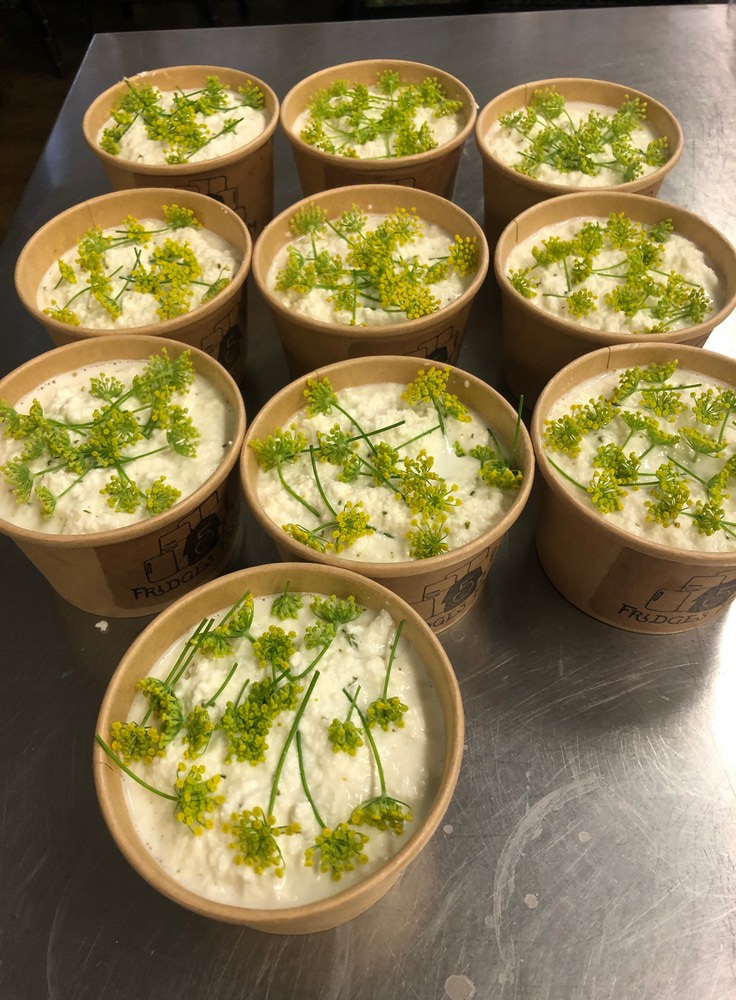
It is all of these thoughts and activities that went into creating a truly sustainable farm business. 5 Fridges now also produces yummy dairy products ( cheese and yogurt) as well as local eggs put in containers that are either returnable, recyclable or compostable.
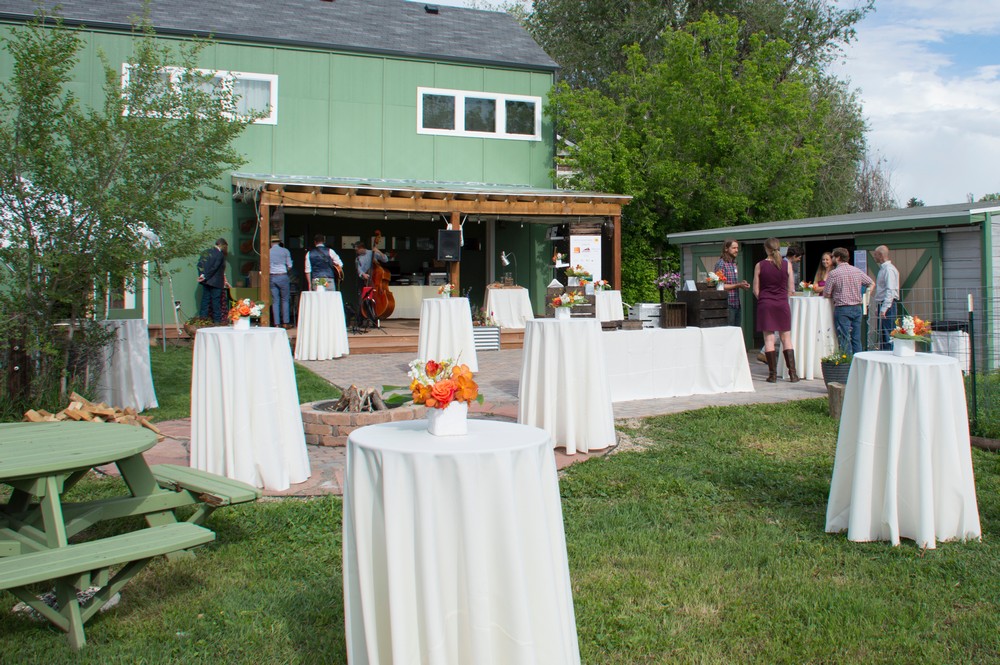
There are two different ways that products get to market from 5 Fridges. Because of a day job and the risk of selling dairy off-farm ( in Colorado), I do not sell at farmer’s markets or in local stores— I make my customers come to the farm to pick up. I use two methods to market and sell. 1) Weekly and Monthly shares of cheese, yogurt, eggs, and raw milk. 2) A monthly online farmer’s market that includes my products as well as other producers from around the state. The two methods work because I have customers willing to take on the risk and responsibility of “shares” for a slightly lower price (and higher availability) and then I have another group who wants the security of only remembering a once-a-month pickup, the ability to choose an amount, and the variety of my dairy as well as grass-fed meat and vegetable products from other Colorado producers.
Most of my “marketing” however is in the rotational grazing program that I do with the City of Wheat Ridge and a fairly large local Instagram/fb following. The goats are in the local parks and the goats are being paraded/herded down local streets and the community is always invited to join the fun. My goal is to educate more urban people to understand and access local small-scale and sustainable production. By bringing the farm to them via social media and actual interaction at a local park, they will begin to ask more questions and maybe even visit the website. As I tell people all the time, “I don’t care if you buy my products, I care that you buy from a local and sustainable producer.”
If you had a friend visiting you, what are some of the local spots you’d want to take them around to?
Colorado Plus Brew Pub in Wheat Ridge Rent a bike and bike Clear Creek Open Space and Biking Trail from Wheat Ridge to Golden
Golden Farmers Market
Activities at Happiness Gardens– the community garden and producer space in Wheat Ridge run by Wheat Ridge Parks and Rec
The Shoutout series is all about recognizing that our success and where we are in life is at least somewhat thanks to the efforts, support, mentorship, love and encouragement of others. So is there someone that you want to dedicate your shoutout to?
I would like to dedicate this to two grandmothers (Harriet Weaver and Nadeen Read) and a mother (RuthAnne Weaver) who taught me to forage berries and mushrooms, cook over a fire, paddle a canoe, fix a leaky toilet, make jam, bake bread, and grow food. It is they who mentored me early so when the opportunity came up to buy a farm on my own— I said “yes” without hesitation.
Website: 5fridgesfarm.com
Instagram: @fivefridgesfarm
Facebook: 5 Fridges Farm