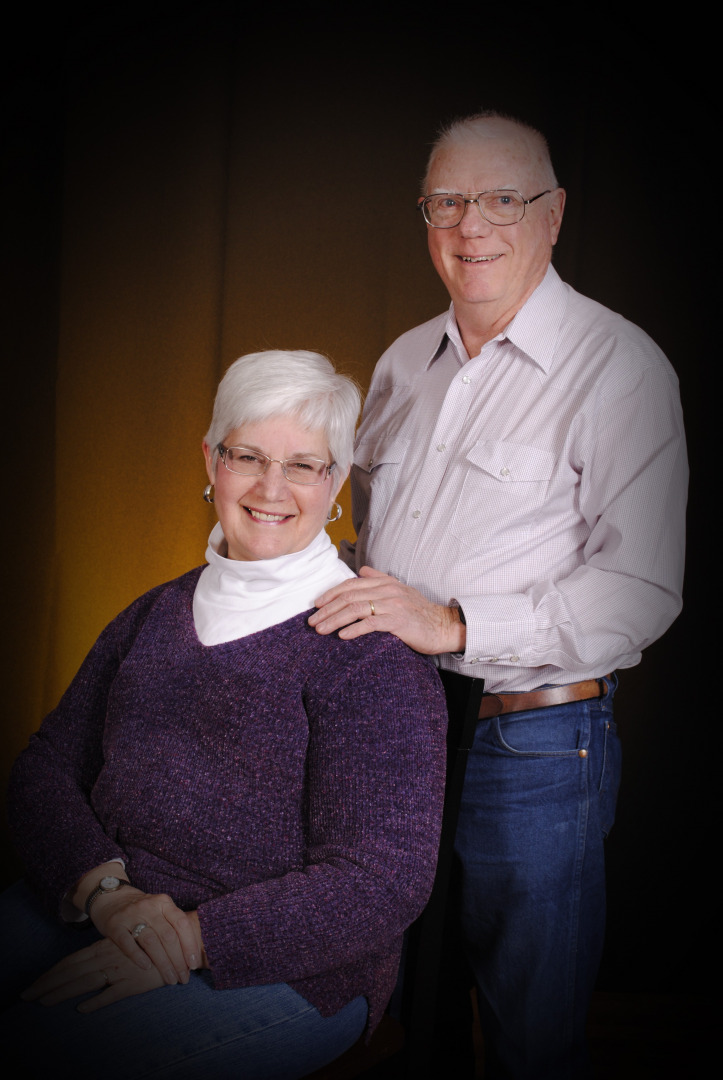
Meet Howard “Cork” Hayden | Professor Emeritus of Physics, UConn.


We had the good fortune of connecting with Howard “Cork” Hayden and we’ve shared our conversation below.
Hi Howard “Cork”, we’d love to hear more about how you thought about starting your own business?
Well, as a money-making business, it is no success. I write a monthly newsletter about energy, and it’s a bit too technical for the general public. I just started my 30th year (the 26th since retirement). The whole idea was to consider all sources of energy with enough detail so that specialists in one field could get a good grounding in another, yet without getting too much into the weeds. For example, all energy sources that are ultimately due to the sun should be evaluated on the basis of how much energy they produce in a year on how much land area.
Another matter is efficiency. Few people know that the Rumford fireplace, which was invented in the early 1800s, was a big improvement, because it was not only less smoky, but the efficiency was a whopping 9 percent. Here we are in the 21st century with central heating, air conditioning, automobiles, trains, airplanes, electric washers and dryers, radio, television, the internet, and cell phones, but we use only about three and a half times as much energy per capita as our colonial ancestors. The reason? millions of incremental improvements in efficiency. It has been my mission to deliver this kind of information to interested readers.

Let’s talk shop? Tell us more about your career, what can you share with our community?
My Ph.D. project was chosen for me, and I was given a small laboratory that was originally a bedroom in married-student housing at the University of Denver. There were some kitchen cabinets and counters on both sides of the room, but otherwise not so much as a screwdriver. I had to buy or make literally everything to make a small accelerator, then figure out why it didn’t work as hoped. I had to learn a bit about how to focus a beam of ions, and that helped me throughout my career. Most notably, another professor’s graduate student was having fits trying to get a poorly designed accelerator to work, so I stepped in with nothing more than a sketch; a weekend in the machine shop and he had a working accelerator.
Many scientists are experts in deciding that a certain experiment is very important to do and writing proposals to funding agencies (NSF, DOE, etc.) to convince them to support the project, I pretend no expertise in figuring out what atomic-collision experiments should be done next or even what the particular importance is of any such experiment. I’m more of a gadgeteer.
When I was in college, a non-science friend asked me about windmills. I did some looking in a reference book and found that the results of some experiment were expressed in horsepower-hours. What would those numbers be if expressed in BTUs, kilocalories, foot-pounds, ergs, joules, or watt-hours? There was a clue staring me in the face: energy experts cannot understand one another unless they use a consistent set of units. Since the Imperial system (with 12 inches per foot, but inches divided into sixteenths) had no electrical units whatsoever, the only choice was to go metric. My first paper specifically about the energy problem was “Rosetta Stones for Energy Problems,” published in 1981. It showed how to convert bizarre units into the International System of Units, but not how to from the rational to the irrational. My hope is to bring the US Energy Information Administration (eia.gov) into the 20th century before the rest of us get out of the 21st.
My post-retirement “career” has been about energy. Energy drives everything, and our sources need to be reliable. When some disaster hits somewhere, the news media immediately comment that “400,000 people are without power” or some similar remark, indicating that they understand the importance of reliable power. Wind and solar are notoriously unreliable. In principle, they can be made reliable with adequate backup, but how many days’ storage would be required to achieve the high reliability we need?
Let’s say your best friend was visiting the area and you wanted to show them the best time ever. Where would you take them? Give us a little itinerary – say it was a week long trip, where would you eat, drink, visit, hang out, etc.
At the risk of sounding like a lawyer, I’d say, “It depends.” For somebody interested in scenery, I would suggest Liberty Point, Westcliffe, the Royal Gorge, and Skyline Drive. A trip to Pikes Peak is a must. For longer trips, I would suggest the Black Canyon of the Gunnison, Ouray, Silverton, Durango, and Mesa Verde. Grab your camera!
For somebody with an interest in local history and culture, I would recommend Union Depot, the Pueblo Heritage Museum, Union Avenue shops, El Pueblo History Museum, the Sangre de Cristo Arts Center and associated Buell Children’s Museum, Rosemount, and (dear to my heart) the Pueblo Weisbrod Aircraft Museum.
The Shoutout series is all about recognizing that our success and where we are in life is at least somewhat thanks to the efforts, support, mentorship, love and encouragement of others. So is there someone that you want to dedicate your shoutout to?
It’s all about learning, and you learn a lot from mistakes, so I have to give credit to a thousand mistakes I made. Do not expect a list.
To my regret, I have little memory of the names of my teachers at Thatcher Grade School in Pueblo. A memorable event occurred in 2nd grade when our teacher told us that the “wh” (as in “where”) should be spelled “hw” (as we do with Chinese names like “Hwang”). Only later did I find that people on the East Coast pronounce “where” as “wear” and “why” as “wye.” New Yorkers find it appalling that we pronounce “marry” and “merry” the same. My sixth-grade teacher was very good at math.
My academic career was spurred by Mrs. Nicholson who taught eight-grade science in Aurora when we had our classes in barracks at Fitzsimons Army Hospital. It would be wonderful if journalists who comment about energy matters knew half of what she taught us. My biggest influence in Aurora High School came from Rolla Rissler, with whom I maintained contact until his death, In college, it was Mario Iona. My professional career started when Nyle Utterback hired me to work in his lab and continued with Robert Amme as my Ph.D. advisor. It was Edgar Everhart who hired me as a research assistant at the University of Connecticut, where I spent the next 32 years teaching (unless you go by what students learned) and doing research (mostly with accelerators).
Other: corkhayden@comcast,net