Meet Jay Flotte | Jay Movement Coaching: Strength Coach & Political Consultant


We had the good fortune of connecting with Jay Flotte and we’ve shared our conversation below.
Hi Jay, how has your perspective on work-life balance evolved over time?
Deciding to start my business was an idea that came to me during the “great retirement.” Basically a year long solo retreat where I practiced balancing life over work after I had burned myself out. I quit a nonprofit job of 3 years where I was a political and community organizer. I put everything into that job, I lived and breathed it. This was to the detriment of some relationships, the biggest being the one with myself. During retirement I watched houses and dogs and did small gigs. I didn’t have a 9-to-5 for over a year and I still don’t. During this time I rested a ton, I took trips for pleasure instead of work, I stayed in my apartment and did nothing for days, I started to heal my relationship with myself, I came out as non-binary to my queer community, I transformed my relationship to productivity and labor, I grieved my dad who we lost to COVID, I grieved the immense loss of life in the pandemic, I grieved the seeming callousness of our institutions towards our pain, I grieved political losses, I grieved my old job and the vision I had for my career. I canceled plans because I was tired or sad and didn’t feel bad about canceling for the first time.
And I started new movement practices. I relearned how to pay attention to my body, how to do something hard that was for me and not anyone else. In some ways I learned how to be in my body for the first time as the authentic me, I experienced gender euphoria for the first time, and resistance training ended up being really central to all of that. I was experiencing a lot more joy while I practiced living into my power as the real me. So I started to really study the science of strength training and the craft of coaching to see if it was something that felt like me. If I hadn’t taken so much time away from traditional work I don’t think I would have had the space I needed to build the confidence that was needed to leap into entrepreneurship. I still have some moments of guilt or disappointment where I’m like, “you’re just scraping by now and you had a ton of money saved up you just blew through” but f*ck that I needed that year to go deep into my healing and my happiness is averaging much higher now because of it.
I’ve really focused on being a better partner to myself and now I’m ready to show up for my community again in a more sustainable way. Showing up through my jobby job but also in my personal relationships. Now my priority is my mental health and my relationship with me over any other labor. That’s balance for me right now. Your relationship with yourself sets the tone for every relationship you have.


What should our readers know about your business?
We’d love to hear what sets you apart from others, what you are most proud of or excited about. My Movement Values
My values as a coach- Queer & Trans Inclusive, Gender Affirming, Body Positivity & Body Neutrality, Trauma-Mindful, Anti-Capitalist & Anti-Racist, Anti-Diet Culture. My values come from being in social & political movement organizing spaces and being in relationship with people across difference who are moving collectively towards the same goal.
Many of my clients are brand new to exercise, training, and gyms. Or they may carry with them negative past experiences related to fitness. My approach is to provide space for clients to work towards their own power and liberation at their own pace. I try to be a resource for my clients to talk through negative experience in movement space, negative self talk, imposter syndrome, supremacist thinking, anti-fatness, toxic fitness culture, body image expectations, gendered expectations, and other internalized oppressions.
My approach as a coach- I see coaching as a collaborative effort combining my expertise on strength training and my client’s expertise on their own body. Because I work with bodies I am mindful I work with trauma. I practice consent around physical touch and the intensity of a lift. I work to develop my lifter’s sense of their own strength potential by gauging their effort level through a scale called rating of perceived exertion (RPE), and am mindful that our strength potential is influenced by life factors outside of the gym. We often do soft check-ins on the lifter’s physical body, emotional body, and energetic body or brain which may influence the numbers I have planned for that day. We talk about goals and progress that are not only seen, but felt. I personally prioritize training as a big part of my mental health management for anxiety, depression, and ADHD. Some of my clients want to open up that conversation as well and I am excited to be learning and sharing more about how we can use movement to train our nervous system.
Most of my clients identify as queer in some way, most are women and non-binary, most are not cis-het. I love working with everyone but of course I have a special place in my heart for trans and nonbinary siblings. I didn’t learn how to build relationships with my clients from my online certification. I’m not unlearning patriarchy from my continuing education credits. My coaching approach has been honed from my years as a student, school teacher, community and political organizer, and navigating a cruel capitalist society as a working class queer person. There are a lot of well-meaning trainers and gyms who I believe have a lot of work to do on anti-oppression and inclusiveness, especially when it comes to body and gender diversity. I don’t have all the answers but I am committed to forever working on getting it right and being accountable to my community.
My Strength Coaching Methods- My strength coaching niche is being a barbell strength training expert. One thing that sets us strength coaches apart is our interest in lifting heavy sh*t, believing you can too, and teaching you the most efficient and progressable way to do it. I specialize in teaching people to squat, bench, deadlift, and overhead press, and at least 5 different variations of each of those lifts. My clients get strong! And it’s easy to see their progress because they are lifting more weight.
Barbell strength training is unique for several reasons. While some classes and coaches set their timers and challenge clients to complete X number of repetitions in a minute or X number of exercises in 20 minutes, the only time I use a timer with my clients is to make sure they are getting 2-5 minutes of rest between heavy sets. If you can get back to your set in less than 2 minutes, you’re not lifting heavy! You don’t have to lift this heavy on every exercise, but learning to do it and do it well is my craft. It’s also my personal preference for pace of intensity, and this slower more measured way of approaching hard reps with high quality technique is the magic of the iron game, baby.
This pause in intensity allows the lifter to settle their nervous system, recover from some muscle fatigue, check in with their body, get some coaching tips and reflect on the meaning of life with your coach or training partner and get ready for your next set. This cyclic nature of strength training offers more time for coaching and community. It has also been compared to exposure therapy in the similar way it trains the nervous system in small increments and is one of the elements being studied by the amazing crew at Trauma Informed Weight Lifting. (check out this recent article “The Healing Power of Strength Training” in New York Times by Danielle Friedman)
I teach people to squat, hinge, press, and pull with a technique that is efficient and repeatable for their body. My clients become masters of their technique! Those movement patterns are modifiable to any body, and can be done with barbells, dumbbells, kettlebells, bodyweight, and negative bodyweight with assistance. They remain staples in all my strength programs whether my client is training for a powerlifting meet or training to bring in the groceries in one trip or play sports with their nieces, nephews, and niephlings. Once you feel confident with those movement patterns I believe the technique principles you have learned set you up well to do everything else people do in and outside of a gym. I teach my clients about biomechanics for lifting, programming concepts for strength development, relevant anatomy, physiological concepts, and general nutrition.
We add in various exercises specific to a client’s goals and preferences aka the fun new sh*t that keeps things interesting. I work with clients who have hypermobility or Ehlers Danlos Syndrome, chronic pain, shoulder mobility limitations, and more. Everyone’s training may look a little different and we are all getting stronger.
What do you want the world to know about your story?
As a kid I was in Scouts and loved hiking and camping. I played organized baseball and basketball but I never quite felt like I fit in with the boys there and I never felt a sense of belonging with other athletes. I was a small, physically awkward, weird kid. At least that’s how I was made to feel in a society that tells you to toughen up and/or shrink yourself based on body parts. Weird, right? I played backyard football in middle school in a way that punished my body. During High School wrestling at an all boys school I was still punishing my body and trying desperately to prove myself. But my body always knew I wanted to move at a more intentional pace, and it knew I needed to be in a softer, queerer, more supportive space. As out of place as I felt in high school I fell in love with lifting weights because I could go at my own pace, make it my own, and focus on how I felt in my own body without competing. Today I am the softest weirdo and I’m so happy about it.
What do you want the world to know about your brand?
Two things! 1) I want to help people get moving by adding resistance training into their life. One of my clients recently said “I like lifting because it’s doing a hard thing for a reason,” followed up with how hard day to day life can be for seemingly no reason(the reason is racial capitalism and patriarchy). 2) I want people to cultivate joy & power in their life. I believe there’s trauma organized into our lives against our will. So we must be intentional about organizing Life, Joy, and Pleasure into our daily lives as much as we can. When we are doing that we are living in our power. This is why Jay Movement Coaching exists.
How did you get to where you are today business-wise. Was it easy? If not, how did you overcome the challenges? What are the lessons you’ve learned along the way?
I’ve never thought about owning my own business. I thought that was something for other people with inherited wealth. But go figure my dad was a small-time lawyer and my sister is a therapist in private practice. Both built their own path and their own businesses. I guess there’s something in my family that goes against the grain of bosses, wage labor, and punching a time clock when someone else tells us to. We’ve always led with our values and put people before profit.
I’ve learned a ton about the fitness industry and it’s mostly not great. Strength training is not usually marketed by or for people like me. Which is funny and weird because lifting weights was marketed towards the person I was socialized to be, a straight white cis man. But are not for me now, a pansexual femme-of-center non-binary person. While there are amazing coaches out there who’ve been carving a path for me to do what I’m doing, still the social media algorithm crowds my Instagram feed with bro-gym sh*t and Youtube ads telling me what is “killing my testosterone” and making me “less of a man.” Jokes on them I guess! Gyms are also often sites of oppression where inaccessible facilities, unhealthy culture, and working conditions uphold systems of oppression. Gyms are often not safe for people with marginalized identities, especially women, queers and gender non-conforming people. Commercial gyms often have anti-fat and weight-loss messaging everywhere, partner with bogus supplement companies, and the staff are often paid sub-living wages with no training on how to serve gender-diverse or BIPOC communities. Ilya Parker of Decolonizing Fitness coined the term “toxic fitness culture” that describes all those qualities, and toxic fitness culture is unfortunately the status quo in Denver. I do not go to the commercial gym as myself, I choose to filter down my queer brilliance so I don’t feel eyed and othered. This is a privilege I have and not an option for many in my community.
I’ve learned that we can do so much better! Personal training certifications are overwhelmingly inadequate. All the well-respected ones, including mine, are full of anti-fat rhetoric, white body supremacy, and no socioeconomic lens on health issues i.e. access to nutritious food, access to safe exercise facilities, affordable equipment and access to high-quality coaching. As coaches committed to doing better we have to learn from other coaches and, I would argue, social movements.
Unfortunately, the fitness & wellness industry is set up in a way that often makes good strength coaching expensive for clients and not especially profitable for coaches/trainers.
In the world as it should be, your health insurance would cover the cost of strength coaching because we coaches operate as a part of the healthcare continuum and in my opinion provide essential services to our community. Furthermore in a perfect world personalized movement coaching would be seen as a common good and a right for all people, and not as a commodity. Because we don’t live in that world, I have a sliding scale for people who are low-income or unemployed.
I want everyone considering a fitness journey in Denver to know 3 things:
#1 you are in control of your destiny. In a world bombarding you with cisheteropatriarchy, working us to death, and traumatizing our ass, you have the power to organize some joy and health into your life. My practice and that of other coaches like me is born out of a passion for serving my community and a desire to disrupt an industry intent on profiting from our pain. I
#2 We see you and we are here to move with you. Denver has amazing queer and trans, fat, BIPOC coaches and you can find someone who you can feel safe(r) with and relate to. If it’s not me, I’ll help you find the right coach.
#3 If you make the time to do anything for your health, you’re making a big investment in your own power to have autonomy over your life. You’re opening yourself up to a world of growth that can radically shift your relationship with your body, with food, with your community, and with external objects you want to lift-y and sett-y down. Your life can feel way different by investing just one, two, or more or more hours a week into training. And after just a month or two the feeling of power like you are in control of your life and you are the one creating the feelings of joy is a reward in and of itself.


If you had a friend visiting you, what are some of the local spots you’d want to take them around to?
During the day we’d walk around Cheesman Park or hike an alpine lake (Blue Lake) or chill hike (St. Mary’s Glacier) depending on my guest’s ambitions. We could grab some coffee at Whittier Cafe, get tacos at El Taco de Mexico or Tacos Veloz, if it’s chilly outside eat at Pho on 6th, and Pepper Asian Bistro has been my go to Thai spot for so long. We’ll grab drinks at The Crypt or Thin Man or an event where Chokecherry Apothecary is mixing up the most delicious non-alcoholic drinks. Hang out in my apartment (duh i love to host). We’d hit the monthly Rainbow Dome event to skate around and check out the stunning art from vendors at their monthly zodiac themed pop up! I love live music and Soy Celesté and Dog Tags are some of my favorite local queer bands. If Alexander Wilson has a show we’ll go see their art because it captures the beauty and gravity of the moment we are living in like nothing else.
We could check out what wild and magical performances are happening at the Mercury Cafe, Enigma Bazaar, and The Savoy. We’ll make time for a drag event looking out for Denver’s trans and non-binary performers. I do love ending the nights with some arcade games at 1up on Colfax and dancing at X Bar or catching a DJ set at 715 Club. If there’s a ball you know we’re there to witness the QTBIPOC excellence that is KiKi House of Flora and the other houses I guess. You know we’re seeking out the queer after hours party from Junk Drawer.


Who else deserves some credit and recognition?
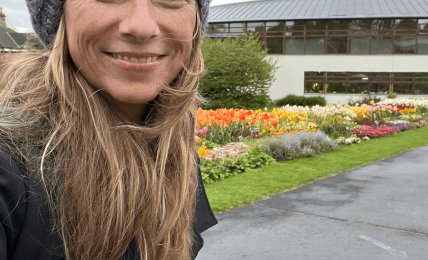
My dad, my mom, my sister. I have an incredibly supportive family. My friend Nick who introduced me to barbell strength training in 2014. My partner Eli who took the pictures in this article, did the design for my logo and branding, and in addition to being one of the most talented designers in Denver is a kick-ass partner and my closest friend. My queer community who inspires me and supports me to be my authentic self. My movement leaders and mentors who pushed me towards leadership over and over again, who taught me how to lead with vulnerability and taught me that living into my own power is one of the most impactful things I can do for my community.
Metamorphosis Fitness, VIBE Gym & Wellness Collective, and Chin-Up Personal Training are all queer owned gyms where I’ve found valuable mentorship.


Website: msha.ke/jaymovementcoaching
Instagram: @jaymovementcoaching
Image Credits
Eli Skye Design