Meet Joanne Beaule Ruggles | Artist and Retired University Art Professor


We had the good fortune of connecting with Joanne Beaule Ruggles and we’ve shared our conversation below.
Hi Joanne Beaule, we’d love to hear about how you approach risk and risk-taking
Careful is Easy, Reckless is More Difficult.
I know, I know…you think I have really lost it, don’t you? How could I possibly make such a statement?
Because after a 55-year career as a professional artist and university art professor, I have found this to be true. If you wind yourself up tightly, use a small enough brush, erase often and aggressively, precisely position each mark, you can likely gain access to a reasonable but superficial likeness of the thing you chose to draw or paint.
Th problem is that you quite possibly will have squeezed every ounce of joy out of the act of doing it. The likeness might be accurate, but making it will likely be dull, formulaic, and possibly soulless. Careful work is often devoid of accident, surprise, serendipity, and those elements that add life to your artwork.
Your audience can see whether you were taking risks with your marks, whether you were working boldly with your tools, and moving your work ahead with fierce courage. Everyone wishes to be brave. I am particularly fond of the word reckless in describing my art process. It signifies that I am willing to risk it all – that everything is on the line.
Alright, so let’s move onto what keeps you busy professionally?
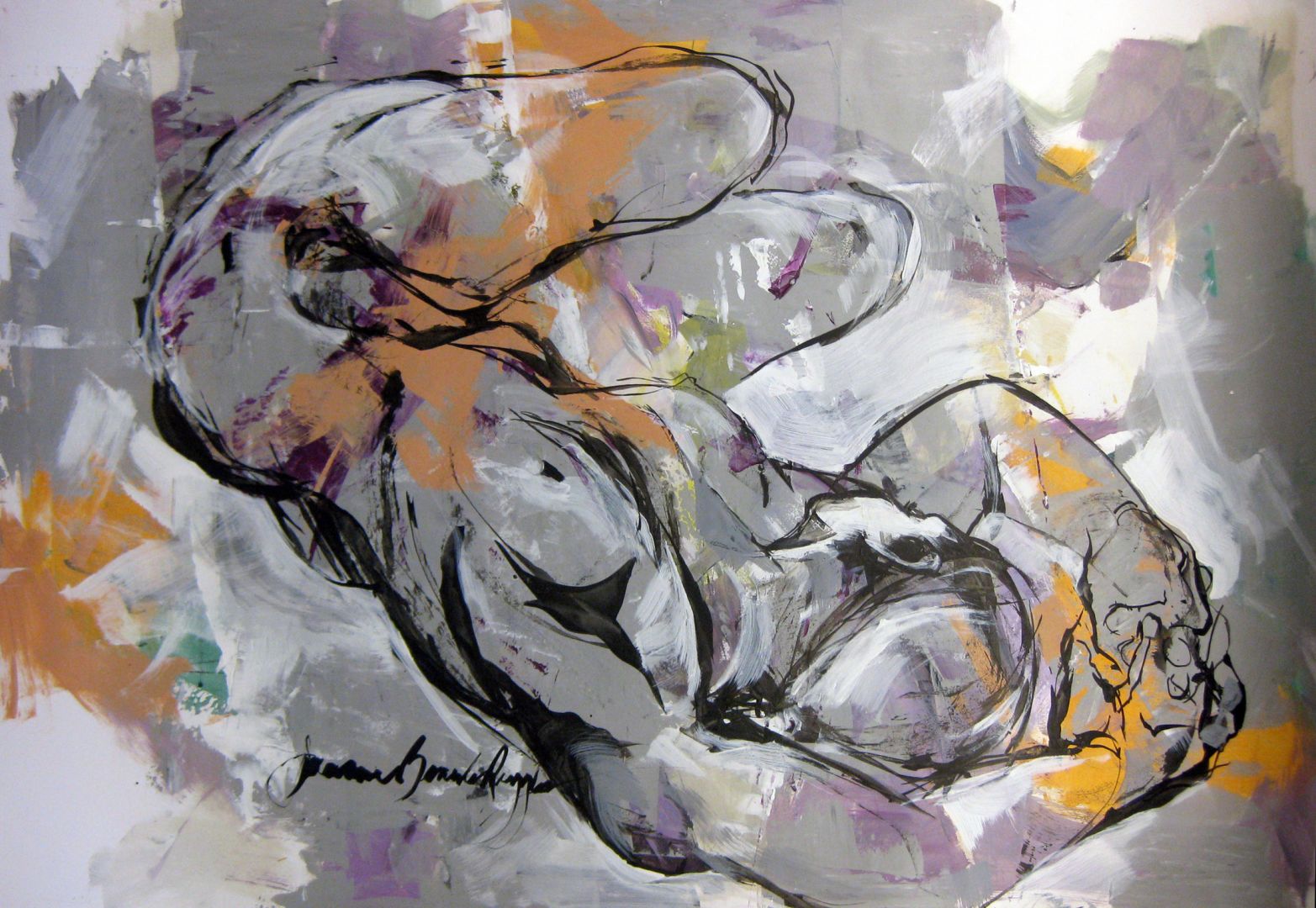
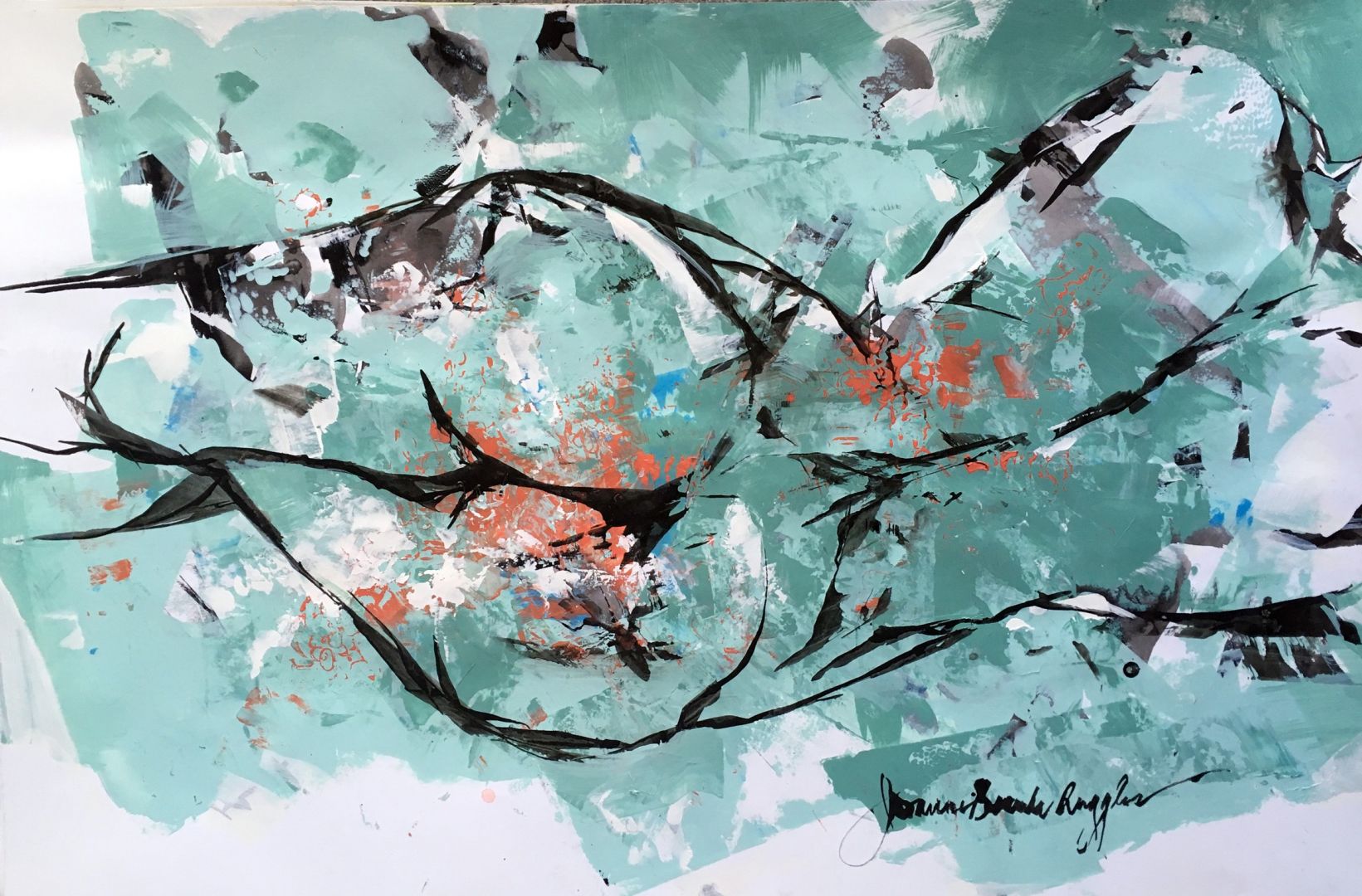
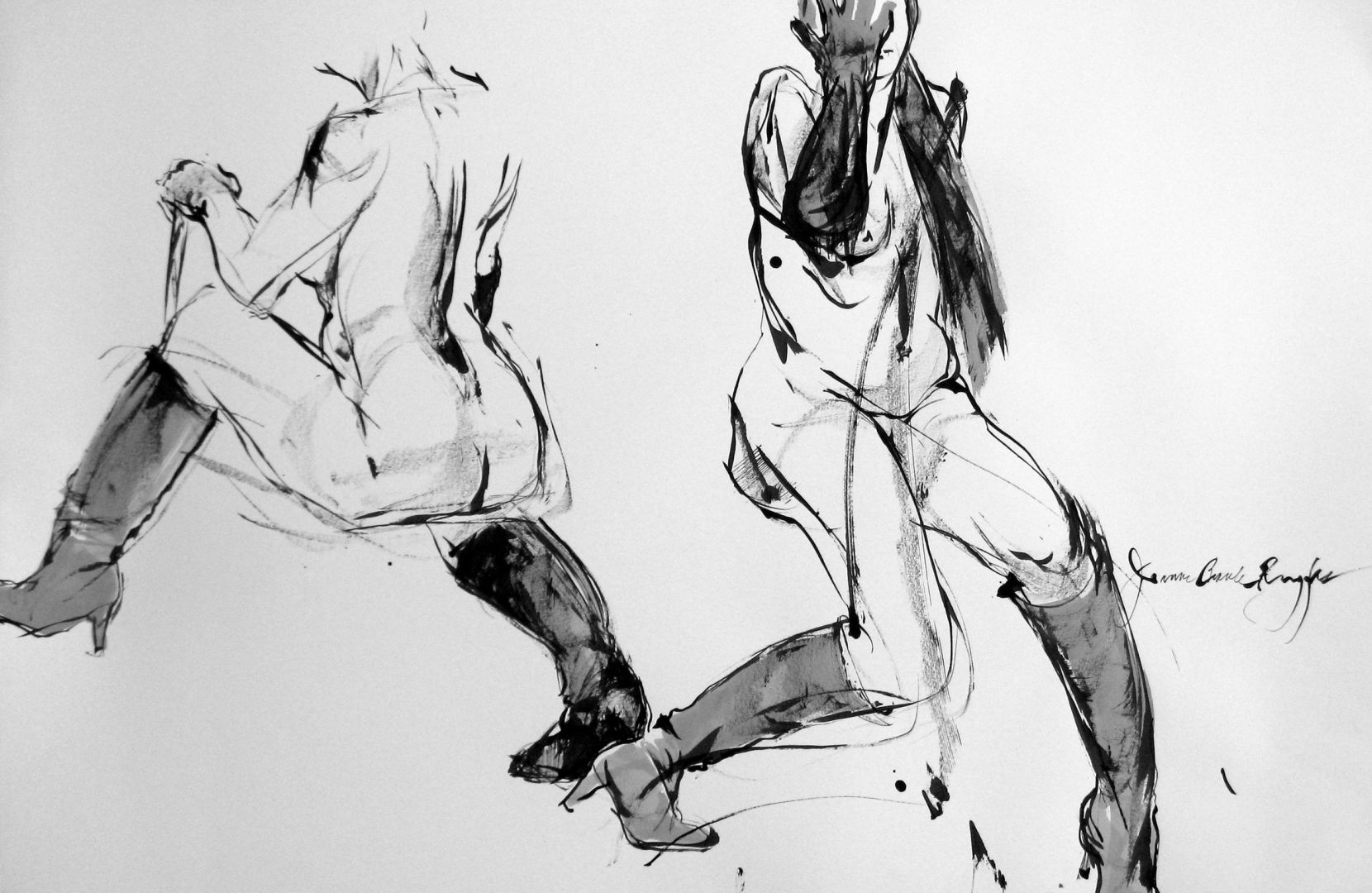
It is quite often the accidental mark, the thing you were not intending to do that is far more wonderful than the thing you were trying to do. For this reason, I have built chance and serendipity into my creative process. I call it “running with sticks”.
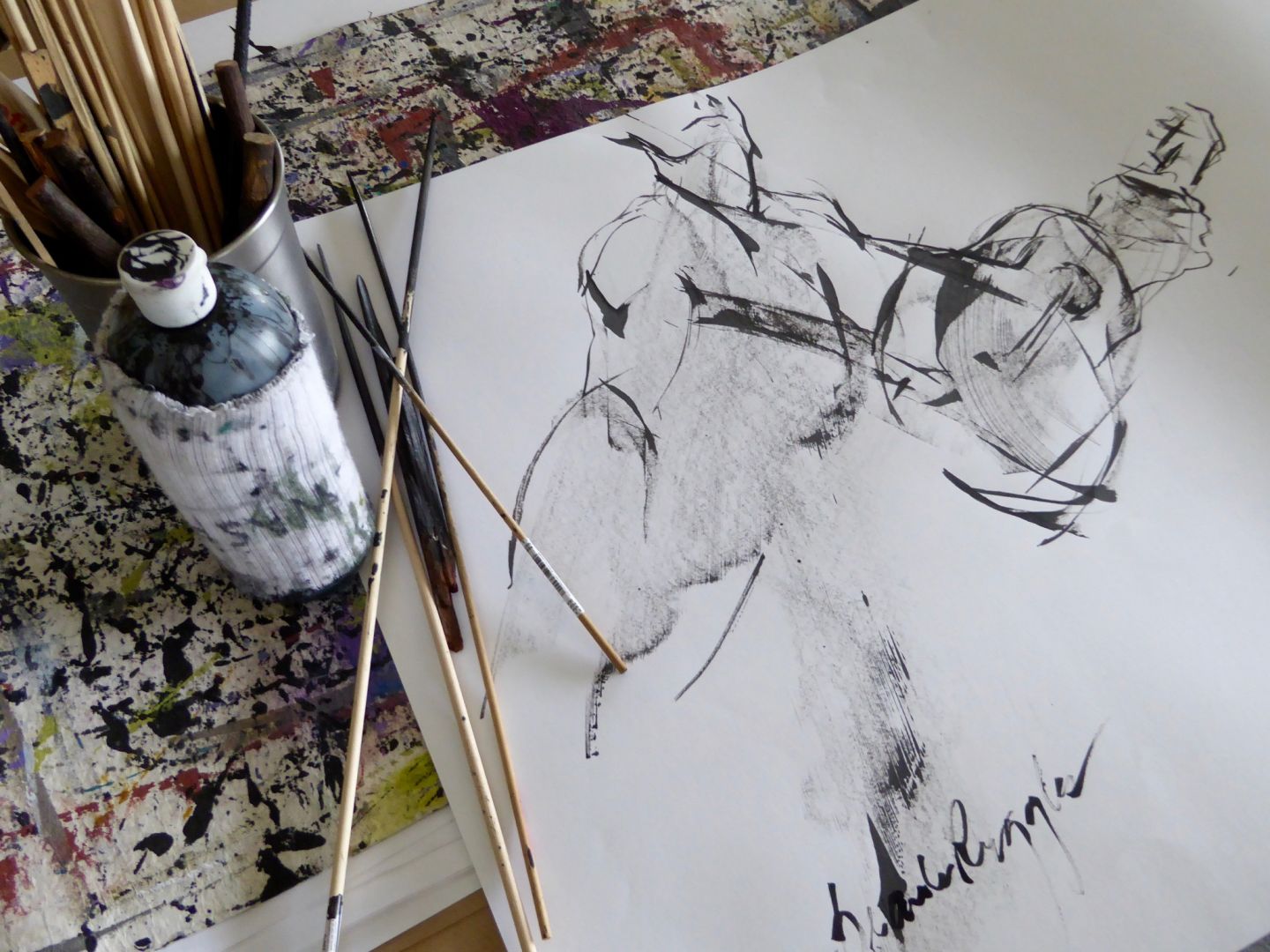
What does this have to do with sticks? Years ago, I was exploring various tools that I could utilize as expressive marking pens. Dowels looked appealing because of their length and various diameters. Breaking them into two to four foot lengths I was able to distance myself from trying to tightly control their marks. I did not permit myself to carve them, but instead allowed them to break, as they wanted to.
The dowels that snapped into pieces with a three to six inch shard at the drawing end were my favorites. This shard would allow ink to flow down to the point just as any primitive pen might have functioned. Traditional two ounce bottles of India ink would not work with these fabricated pens, so I learned to use ink in quart bottles to allow the dowel pens to fill up sufficiently.
The pens I devised were in many ways unforgiving – India ink is non-negotiable – I had to embrace the idea of working quickly and could not spend any time trying to fix any perceived imperfections. Because I bent and broke them, the dowel pens did not break to produce effective points so there was a percentage of loss. I also had to learn that the moment these pens came in contact with my drawing sheet, they wanted to unload a lot of ink.
On the other hand, the line quality that was possible proved to be extensive. By twisting the pen or by bending and placing more or less of the dowel’s length against the sheet, my lines widened or narrowed. Standing the pen up on its tip made a noticeably different line than sliding the dowel on its side, and a loaded pen had a much different voice than a depleted one.
I will admit that running with sticks has been risky business, but the risk has been worth it as these dowel pens have allowed me to create lines that are unabashedly loaded with passion.
If you had a friend visiting you, what are some of the local spots you’d want to take them around to?
A longtime friend and former student is preparing for an Art exhibition in early 2023. She happens to be visiting for a couple days this weekend. She was my art student about 30 years ago and we have kept in touch. She has attended several life drawing workshops I have given. She is quite anxious to make and talk about art with me. Tomorrow we will attend a 3 hour life drawing session in Arroyo Grande, afterwards we’ll have a lovely dinner at Ember restaurant nearby, and then we will come back to my studio in San Luis Obispo and hangout and critique our artworks. Friday morning we will attend another life drawing session in Morro Bay, followed by a discussion of how her artworks could be strengthened and further developed in preparation for her artshow.
The Shoutout series is all about recognizing that our success and where we are in life is at least somewhat thanks to the efforts, support, mentorship, love and encouragement of others. So is there someone that you want to dedicate your shoutout to?
There have been many sources of support for my creative journey: my dad (an old-school carpenter) who taught me to be brave and strong and solve problems creatively. I received lots of affirmations from several of my university professors who convinced me of the value of originality within my art. There have been a number of books that helped my develop my artistic philosophy – one in particular is Zen in the Art of Archery by Eugen Herrigel. The dean in our College of Liberal Arts was a great ally of mine, helping me win many awards within our University. And certainly most of all I was supported by my husband of 53 years in every sort of way possible. He was awed by my talent, attended every art exhibit, every opening or artist talk I gave, and cheered me on when I surpassed him in rank in the final years before we both retired, The last year I taught, I won the university’s Distinguished Research and Creative Activity award and that recognition was an immense boost to my career.

Website: https://www.joannebeauleruggles.com
Instagram: https://www.instagram.com › joannebeauleruggles
Facebook: https://www.facebook.com › joannebeaulerugglesartist
Other: https://www.ednacontemporary.com/joanne-beaule-ruggles