Meet Karissa Taylor |


We had the good fortune of connecting with Karissa Taylor and we’ve shared our conversation below.
Hi Karissa, we’d love to hear more about how you thought about starting your own business?
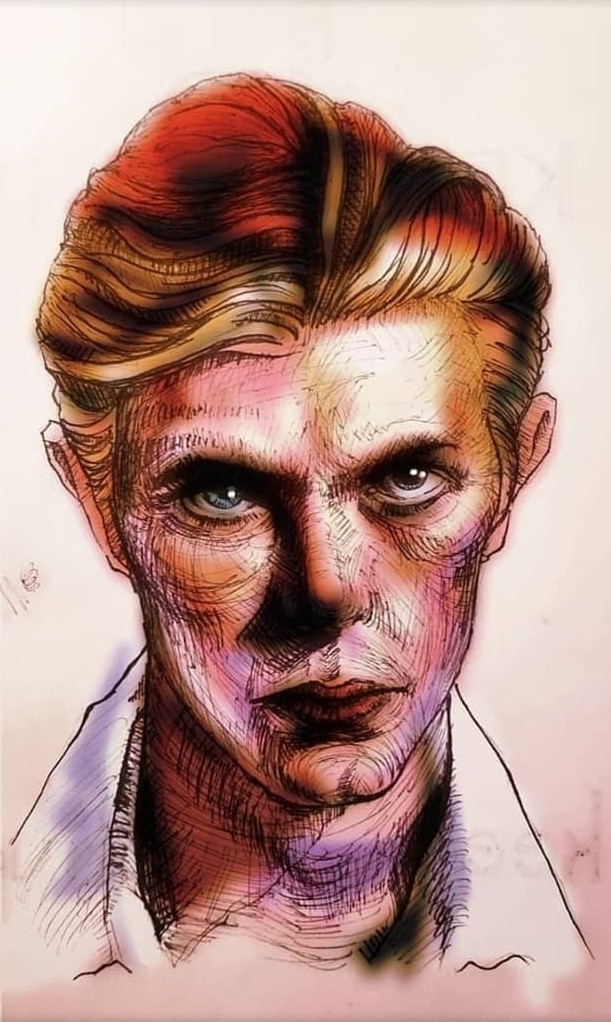
I always knew I would rather struggle for money doing something I was passionate about than wallowing in shallow riches. For me, being a full-time artist meant I would be following my purpose in this world and living my life to the fullest. This was easier said than done. I’ve bounced from one odd job to the next attempting to get a foot in the door, making just enough money to survive. I view these jobs as necessary stepping stones to achieving my goals, even if sometimes those stones felt more like walking on hot coals; they only strengthen my resolve to become an artist. My last job I was working as a night counselor in a facility for kids with mental illnesses. Since it was a night shift, I had a lot of down time to organize my thoughts and get a thorough portfolio of my work together so I could be ready to sell. I started my business on Instagram (@karissataylor94 and @pinkshedstudios) because I believe social media is the best route for a newcomer to be “discovered” since it gives the largest community of people access to my work. It has expanded my connections and made opportunities available to me as well.
How does your business help the community or the world?
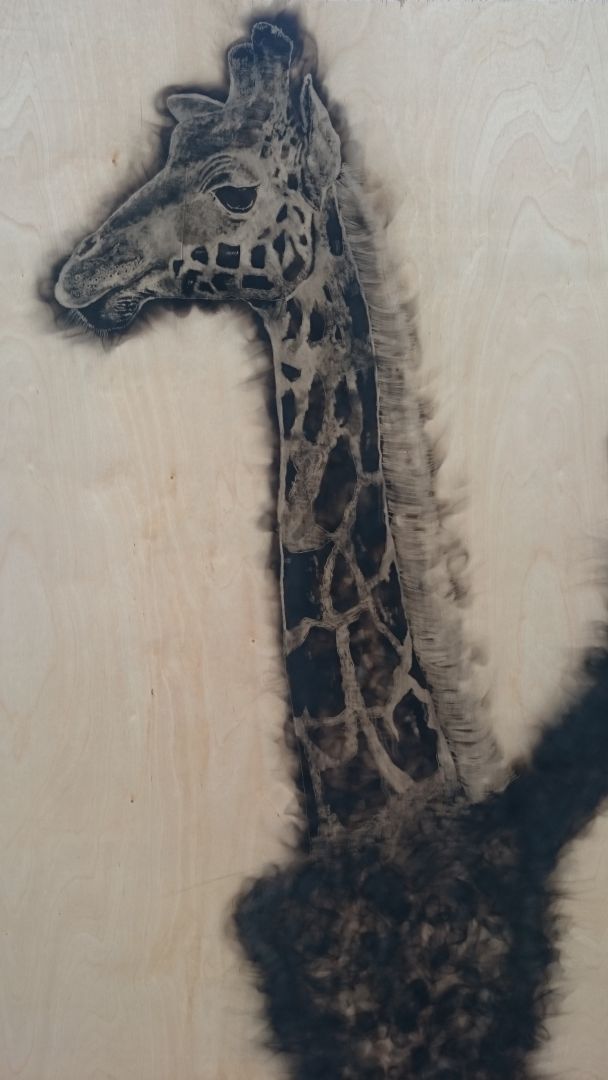
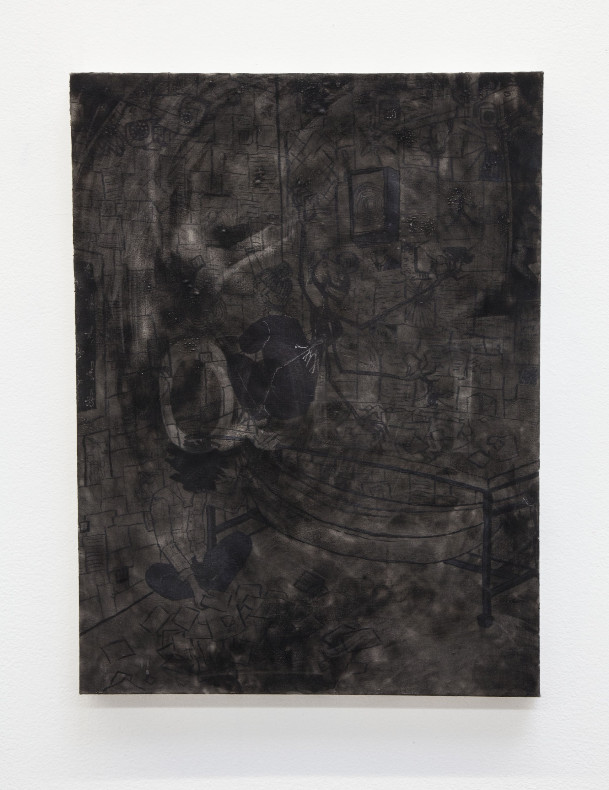
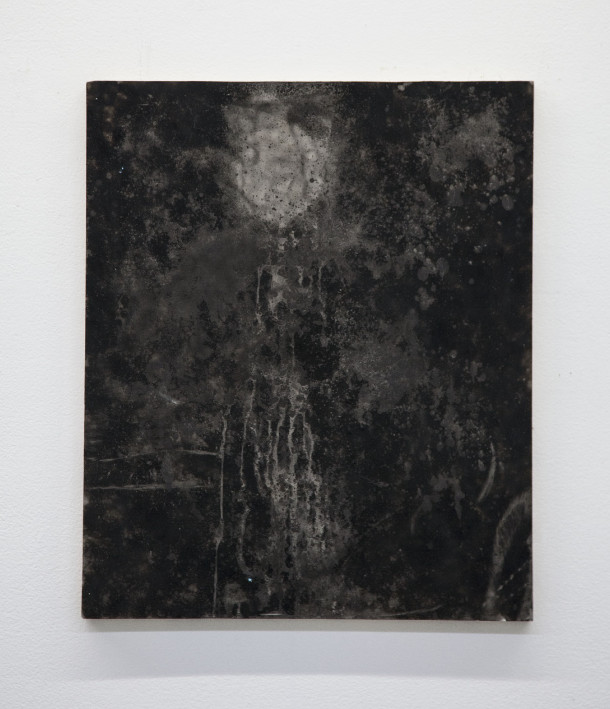
I frequently think about my place in the world. I don’t believe in an afterlife so I think we ought to focus on our time here on Earth while there’s still air in our lungs and a beating of our heart, finding and fulfilling one’s life purpose so to speak. To me, a person finds value and meaning in their life through how much they give back to the world, and as such, I’m always looking for ways I can personally make an impact, whether it’s how I live my day-to-day life or through my business practices. Environmentalism is a big part of my art practice. For instance, the majority of my art supplies are reused or found materials off the street. One current body of work I’m producing is made using smoke, ash, and wax which helps cut down on waste. Another series turns old pairs of shoes into sculptures and keeps them from winding up in landfills. I also want to start planting a tree for every work sold, and organizing community trash clean-ups after reaching business milestones, but this is still in the works as I hammer out the details.
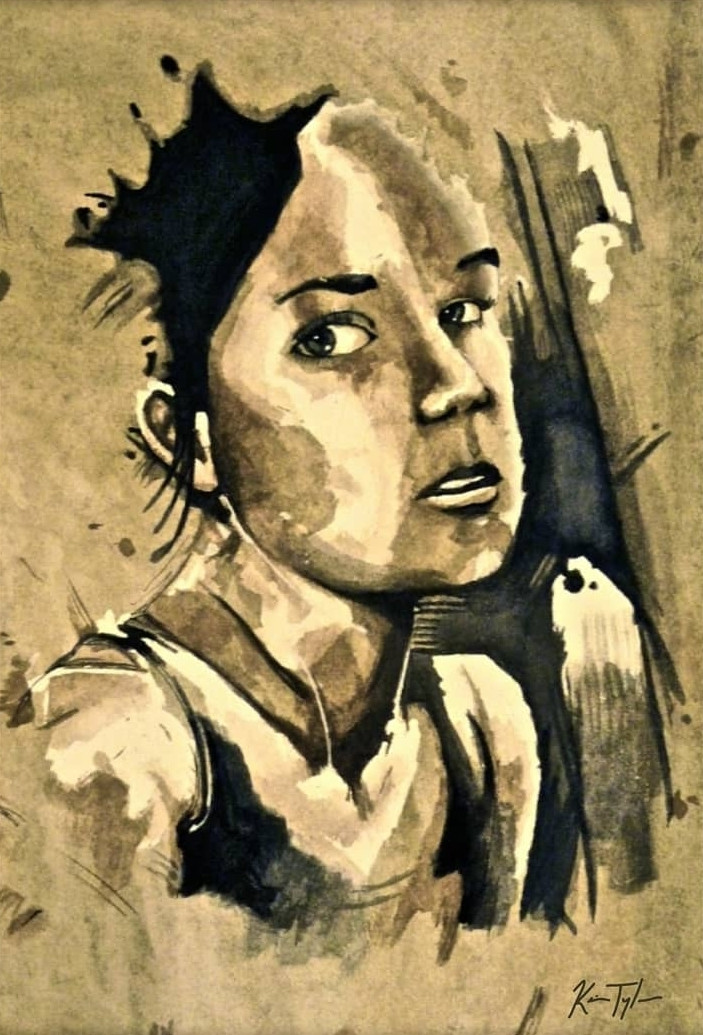
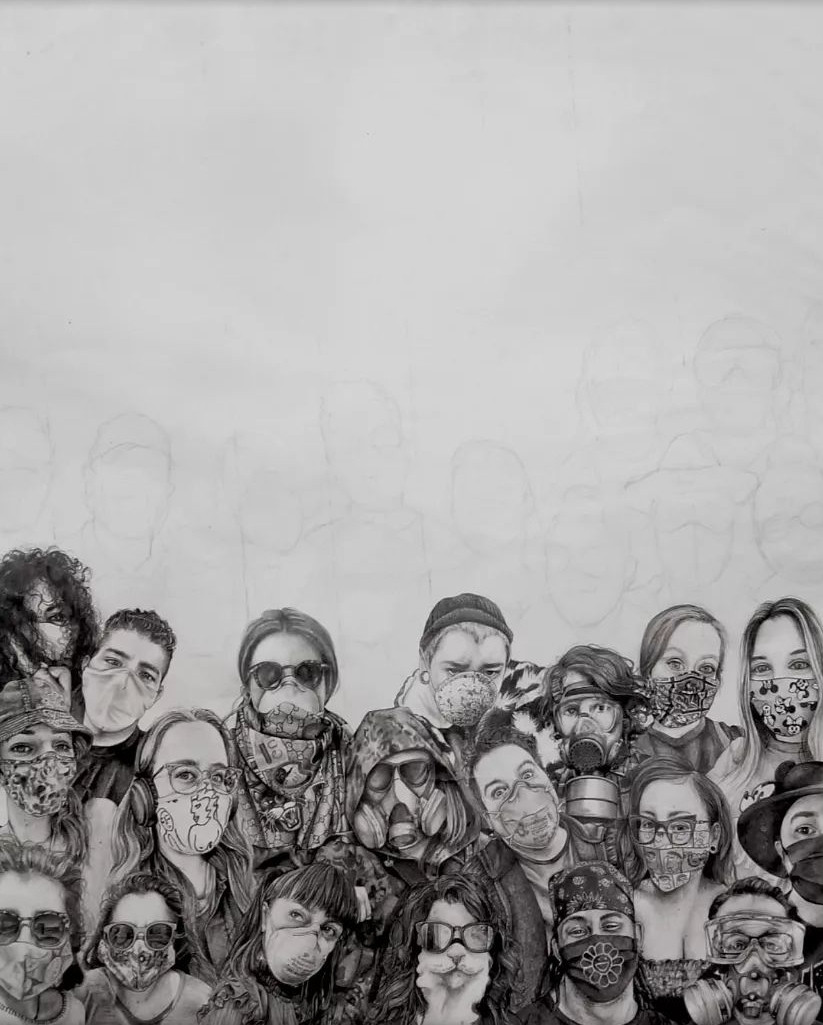
When it comes to impacting the people in my community, I have a few things where I set my focus. My art community is very important to me and I look at them as a sort of family; whether I met someone in art school or later at some point in my career, my connections continue to play a big part in my life. I have organized shows with other artists so they too could have a chance at selling work. This is a big reason I didn’t just sell my art, but why I also created the online studio, Pink Shed Studios (@pinkshedstudios) for a group of artists in my circle. The people I meet also play a part in the pieces I create. One project I’m working on brings together people from different times in my life, a giant collage of faces wearing masks to combat covid in their respective cities. When I think about success, I think about what ways I can help give back to that circle of artists that have helped me along the way. Another way I impact the people in my community has to do with subject matter. A lot of my work delves into the vastness of an underrepresented community, people who struggle with mental illness. I find that creativity is often linked to mental health problems, and as someone who has experience with both, it only made sense for me to create work that dealt with this “taboo” topic. This served as both a therapeutic tool with my own health as well as a way to connect to others with mental illnesses who are often misrepresented and misunderstood. I always thought that if my artwork resonated with just one person struggling, then my work would have come full circle and been fully realized.
How do you think about risk? What role has risk taken in your life and your career?
When I think about what it takes to become a successful artist, I think about the story of Icarus. For many people, the thought of living an alternative lifestyle being an artist is like Icarus taking flight for the first time. It’s a freeing experience unlike any other causing hundreds of thousands of people to attempt to take flight too. They do this hastily, however, for there are considerable risks; they fly too high or too low, and just like Icarus, they plunge into the sea with defeat.
While I typically have the bad habit of over-analyzing things to avoid unnecessary risk, I seemed to have always known I would take a huge risk to live an alternative lifestyle pursuing a creative career. This choice did not come without sacrifice.
What is the most important factor behind your success? The success of your brand?
Sacrifice. Despite the increasing number of people attempting to become artists, I would venture to say the majority of them aren’t willing to make the sacrifices necessary to help them reach their dreams. This isn’t a put-down. Each person is unique; they have different sacrifices and lines they just won’t cross. And unless they get lucky or have the right connections, people have to be willing to give up certain things and adapt to unusual solutions. I think of this process like a river. Some people see these sacrifices as obstacles that dam the river flow, putting a complete halt to their lives and making them give up on their creative careers. But I’ve learned you need to be fluid when you hit these obstacles, make sacrifices, and course correct to keep moving forward.
This process might come more naturally to me because I felt like I never had a choice to do something else with my life. I did very well in school and could have easily become a doctor or an engineer or have any number of stable careers, but I’ve always known my soul, my creative life force, my reason for living would be completely destroyed. I could never commit to a 9-5 for the rest of my life, so I said, “I have to make this work,” and gave up a lot to keep going.
To give a lay man an idea of what kind of sacrifices you have to make to become a financially independent artist, I’ll briefly describe some of the things I’ve given up to get where I am today. First and foremost, stable housing. I look for very cheap housing options to keep my bills as low as possible and because of this I had to leave LA, rent out single rooms, and eventually buy a tiny home I’m currently remodeling. I’ve been told I had to move while I was on vacation and I’ve even been evicted on Christmas. I’ve also sacrificed a stable income and in turn health insurance. I applied to over 130 jobs since 2017 and most didn’t even lead to an interview. I bounced from around from job to job and now continue to do odd jobs on the side to bring in extra cash. I’m currently a dishwasher/custodian two days a week. Because my life is my career, I don’t have a family; I don’t have kids and I’m never really looking to date because it’s too much of a distraction. This alternative lifestyle has also had an impact on my mental health. Since graduating in 2017 my depression was at its worst and I very nearly didn’t make it through, my confidence was wiped out, and my paranoia and anxiety has been at an all time high. Luckily moving to a small town surrounded by my family and excelling in my jobs has improved my self esteem and mental wellbeing. Some days are better than others.
While the life of a “starving artist” might be romanticized, the truth is oftentimes it’s ugly. It’s rough and pathetic. It’s chaotic and unforgiving. This lifestyle certainly isn’t for everyone and I completely understand why most people can’t make the sacrifice, eventually giving up entirely.
How do you know whether to keep going or to give up?
The short answer is I don’t. I have “small” moments of wanting to give up. Once, I even almost burnt all of my artwork in complete desperation. But for whatever reason, I’m always drawn right back every time. I could say it’s the only thing that truly makes me happy or that it gives me something to care about, but the truth is, I find my connection to artmaking deeply complex and utterly unexplainable.
I do know, however, that this need to keep going is one factor for what it takes to be a full-time artist. I know this because the art world is cutthroat and every artist out there has failed over and over again. You’ll have people that will tear you down and rip your work apart just because they’re bored. You’ll have thousands of missed jobs and opportunities. Even in your success you’re susceptible to imposter syndrome, where you hate your art and think of yourself as a phony. There will never be a shortage of times when you’ll want to give up, but if you truly want to make it, you’ll have to lick your wounds, pull your raggedy body out of the dirt, and keep going.
Work/life balance. How has your balance changed over time? How do you think about the balance?
Throughout the entirety of my career, my work/life balance has constantly been changing. Right now I have a side job working Sunday and Monday that allows me to work towards my goals the rest of the week. Sometimes this means making art, but most of the time it’s something else that I need to do to help my career- it could be working to build a social media presence, researching galleries and art festivals, even renovating my tiny house. As long as it’s helping me move closer to getting a studio and making/selling enough art to support me financially, then I consider it as work. I don’t want to be overworked, but I also have a bad habit of procrastinating so I aim to use a regular eight hour day to keep me organized and balanced.
One trick I’ve learned to knock two birds out with one stone is to create art while doing something else so as to be more productive with my time. When I worked as a night counselor, I had about ten hours/day to work on whatever I wanted; I did my job and worked on my art at the same time. Another example is my shoe project. Each time I wear the shoes, I keep track of exactly where I’ve been and how many steps I took in them, eventually being recorded in a notebook displayed with the worn pair of shoes as a sculpture. This allows me to always be making a piece of artwork even on days I’m not as productive with my time.
What makes you happy? Why?
The obvious answer is making things and being creative. I remember my sophomore year in high school was the one year I didn’t take any art class and it was a terrible year for my depression. It was as if I had nothing to live for. When I graduated college and had to move five times, I had to pack up my studio and put all of my art materials into boxes. I still don’t have a studio space and it’s been devastating to not be able to surround myself with the things I know would spark my creativity and help my career move forward. But I do a lot of digital art and drawings in my sketchbook to balance out the lack of a studio space.
When I was getting my degree at Otis College of Art and Design, I was truly at my happiest in my life. Finally I was taking classes that had to do with art. I was surrounded by creative people that not only shared my passions but also pushed me to think differently. To be able to create in that kind of environment was pure euphoria.
I do have other passions and things I care about. Family is a big one. My family is unusually (and sometimes embarrassingly) close. It was quite a difficult decision for me when I first graduated whether I should stay in LA for the art scene or move back home to be with my family. That decision was eventually made for me. Other things that make me happy are nature, wildlife, and traveling. I think the earth is beautiful and I want to see as much of it as I can. Traveling is a great way to immerse yourself in cultures vastly different from your own; it challenges your comfort zone and awakens something in you.
Having these things in my life makes everything seem easier. It’s a gift, and it makes me feel as if I’m experiencing life the way humans were meant to.
Why did you pursue an artistic or creative career?
I believe that my life is entangled with art making and if there were such a thing as fate, mine would be pursuing a creative career. Every year in elementary school our teachers would ask us what we wanted to be when we grew up. I was the only person who never faltered with their choice. For me it was simple- I wanted to be an artist.
As I got older I considered having a more financially stable job but I couldn’t think of a single profession that would make a happy fit. I’d talk with classmates that wanted to be veterinarians, lawyers, teachers, real estate agents and it always sounded like the worst possible way to live. Sure you’d make money, in some cases great money, but I couldn’t ever imagine giving away precious hours of my life to a job that would slowly tear my soul apart. I knew I had to follow a different, more shaky path.
How do you define success?
That’s a tough one as I think it changes as we make our way through life. Right now, at this very moment I would say being successful means I have security. That I have a home and I’m selling enough art to have a savings. If I think about success as a long term goal (or fantasy) I think about being well-known and having fame and everyone loves me. But I suppose when you get to the end of your life you mainly just don’t want to be disappointed with your life choices. For me personally, when I get to the end of my life I want to look back and see that I was happy. I guess in that perspective nothing else really matters.
Let’s talk shop? Tell us more about your career, what can you share with our community?
I suppose I want people to know how my work has changed over time, the years of work it took, and everything else that went into getting where I am today. I was completely self taught, so in my youth my work consisted of a lot of training to polish my skills and develop a photorealistic art style; the closer the drawing looked to the reference photo meant I was getting better. Slowly I began to evolve into copying other artists trying to find a style that suited me. Pablo Picasso did say, after all, that “good artists borrow, great artists steal.” This time was important because I learned a variety of techniques and branched out into further styles.
College was really the turning point in my career as I learned what it meant to be a good artist. I already learned the skills to master copy images, but in a room full of artists who did photorealistic art, my work would go entirely unnoticed. I needed to find something that would set me apart. As I was still experimenting with styles of art, I worked on making my work stand out through subject matter. This is when I began to create a cohesive body of work, and focus on topics that meant a lot to me, such as mental illness. Lastly, through my experiments, I discovered using fire and smoke to create work which I’ve made my own. Very few artists in the world are using this technique and each person’s is entirely unique.
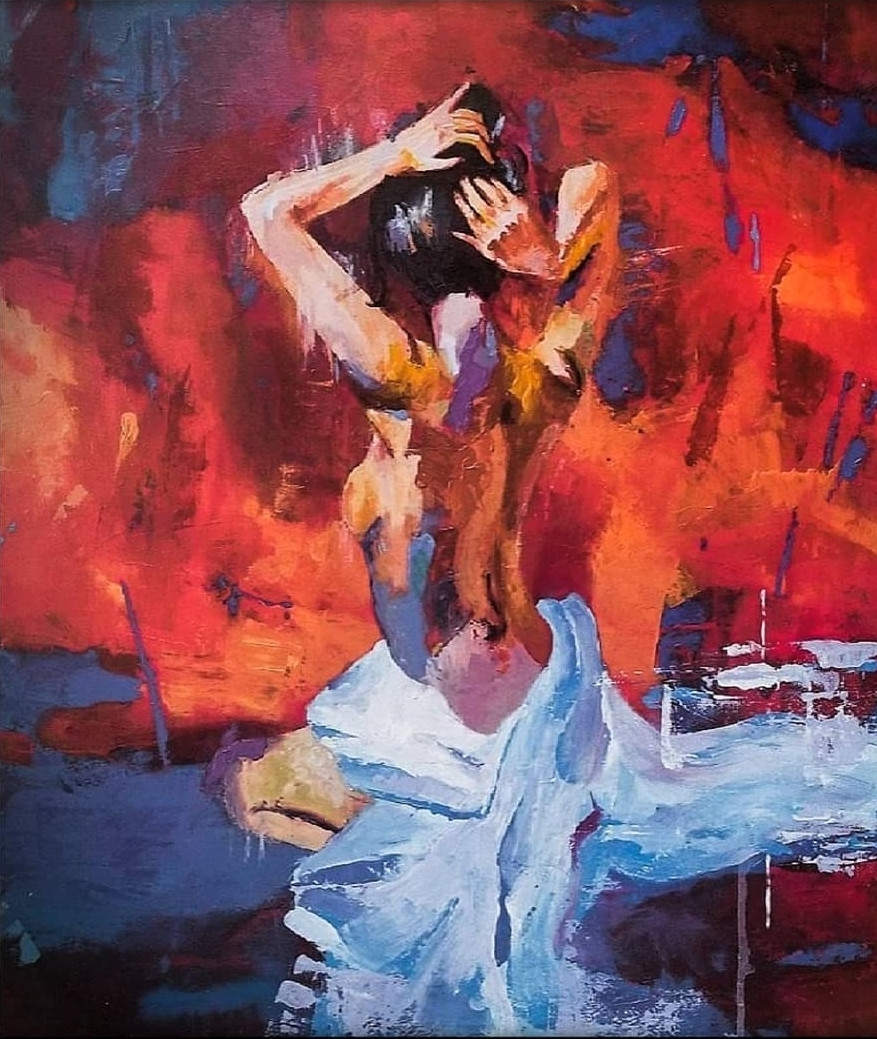
I think a lot of people would disagree with my interpretation of good art; most people I meet just want to see a pretty picture or something that looks hyper-realistic. While I consider copying and realism to be an important part of my journey, I think back to the great like Van Gogh and Picasso. They too had the ability to paint detailed and realistic works and did so early in their careers. But when you look at the complete scope of the art world, they didn’t become famous for creating pretty pictures; they did so once they “gave up” their talents and evolved their styles into something the world hadn’t seen before, what we today know as impressionism and cubism. Good art isn’t meant to just be pretty or a display of skill.
Let’s say your best friend was visiting the area and you wanted to show them the best time ever. Where would you take them? Give us a little itinerary – say it was a week long trip, where would you eat, drink, visit, hang out, etc.
While I frequently joke that Cheyenne, Wyoming must be where people are banished, I’m actually quite connected to my hometown. I’d suggest my friend visit during July to experience our city’s most popular tourist attraction- Cheyenne Frontier Days. Though I’m not an enthusiast of the local cowboy culture, CFD is a good way for an outsider to experience the embodiment of Wyoming.
I’d love people to experience the quiet nature this part of the country has to offer so I’d definitely take my friend to hike and/or camp in the mountains, go rock climbing in Vedauwoo, tube down the river in Fort Collins etc. Perhaps I’d take them to Estes PArk for a good chance to see elk, deer, and bighorn sheep. Wyoming and northern Colorado provide a great way to immerse yourself into nature.
Shoutout is all about shouting out others who you feel deserve additional recognition and exposure. Who would you like to shoutout?
Late artist John Baldessari was a profound addition to the art world and to me as well. He was known as the father of conceptualism and his work had as much of an influence on my outlook on life as it did on my artwork, if not more so. His convoluted work read clearly to me and his text art seemed to mirror my thoughts. He is the artist that has most shaped my work to date and I was lucky to have met him.
One of Baldessari’s works ironically leads me to my next shoutout. In his work How to Feel Miserable as an Artist, he says trying to get family to cheer you on will tear each artist apart. While this rings true in a sense, my biggest supporter has actually been my mom. My mom has stood by my choice to pursue this career since day one and has pushed me along as best as she could. She has listened to me rattle on about artists and ideas she has no interest in and attends all of my art shows. She paid what I couldn’t so I could go to art school and she’s held me together when I’ve wanted to burn all my art. She deserves all the recognition in the world.
Lastly, in an annoying award speech fashion I’d like to shoutout all of my mentors and peers that have gotten me to where I am today. Soo, Meg, Alex, Lincoln, Nick, Ian, Siri, Scott thank you for being wonderful teachers. You guided my thoughts and pushed my work throughout school and did more for me once I graduated than the school ever tried. Camille, Juri, Dakota, Darrah, Tada, Adrian, Victoria, Katie, Emmanuelle, Jessi, Natalie thank you for creating such a wonderful environment that allowed me to let down my guard and flourish with creativity. Alexis, Forouzan, David, Megan thank you for once giving me extraordinary happiness only for it to be utterly destroyed later on. The pain you personally caused nearly took me down, but with time you’ve only made me stronger and more resilient.
Instagram: @karissataylor94, @pinkshedstudios.


