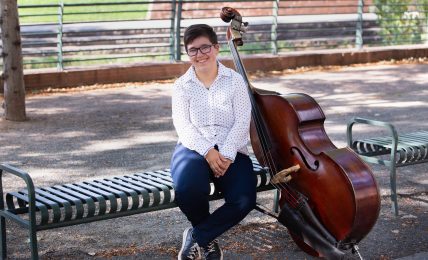
Meet Sean Thompson | Principal Designer at Loom


We had the good fortune of connecting with Sean Thompson and we’ve shared our conversation below.
Hi Sean, how do you think about risk?
While I do not consider myself a traditional risk-taker (skydiving? No thank you), I have made pivotal decisions in my career and personal life that would undeniably be classified as significant risks based on my instincts.
One memorable example occurred at the outset of my career. Upon graduating from college, securing any job was my primary mission. However, I soon found myself deeply unhappy with both the work and the new city I had moved to—I felt stagnant and unfulfilled.
Despite advice from friends and family to persevere, asserting that any job experience was better than none, I chose to take a risk. I left the job, moved back home, and accepted another position that, while still not ideal, afforded me the mental space to reflect on my aspirations and how to achieve them.
This decision, along with other instinct-driven risks, has empowered me to make bold moves in my life. I didn’t leap out of a plane; rather, I developed a plan and became more comfortable discerning when to heed advice and when to follow my own path.

Alright, so let’s move onto what keeps you busy professionally?
I started my career in a rather unconventional way, one that is more common in design as a craft than I realized at the time. As a child, I was bullied—a terrible experience that I still work to fully overcome. However, this adversity led me to discover new ways to connect with people and a craft I had no idea existed given my challenging socioeconomic background: design.
My computer and the video games on it became an escape and a connection to other kids my age, many of whom were creative online through writing, coding, and design. I’ve always been immensely drawn to and fascinated by aesthetics, which helped me train my eye for design in a way that helped me stand out even early in my career. When I first saw other kids my age designing for fun, I had to jump in. It wasn’t until the end of my college career that I recognized design as a craft that could be an incredibly rewarding career.
Another pivotal moment was before graduating when I sold an online community I had created, which had grown to over one million discussions and was monetized. This success made me and those around me realize that what started as an escape could be a fulfilling career path. It also helped me pay for my entire education, freeing me from the worry of student debt.
After college and a few false starts, one of my first jobs in tech was as a project manager, where I did some entry-level design work. There, I learned to articulate projects and functionality to both clients and engineers—a skill that remains uniquely invaluable in product design as a leader. At this first design agency opportunity, the Creative Director encouraged me to pursue the design craft I had been practicing since childhood because he saw my potential.
From that point on, I took on many freelance opportunities, working with brand designers, engineers, and other creatives, and literally and figuratively knocking on doors to get work, which fueled my development as a designer. Eventually, my partner and I, who shared a similar self-taught journey, decided to move to California to further invest in our careers. Our freelance work in California led to incredible full-time opportunities that helped us continue to hone our skills and start to become leaders, slowly but surely.
One of the most significant periods of my career was at Twitter, early in its development as a communication service. As a young designer, I joined not because I used Twitter (in fact, I didn’t), but because I admired the immense skills of the early designers there. Over an eight-year career, I transformed from a junior designer with immense imposter syndrome to the most senior and relied-upon member of product design at its height. Strong mentorship at Twitter helped me hone my storytelling, visual design, and systems design abilities in ways that fundamentally changed my trajectory. I also started to pitch and ship my own new ideas that improved our ability to keep customers as emerging mediums like audio became popular and as new safety risks emerged in an age of misinformation.
I left Twitter during the pandemic when I saw Loom being used at work by designers and engineers and recognized it as the next communication medium I wanted to help progress. Loom allows asynchronous communication through video, offering a uniquely expressive and effective way to communicate without the need for a live audience. As Loom’s Principal Designer, I’ve had the incredible opportunity to partner with and be mentored by our VP of Design, and am charged with elevating the craft of our entire product design team through rituals and mentorship intended to establish a safe space for taking risks and collaborating early and often as a team. I also collaborate with the broader executive team on strategic planning, big bets, and product vision, while still shipping day-to-day features that help improve the service, like Loom AI and our recorder re-architecture and redesign.
Looking back, I’m immensely grateful to the mentors who helped me find my unique voice and strength as a designer. They shared my passion for the craft and supported me in becoming a designer who leads with both heart and a fascination for how design can contribute to inventing new, more intuitive ways to communicate, regardless of where we live. This ties back to my early origins as a kid trying to find community and purpose by communicating and designing online. Today, I know now what I didn’t know then: that design is a craft that will always give me fulfillment and purpose, no matter where it takes me.
If you had a friend visiting you, what are some of the local spots you’d want to take them around to?
Living in Boulder, Colorado, is a joy, and I love sharing its hidden gems beyond the small downtown area. When friends visit, I take them to my favorite coffee shops, like Dry Storage and Boxcar to get a sense of the community, and to grab a hike-ready lunch from Daedalus and head to where Boulder truly shines: the mountains and forests.
As an avid gravel cyclist, I love taking visitors on bike rides of any kind. Exploring forgotten logging roads, nearby mountain towns, and expansive landscapes offers a sense of freedom that’s a stark contrast to big city life, and it’s a pleasure to share this experience with my friends.
This version maintains your personal touch while providing a clear and inviting picture of your Boulder experiences.
The Shoutout series is all about recognizing that our success and where we are in life is at least somewhat thanks to the efforts, support, mentorship, love and encouragement of others. So is there someone that you want to dedicate your shoutout to?
I have to shout out my partner Ryan, with whom I’ve shared over fifteen years. We met when we had nothing—financially or experientially—and together, we developed emotional and critical forms of maturity that have helped us rise and endure many trials.
Without Ryan, I wouldn’t have as courageously overcome the worry and doubt we all face, especially early in life.
Website: https://read.cv/cyanhex
Instagram: https://instagram.com/cyanhex
Linkedin: https://linkedin.com/seanthomps
Twitter: https://x.com/cyanhex