Meet Jessica Lawson | Poet and Educator


We had the good fortune of connecting with Jessica Lawson and we’ve shared our conversation below.
Hi Jessica, what are you inspired by?
I think it can be useful to distinguish between inspiration and motivation. My motivation for writing is usually political or emotional (and often both). For example, my motivation for writing the poem “Penalty Map” was a 2017 United Nations resolution banning the death penalty for homosexuality (which the U.S. voted against), but it wouldn’t be accurate to call this the poem’s inspiration. Motivation makes me need to write, but doesn’t necessarily inform the work I do once I reach the page. That’s where inspiration has to take over. My inspiration is usually connected to the form of the poem itself. Sometimes, this means writing poems that follow a specific set of formal rules, whether those are ones that I’ve inherited (like a sonnet) or invented. My first book, Gash Atlas, used “maps” as inspiration, and most of the poems in it are imagined to be verbal maps of social or emotional terrain. In “Penalty Map,” specifically, I wanted to capture the feeling of being queer and not being safely able to talk about it, so I delayed my direct reference to the United Nations decision till the end of the poem, and started each section building up to it with words that sounded similar but pushed the poem in a different direction, mapping out other fears in queer life and avoiding explicitly coming out till the very end. Sometimes my formal inspiration is more subtle, like a turn of phrase I build the poem around. In my poem “background,” I interwove my own language with quotations from my yearly application for my low-income housing unit, and I’m often inspired to use the non-poetic language I interact with in this way. A lot of my poems have visual components, including hand-drawing, photography, and collage, which also inspires the writing. Motivation is what gives me the fire to do the work, inspiration is what shapes the flame and directs its light.


Can you open up a bit about your work and career? We’re big fans and we’d love for our community to learn more about your work.
First and foremost, I’m a poet. But my relationship with writing goes beyond poetry as a genre, and my poetry itself pushes on the boundaries of what poetry is “supposed” to look like and do. Thinking about it, the history of my own relationship to writing has similarly pushed the boundaries of what we think a poetry career path looks like.
I wrote steadily throughout my youth, but an abusive relationship in college shook my relationship with poetry, so I began to study and practice other genres of writing. I gravitated toward experimental forms that let me push back in the direction of poetry without naming my works as poems–I wrote all my papers about poems that looked like paintings, novels that looked like plays, and much more. I was the first student in my undergrad literature program to be given permission to write a creative thesis, and I turned in a 260 page experimental novel that personified the relationship between Writer, Reader, and Text as a sordid love triangle. Eventually I enrolled in a Ph.D. program studying literary history and theory, and my creative writing, while always present, existed alongside the exhausting work of doctoral study.
As I reached my dissertation stage, which happened around the same time I had my first child and began life as a single parent, I reached a crisis in my own writing. I knew I was finishing a degree that would put me on a career path moving further and further away from my creative work. And I realized my daughter would grow up seeing this. I was suddenly unwilling to let her watch me give up on my dreams. I still finished my dissertation (on the representation of the sexual body in late 20th and early 21st century literature), but I also applied to MFA programs at the same time. I defended my dissertation, gave birth to a second baby, moved to Colorado (from Iowa), and started my poetry grad program, all within a 3 month period, all without a co-parent or local family. It was chaotic beyond belief, but I’m so grateful to my daughter for reminding me, through her very existence, about the kind of writing I needed to do. And I’m grateful to myself for listening.
While it’s totally possible to write without having an MFA, I found that pushing myself to enroll in a poetry program helped me take myself seriously as a writer again. It also gave me a ready-made writing community, one I’ve expanded and built on in my life here in Denver. My thesis project turned into my first book, Gash Atlas, which won the Kore Press Institute Poetry Prize (judged by Erica Hunt), and was published last fall. Even though I started publishing less than a decade ago, I’ve now published poems in over 20 journals, have been nominated for a Pushcart Prize twice, and spent three years as a reader and editor for Timber Journal. I’ve also won prizes for my writing in other genres, including an essay on the shooting at the Table Mesa King Soopers in Boulder, and I shared this piece at a memorial event on the one year anniversary.
My poetry doesn’t always resemble what people think of when they try to define poetry as a genre. I have poems that blur the line between poetry and prose, plays, or visual art. I fall into what would be considered “experimental” poetry, broadly speaking. I also read and write poems whose subject matter is much more difficult, abrasive, or raw than what some people associate with poems – there’s nothing wrong with a quiet meditation about love and trees, but you won’t tend to find that in my work. There’s an even chance of stumbling across a ribcage in one of my pieces. I especially like to pair intimate writing about uncomfortable emotions or political injustice with unconventional approaches to the form of poetry. Folks sometimes think of experimental poetry as being too cerebral and pretentious, definitely apolitical, and unconcerned with everyday life in the material world. And while some experimental poets do write like that, many more use their experiments to break the page so that it reflects a broken world. I’m especially inspired by the way experimental poets (particularly poets of color, queer and trans poets, disabled poets, and working class poets) use their writings to push back against systems of oppression, and I aim for that in my own work.


If you had a friend visiting you, what are some of the local spots you’d want to take them around to?
Before anything else: Cleo Parker Robinson Dance! Hands down my favorite local arts organization, one that deserves every bit of its international acclaim.
Moving on, as a parent of three kids, I’m often looking for places to go that are exciting for me as well as inspiring, accessible, and inexpensive for them. We love the children’s room at the central location of Denver Public Library. We love art museums, the History Museum, and the Museum of Nature and Science. We love biking around the pond at City Park. When I can get a babysitter, I love going to readings at Counterpath, Mutiny, Dikeou, and more. When we can afford to eat out, my favorite place is Ethiopian Restaurant on Colfax.


Shoutout is all about shouting out others who you feel deserve additional recognition and exposure. Who would you like to shoutout?
I’m one of a large number of local writers who owe lots of love to Steven Dunn, who is both an amazing writer and organizer and also simply a really great person to know. Steven has a talent for seeing brilliance outside of the places we’ve been trained to look, in both his writing and his community work. When my book was coming out I was pregnant with my third baby and he reached out to offer to throw me a book launch, which meant the world to me with everything I had going on. The launch itself happened at Counterpath, which is an org that also deserves some love (they publish books, they run a food bank, they host community and literary events). Lastly, I want to give a big shout out to my union, United Campus Workers, which fights for folks on the campus where I teach. Like me, a lot of local writers balance their creative output with the adjunct teaching they have to take on to pay the bills, and UCW is looking out for us as we do this challenging, low-paying, and absolutely crucial work.


Website: https://www.lawsonlit.com/
Twitter: https://twitter.com/LawsonLit
Facebook: https://www.facebook.com/jessica.lawson.798/
Youtube: https://www.youtube.com/@lawsonlit
Other: https://www.colorado.edu/wgst/jessica-lawson-0
Image Credits
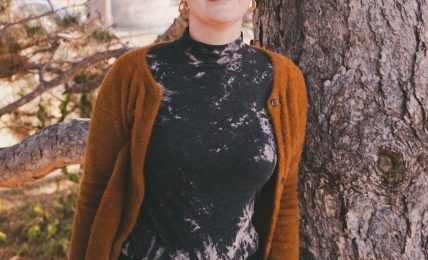
Jay Halsey (author photos) Sally Geier (book cover art/design) Jessica Lawson (all remaining)